

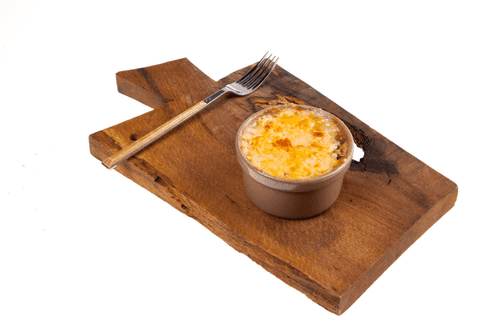
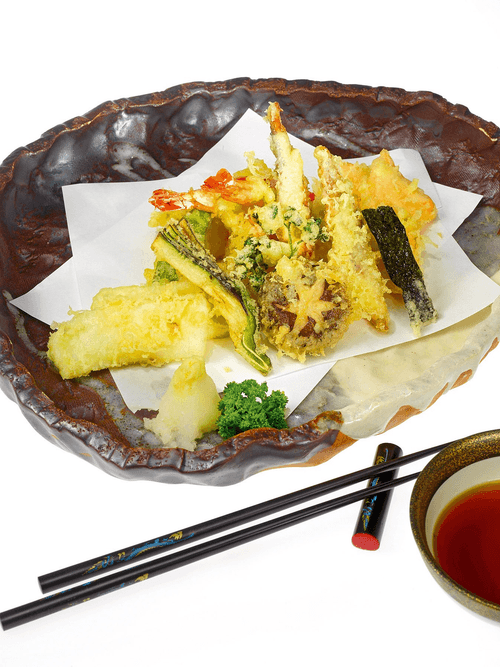
Vegetable and seafood tempura
4 servings
25 minutes
The word "tempura" is of Portuguese origin, or more precisely, Latin, meaning "times". This is how Portuguese missionaries designated the time of fasting. They also shared with the Japanese the recipe for making Lenten food very tasty with the help of batter and deep-frying. In principle, you can fry anything that comes to hand this way.
1
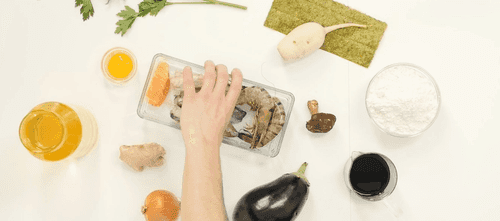
Prepare the necessary ingredients.
2
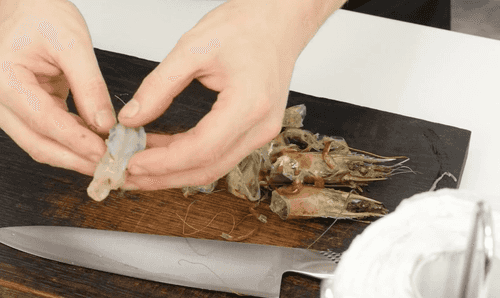
Prepare the ingredients for immersion. Remove the heads and esophagus from the shrimp.
- Shrimps: 2 pieces
3
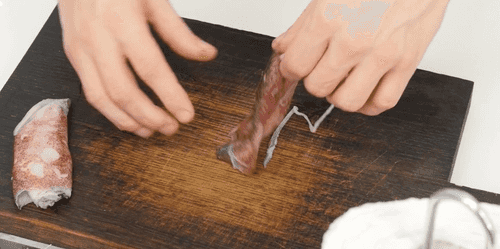
Cut the squid, salmon, and eel into slices that are not too thin, but also not thick.
- Squid: 2 pieces
- Salmon fillet: 2 pieces
- Smoked eel: 2 pieces
4
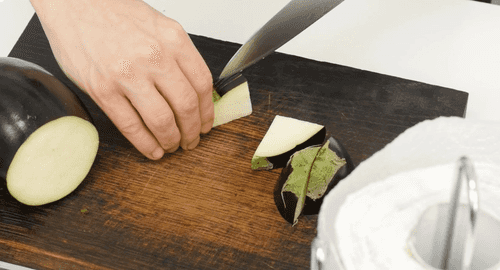
Cut a small piece of eggplant with several deep cuts and secure them with a toothpick.
- Eggplants: 40 g
5
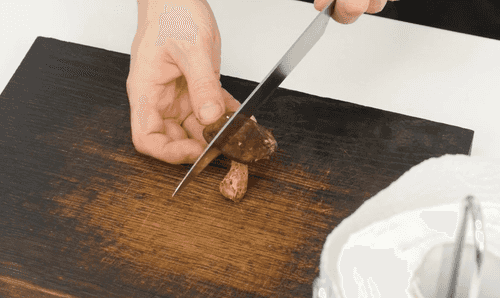
Pierce the onion ring through with another toothpick to prevent it from falling apart during frying. Cut a star in the cap of the shiitake (though this can be skipped).
- Onion: 0.3 head
- Shiitake mushrooms: 1 piece
6
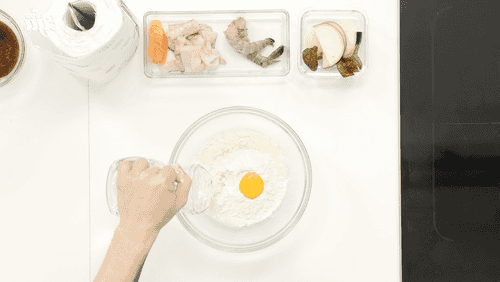
For the batter, pour 100 grams of tempura flour into a bowl. Add the yolk and gradually pour in cold water while stirring; about 300 ml will be needed.
- Tempura flour: 150 g
- Egg yolk: 1 piece
- Deep frying oil: 1.5 l

7
Place a pot with vegetable oil on low heat - let it heat up to 180 degrees. In the end, it should simmer gently, not boil vigorously.
- Deep frying oil: 1.5 l

8
Coat all seafood and vegetables, seaweed, and a sprig of parsley first in the remaining tempura flour, then in the batter, and deep-fry (it takes a minute or two).
- Dry seaweed nori: 1 piece
- Curly parsley: 1 stem
- Tempura flour: 150 g
- Deep frying oil: 1.5 l
9
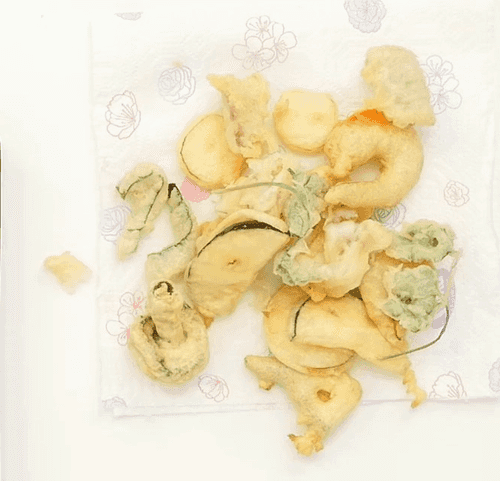
Place the tempura on paper towels.
10
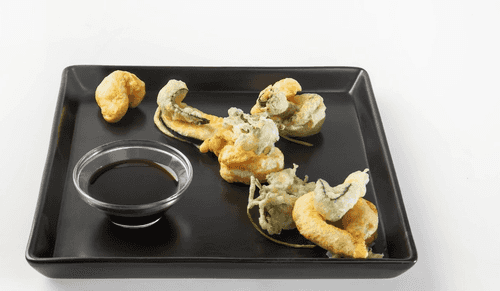
Then serve on a plate.
- Soy sauce: to taste
- Daikon: 10 g
- Grated ginger: 5 g