
Belgian mussels in white wine
1 serving
60 minutes
This is how mussels are prepared in the Moscow beer hall "Belgian Brasserie 0.33".
1
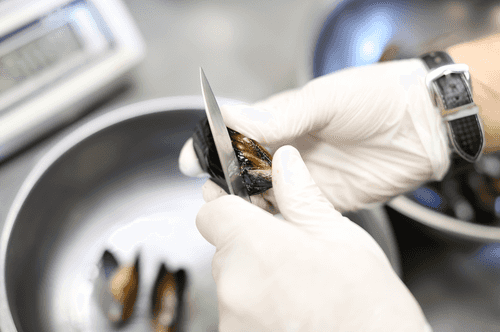
Carefully inspect each shell: fresh mussels must be closed. An open raw mussel is a sign of spoilage. Cooked-frozen mussels should be open. If there is a chip on the mussel shell, it should not be eaten as it is dangerous. Scrape the shells with a knife or steel sponge in case there are traces of algae and fluff left on them. However, you cannot avoid sand on your teeth; this is the nature of the product.
- Mussels in shells: 350 g
2
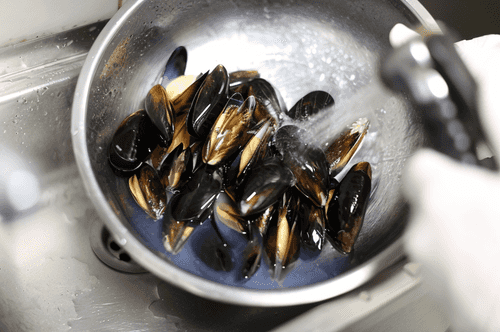
Rinse the shells under a strong stream of cold water.
- Mussels in shells: 350 g
3
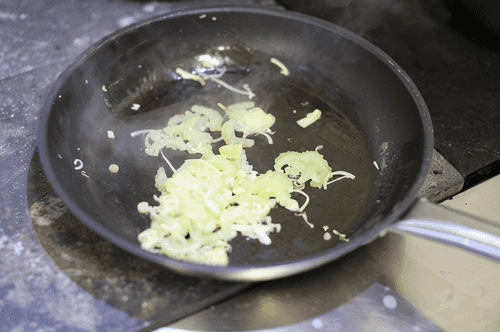
Slice the leek and celery stalk very thinly into half-rings. Place them in a wide pot or thick-bottomed pan and sauté in olive oil over medium heat for a maximum of 2 minutes, until a light golden hue appears.
- Leek: 20 g
- Celery stalk: 20 g
4
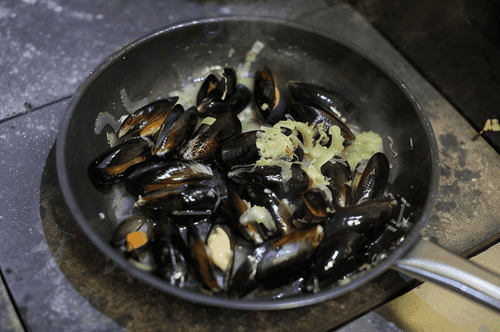
Add mussels to the stewed onions and celery. Cook for another 5 minutes over medium heat.
- Mussels in shells: 350 g
5
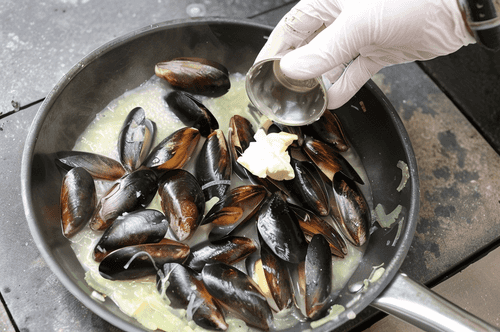
Pour water and white wine into the container with mussels, then immediately add butter. The butter is needed to thicken the sauce.
- Water: 70 ml
- Dry white wine: 40 ml
- Butter: 20 g
6
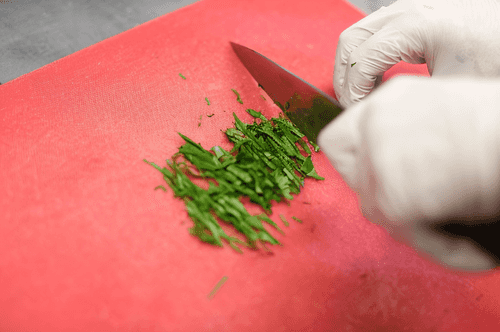
Chop the parsley leaves very finely. When the sauce thickens slightly, add the parsley to the pot. Turn off the heat.
- Parsley leaves: 20 g
7
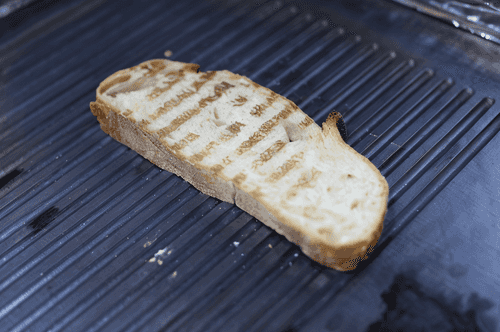
Dry the bread on the grill or in a pan. Place the aioli sauce in a separate bowl.
- White bread: 1 piece
- Aioli sauce: 35 g
8
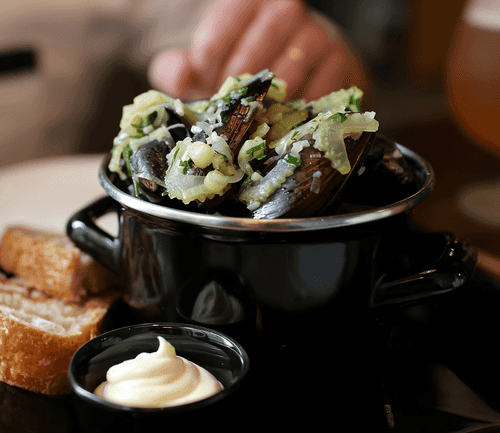
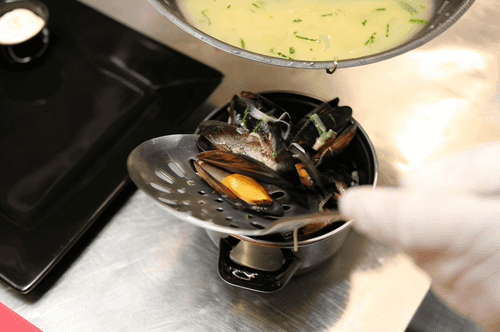
Transfer the mussels to a deep bowl. In Belgium, special pots are used for mussels in white wine, which have lids where empty shells can be placed. But at home, a regular deep bowl will do. It should be deep so the mussels stay in the sauce.
9
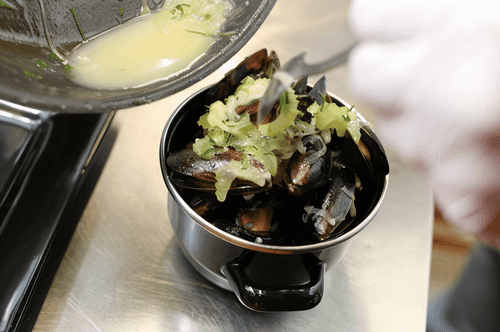
Carefully place onions, celery, and parsley over the mussels. Pour the sauce left in the pot or pan where the mussels were cooked on top.
- Leek: 20 g
- Celery stalk: 20 g
- Parsley leaves: 20 g