



Classic Crispy Sauerkraut
20 servings
20 minutes
Classic crispy sauerkraut is a symbol of Russian cuisine with a rich history dating back centuries. This recipe embodies the art of natural fermentation, giving the cabbage a bright, refreshing taste with a subtle tang and crunchy texture. Carrots add sweetness and a hint of tenderness, while stone salt enhances the product's naturalness. Sauerkraut pairs perfectly with meat dishes, potatoes, and rye bread and serves as an excellent base for borscht and other traditional Russian soups. It is not only delicious but also healthy as it contains many vitamins and beneficial bacteria that support gut health. Its simplicity in preparation and naturalness make it indispensable in the winter diet when fresh vegetables become scarce.

1
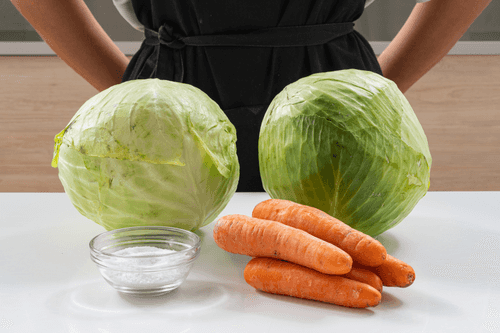
Prepare all the ingredients.
2
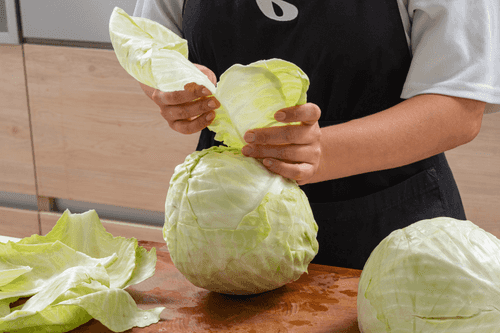
Remove the top leaves from the cabbage and rinse under cold water. Set aside a few leaves to fully cover the bottom of the pot and to cover the cabbage on top. The leaves will help prevent the cabbage from darkening.
- White cabbage: 2 kg
3
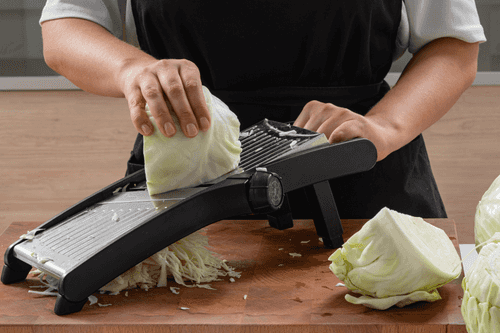
Cut the cabbage in half or into four parts, remove the core, and shred it into thin long strips with a sharp knife or a special shredder. Transfer the cabbage to a large deep bowl for easy mixing.
- White cabbage: 2 kg
4
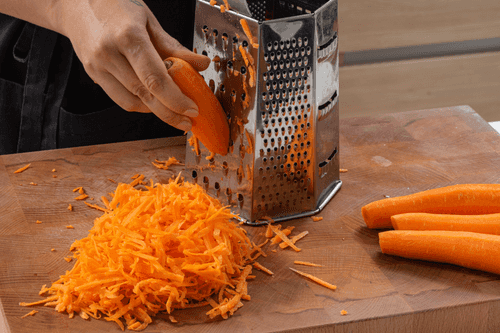
Peel the carrot and grate it on a coarse grater, then transfer it to the bowl with the cabbage.
- Carrot: 250 g

5
Add salt and mix everything by hand. There's no need to knead hard: the cabbage will release juice on its own.
- Rock salt: 50 g
6
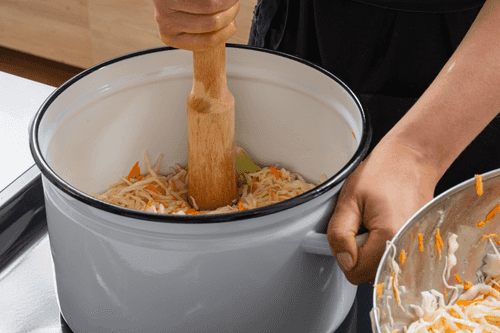
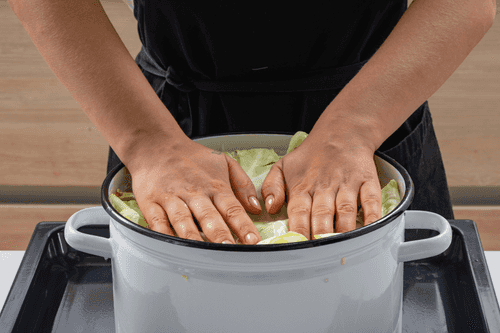
Prepare a container for fermentation: a pot (enameled or glass), a barrel, or a large glass jar. Place it on a tray. Line the bottom of the pot with half of the reserved leaves. Then layer the cabbage by handfuls, pressing each portion down with a wooden pestle.
- White cabbage: 2 kg
7
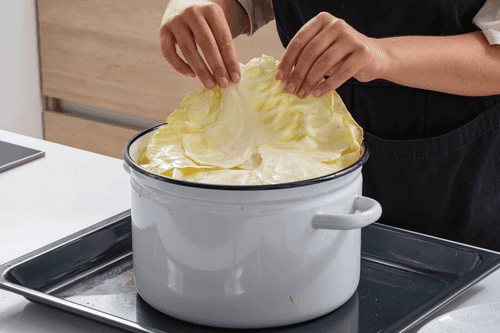
Place the remaining leaves on top.
- White cabbage: 2 kg
8
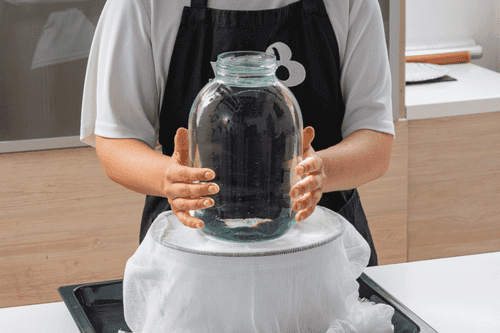
Cover with an inverted plate, then with cheesecloth and place a weight on top. Leave the cabbage container at room temperature. If fermenting cabbage in a jar, you can cut the core lengthwise and push pieces into the jar's neck to press the cabbage down.
- White cabbage: 2 kg

9
After a few days, foam will form on the surface. A fermentation smell will appear, and the juice will become cloudy. At this moment, you need to remove the weight, cheesecloth, plate, and leaves from the pot. Puncture the entire layer of cabbage in several places down to the bottom with a thin rolling pin or wooden spoon.
- White cabbage: 2 kg
10
Wash the top leaves with running water, cover the cabbage with them. Return the plate, cheesecloth, and weight, and place the cabbage to ferment at room temperature again.
- White cabbage: 2 kg

11
The foam should be removed as soon as it appears. For all these days, the cabbage needs to be checked once a day. After removing the foam, the cabbage should be pierced again and the top leaves washed. The fermentation process will last only 3-4 days. When the foam stops appearing and the juice becomes clear, the cabbage is ready. At this moment, it can be tasted and if desired, left to ferment for another day.
- White cabbage: 2 kg

12
Store the prepared cabbage in the refrigerator or on the balcony.
- White cabbage: 2 kg