

Natural Sourdough Bread
10 servings
255 minutes
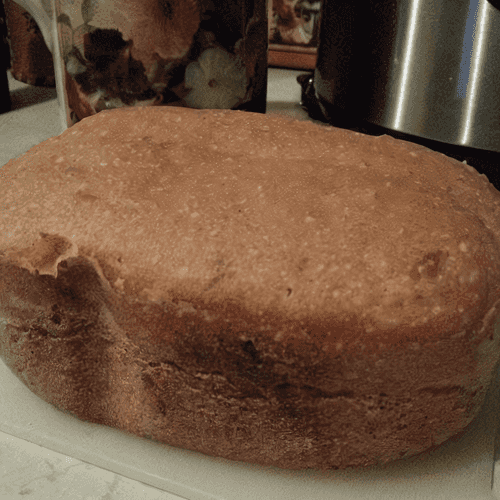
Bread made with natural sourdough is a true classic of Russian cuisine, rooted in ancient baking traditions. The sourdough made from rye flour gives the bread a rich aroma with sweet-sour notes, while the addition of cumin and pumpkin seeds provides pleasant spicy accents. This bread has a dense yet airy texture, a soft and slightly moist crumb, and a crispy crust. It pairs excellently with any dishes: from simple home breakfasts to exquisite appetizers. Especially good with butter, cheese, or honey. Thanks to natural fermentation, this bread retains its freshness and rich flavor for a long time. Each loaf is the result of meticulous work and respect for age-old recipes, making it not just a product but a piece of cultural heritage.
1
I pour room temperature boiled water into the entire sourdough. I stir to make the mass homogeneous. I send half of the mixture to a container for kneading dough, and to the remaining part, I add rye flour (in the photo is the consistency of the new sourdough) and let it 'rise' for about 4 hours (then you place this container in the refrigerator until next use).
- Water: 1 glass
- Rye flour: 4 tablespoons
2
Add salt and sugar to the mixing bowl for the dough. Mix everything in the liquid starter.
- Salt: 1 teaspoon
- Sugar: 1 tablespoon
3
We are preparing the dough. I add wheat and rye flour in a ratio of 3:1. Instead of rye, whole grain, buckwheat, corn flour and other types can be used. It's important to remember that if you add too much flour other than wheat, the bread will be moist, rise less, and become less tasty on the second or third day after baking.
- Wheat flour: 12 tablespoons
- Rye flour: 4 tablespoons
4
Add pumpkin seeds, cumin, pour in oil, and mix. The dough should be sticky, stretchy, and cling to the spoon. If kneaded more tightly, the bread will be drier.
- Peeled pumpkin seeds: 3 tablespoons
- Caraway: 1 teaspoon
- Vegetable oil: 2 tablespoons
5
If you are using a bread maker, set it to the regular baking mode for 4 hours. You can choose the size to your liking. Just place the dough in the bread maker and wait for the process to finish. After baking, leave your bread in the turned-off machine for another two hours.
6
If you only have an oven, try to knead the dough so that there are no lumps. Cover it with a towel and let it sit for a couple of hours (make sure there are no drafts!). I use the turned-off oven.
7
Then mix it well again, don't worry that the volume will decrease again. You are enriching the dough with oxygen, and carbon dioxide will reappear and give your bread volume.
8
Transfer to a baking dish. Cover with foil. Leave in the oven for another 1-1.5 hours.
9
Take the form with the dough if you used the oven. Preheat the oven to 180 degrees, place the form inside, and bake for an hour in convection mode or on the middle rack if your oven doesn't have that mode. The foil will prevent the top from burning. I don't grease the top of the bread; it will brown on its own.
10
Take the bread out of the mold and wrap it in a kitchen towel. The towel can be slightly dampened to prevent the bread from drying out while cooling. But if you want a crispy crust, choose dry wrapping. Let the bread rest for an hour or two.