


Easter with honey and candied fruits
8 servings
150 minutes
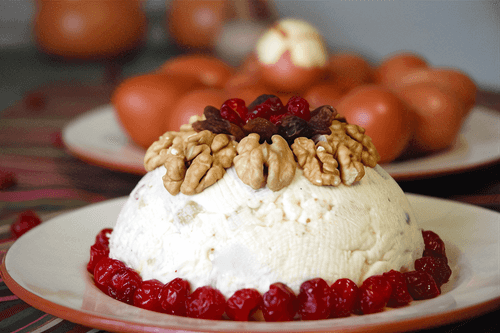
Easter with honey and candied fruits is a traditional Russian dish prepared for the bright holiday of Easter. Its roots go back to the distant past when cottage cheese Easter cakes symbolized abundance and joy. This dessert has a delicate, velvety texture thanks to the finely strained cottage cheese and butter. Honey gives it natural sweetness, while candied fruits, raisins, and nuts create a pleasant play of flavors and shades. Almonds and dried fruits add depth to the taste, while the tartness of cherries makes it even more exquisite. The Easter cake is not only delicious but also beautiful—it is decorated to become a true festive symbol. It pairs perfectly with tea, adding coziness and solemnity to the Easter table.
1
Pass the cottage cheese through a sieve to avoid lumps.
- Cottage cheese 1.8%: 900 g
2
Whisk the yolks with honey and add sour cream.
- Egg yolk: 3 pieces
- Honey: 5 tablespoon
- Sour cream 10%: 250 g
3
Mix the resulting mass with soft butter and crushed cottage cheese, and blend well with a mixer until smooth.
- Butter: 50 g
- Cottage cheese 1.8%: 900 g
4
Now this mass needs to be cooked in a water bath. Pour water into a pot and place a smaller pot with the curd mass inside. Cook on low heat for 30-40 minutes until thickened, stirring constantly.
- Cottage cheese 1.8%: 900 g
5
After brewing, the pot should be immediately placed in a bowl of cold water. While cooling, the mixture must be continuously stirred.
6
Soak the almonds in water for a few hours, then peel and chop them coarsely.
- Almond: 30 g
7
Add candied fruits, almonds, raisins, cherries, finely chopped figs, and dried apricots to the cooled cottage cheese mixture. Mix everything thoroughly.
- Candied fruit: 50 g
- Almond: 30 g
- Raisin: 20 g
- Dried cherries: 20 g
- Dried figs: 3 pieces
- Dried apricots: 3 pieces
8
Line the mold with damp gauze folded in 2-3 layers and place the cottage cheese mixture inside.
9
Cover the surface of the sandpit with hanging edges of gauze, place a polyethylene film on top, cover with a cardboard cut to the size of the sandpit, and place a weight on top.
10
Place a damp cheesecloth folded in several layers under the narrow end of the mold to collect the liquid dripping from the Easter dish. Put the dish in the refrigerator overnight.
11
Then take the mold out of the refrigerator, carefully remove the form, trying not to damage the pressed delicate relief. Gently remove the cheesecloth and decorate the Easter.