
Yeast pancakes
4 servings
40 minutes
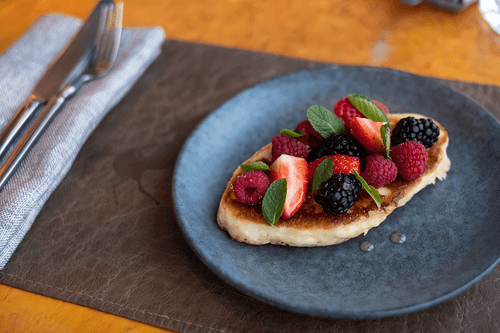
Pancakes are fluffy flatbreads made from wheat flour, usually smaller in diameter and thicker than pancakes. They are baked from yeast and yeast-free dough and often have grated vegetables added to the dough - zucchini or potatoes, for example. Pancakes can be salty or sweet, serve as a base for other dishes (for example, replace bread in sandwiches), can be breakfast, lunch or a snack. In general, pancakes are a multifunctional, healthy and tasty thing. For a recipe for ideal pancakes, we turned to the chef of the Ruski restaurant, Alexander Volkov-Medvedev.
1
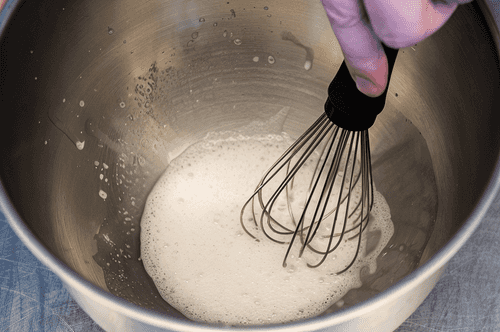
Put 10 grams of yeast and 50 grams of sugar in a bowl. Add a little room temperature milk to cover the sugar with the yeast. Mix everything by hand with a whisk until the yeast is completely dissolved: there should be no lumps. This will take about 5 minutes. This step is necessary for the yeast to activate and come to life. The fluffiness of the dough comes from their activity results. Yeast feeds on sugar, and the holes in the dough are formed by the release of carbon dioxide. There is sugar in wheat flour and milk, but not enough for the yeast to quickly raise the dough, so the process starts with mixing yeast and sugar together. Let the mixture sit for a few minutes.
- Fresh yeast: 10 g
- Sugar: 50 g
- Milk: 600 ml
2
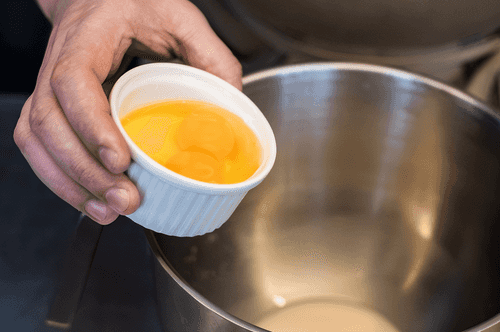
As soon as bubbles start to appear on the surface, add 10 grams of salt and stir. Then add 100 grams of eggs. Next, add 250 grams of premium wheat flour.
- Salt: 10 g
- Chicken egg: 2 pieces
- Wheat flour: 250 g
3
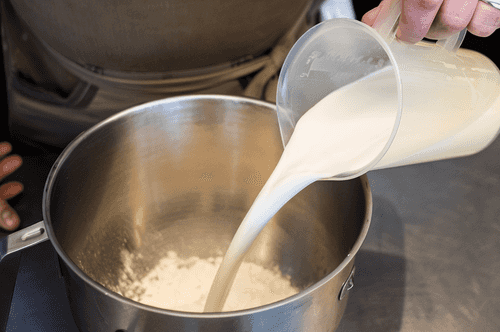
Pour room temperature milk into the dough: prepare 600 ml but pour less, about 400 ml, so you can dilute the dough later if needed. Flour varies, and depending on it, the dough can turn out differently.
- Milk: 600 ml
4
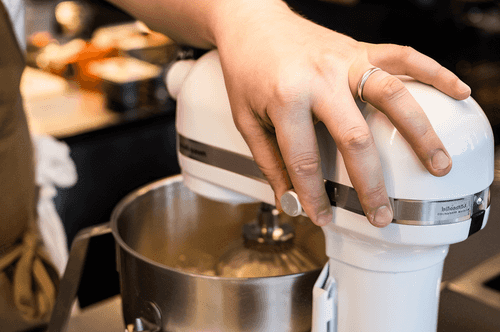
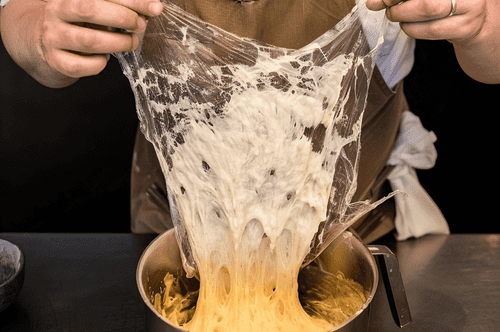
Knead the dough. The speed of the mixer doesn't matter. Knead for about 10 minutes until the dough is thick, elastic, creamy, but still a bit runny. If it seems too thick, add milk.
- Milk: 600 ml
5
Cover the dough with plastic wrap in contact, then with a towel and place it in a warm place for 20 minutes. After that, take out the dough and knead it by hand. If the consistency is not satisfactory, add either flour or milk depending on whether you need more liquid or thickness. Cover again with plastic wrap and a towel for 40 minutes.
- Milk: 600 ml
- Wheat flour: 250 g
6
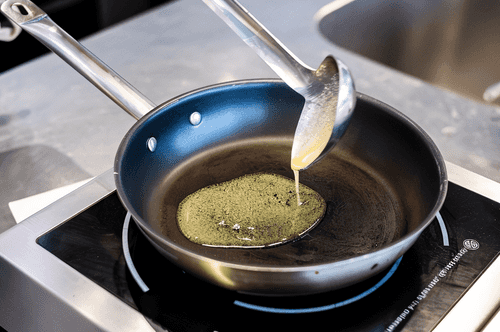
The ideal tool for pancakes is a sauce ladle, which makes it easy to pour the batter onto the skillet. Grease the ladle with melted butter to prevent the sticky batter from sticking to its surface. Pancakes should be fried in a thick-bottomed skillet at low temperature. This ensures that the bottom heats evenly and transfers heat to the pancakes across their surface. A thin surface heats up quickly, but when cold batter hits it, the temperature drops instantly, causing the pancakes to steam instead of fry; and when the bottom heats up again, they start to burn. So, preheat a thick-bottomed skillet over medium-low heat, about one-third of 9 divisions. Leave it on this heat for about 10 minutes. Then pour melted butter into the heated skillet for a pleasant nutty aroma in the pancakes. You can also fry pancakes in refined vegetable oil, but it's tasteless and lacks aroma. If there's a way to enhance flavor, why not take advantage of it?
- Melted butter: 50 g
- Melted butter: 50 g
7
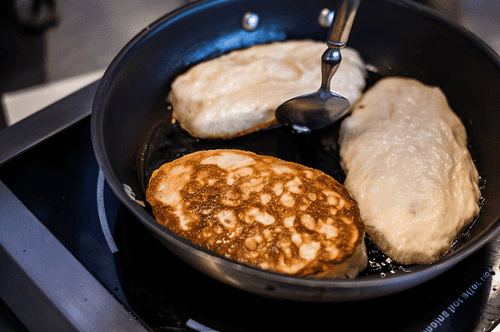
Scoop the batter with a ladle and place it in the pan. As soon as the pancakes have a colored crust on the bottom (visible from the side), immediately flip them and fry on the other side. Frying on one side takes about 1 minute. Fry the pancakes on the other side until a crust forms as well. Low temperature is needed to prevent the surface of the pancakes from burning while ensuring they cook through.