

Lemon chicken
4 servings
90 minutes
You can cook skinless fish fillet in a similar way, but for the sake of variety, use pomegranate juice for the sauce instead of lemon juice, zest and tomato paste. Four spoons of pomegranate juice, two spoons of vegetable oil, three spoons of sugar , salt, and at the end one spoon of starch soaked in water.
1
This is a very simple, yet very effective and unexpectedly tasty way to use an ordinary chicken breast from a regular supermarket with the most common ingredients.
2
Cut the breast into finger-thick slices. Sprinkle them with salt.
- Chicken breast: 600 g
- Salt: 1.5 teaspoon
3
In one bowl, break two eggs, add salt, and mix with a fork. In another bowl, add breadcrumbs.
- Chicken egg: 2 pieces
- Breadcrumbs: 200 g
4
Dip the breast in egg and coat with breadcrumbs. Repeat the process.
- Chicken breast: 600 g
- Chicken egg: 2 pieces
- Breadcrumbs: 200 g
5
In a pot with a diameter of 15-20 cm, pour enough vegetable oil so that the chicken breasts float while frying in stages. You will need about 400-500 ml of oil. Note! The amount of oil at this stage is unrelated to the dish we are preparing. We will fry in oil heated to 170°C. At this temperature, moisture on the surface of the product instantly boils, and steam escapes from all possible pores that oil could enter at a different temperature. Additionally, the heated oil is the source of heat that will be transferred to the product. If there is not enough oil, the cold breast will simply cool it down, and the described effect will not occur - the oil will fill all the pores in the product, soaking it. How to determine if your oil is heated to the required temperature without a thermometer? Bread small trimmings from the breast and drop them into the oil first. Bubbles should form around the piece of breast immediately, indicating that steam is escaping from the product, not the other way around - oil is penetrating the product. The breading should take on color, as in the photo, in 2-3 minutes. Larger pieces of breast will behave the same way if fried one or two pieces at a time. Do not fry too long. In raw form, the breast bends if you hold one end. When cooked, it will not bend, and inside, when cut, it should be pink but opaque - in short, like in the photo. Don't worry about its doneness; it will undergo another stage of thermal processing. After frying, place the breasts on paper towels to drain excess oil, and when they cool slightly, cut them into pieces.
- Chicken breast: 600 g
6
Use a vegetable peeler to cut the zest from the lemon and slice it into thin strips. In a wok or pot, place two tablespoons of sugar, drizzle with one tablespoon of lemon juice, add two tablespoons of tomato paste, two tablespoons of water, half a teaspoon of salt and put everything on the heat.
- Lemon: 1 piece
- Sugar: 2 tablespoons
- Lemon juice: 2 tablespoons
- Tomato paste: 2 tablespoons
- Salt: 1.5 teaspoon
7
Stir the mixture until the sugar dissolves and it turns into a translucent sauce. This will take about three minutes. Don't worry about the amount of sugar in the sauce; it doesn't affect the sweetness of the final dish. Heating sugar to 107°C with lemon juice and tomato paste acid inverts the syrup, turning sucrose into glucose and fructose, which have a moderately sweet taste balanced by the acidity of the tomato paste. To ensure the syrup reaches 107°C, you don't need to do anything special. Water boils at 100°C, but the inner surface of the wok or pot is much hotter. If you don't stir the thick sauce constantly, it may burn. Stirring will keep the sauce at the required temperature (you can check with a thermometer!) until it starts to thicken.
- Sugar: 2 tablespoons
- Tomato paste: 2 tablespoons
8
But when the sauce thickens, pieces of chicken breast should be added and mixed intensively but carefully until the sauce is almost fully absorbed into the coating and chicken. In one or two minutes that the breasts are in this sauce, they will reach just the right level of doneness without drying out.
- Chicken breast: 600 g
9
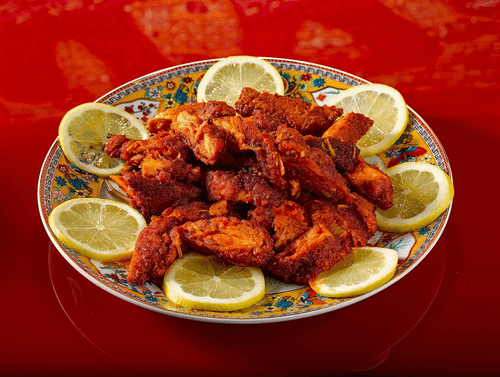
Serve on a plate with lemon slices. The lemon zest in the sauce gives the dish a bright lemon aroma, while the tomato paste and sugar create a very pleasant sweet-sour combination. The breast remains tender and juicy, but if you don't say what it is, few will guess it's just ordinary chicken breast. And if someone says it's not tasty, that person must have a hard and cruel heart, because a normal person cannot dislike this dish.
- Lemon: 1 piece