
Japanese omelette dashimaki-tamago
4 servings
60 minutes
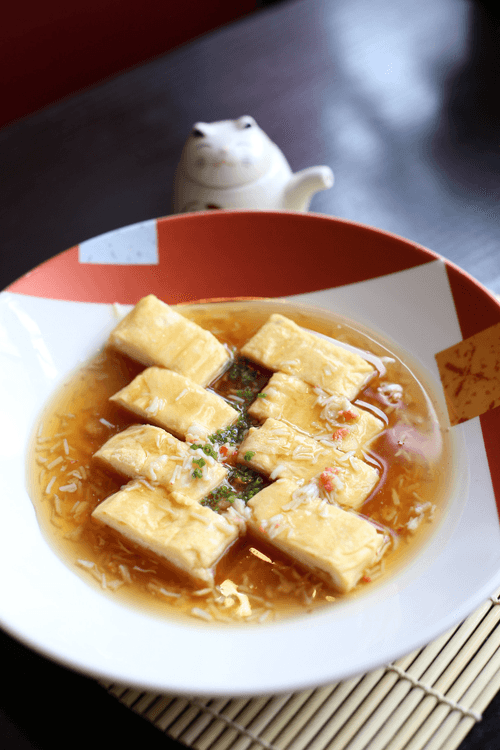
Dasimaki tamago is a delicate Japanese omelet soaked in flavorful dashi broth, giving it a refined taste with light umami notes. This omelet is an integral part of traditional Japanese cuisine, often served as a side dish to sushi or as a standalone dish. Its history dates back to the Edo period when chefs began experimenting with eggs and dashi to achieve a soft texture and rich flavor. The main feature of dasimaki tamago is its layered structure obtained by gradually rolling the omelet in a hot pan. This cooking method keeps it juicy and airy. This refined dish reveals the true essence of Japanese culinary mastery—simplicity, harmony, and deep flavor in every bite.
1
Whisk the eggs in a bowl to a light, airy foam.
- Chicken egg (organic): 6 pieces
2
Add dashi broth and 1 teaspoon of soy sauce. Stir.
- Dashi broth: 500 ml
- Soy sauce: 1 tablespoon
3
Lightly grease the pan with oil and heat it over medium heat.
- Sunflower oil: 20 ml
4
Pour enough egg and dashi mixture into the pan to make a thin pancake. Press down all the air bubbles with chopsticks.
- Chicken egg (organic): 6 pieces
- Dashi broth: 500 ml
5
When the omelet is slightly dried on top, run chopsticks around it to release the edges.
6
Now the most difficult part: imagine that the omelet is divided by horizontal lines into three parts, the first of which is the farthest away. Use chopsticks to roll one third of the omelet from the far side to the center. Now fold these two thirds of the omelet over the remaining third towards yourself.
7
Pour a little mixture of eggs and dashi broth into the empty part of the pan, lifting the fried omelet to let the liquid mixture flow underneath it.
- Chicken egg (organic): 6 pieces
- Dashi broth: 500 ml
8
Repeat steps 6 and 7 until the tamago is 2.5 cm thick. Remove from the pan and press with a bamboo sushi mat. Then cool the dashimaki to room temperature and remove the mat.
9
Cut into strips. Serve the omelet like regular rolls.