







No-knead bread
12 servings
60 minutes
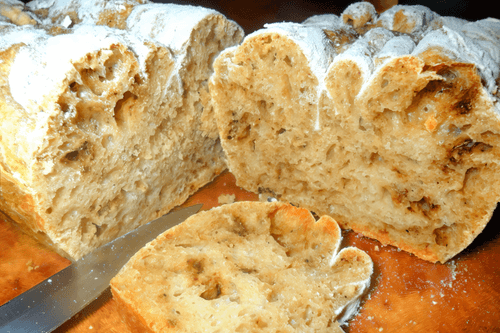
No-knead bread is the embodiment of simplicity and flavor. Its roots trace back to traditional village kitchen recipes, where a long fermentation process replaces intensive kneading. With minimal yeast and extended fermentation, the bread develops a rich aroma, airy texture, and crispy crust. It’s perfect for breakfasts with butter and jam, as an accompaniment to soups and snacks, and as a base for delicious sandwiches. Its flavor is deeper and more complex than regular bread, with a slight tanginess and softness inside. Baking in a closed form helps retain moisture and create an ideal balance of textures—crispy outside, tender inside. This bread is a true find for those who appreciate natural ingredients and patience in cooking.
1
Mix all dry ingredients in a large deep pot.
- Wheat flour: 3 glasss
- Dry yeast: 1 g
- Salt: 1.5 teaspoon
- Sugar: 1.5 teaspoon
2
Heat the water slightly, mix it with oil, and pour it into the dry mixture. Stir with a spoon - the dough will be quite liquid, you can't mix it by hand, and that's how it should be.
- Water: 1.5 glass
- Vegetable oil: 1 tablespoon
3
Cover with a lid and let it rise for at least 12 hours! The thing is, there are very few yeast, and the dough will rise thanks to the gluten.
4
Then knead the dough with a spoon and pour it onto a generously floured table, fold the edges towards the center to form a flour-covered envelope, and transfer it to a baking dish - it should have a lid, so a ceramic pot or cast iron will do, basically, it should be something that can be baked in the oven. Let it rise and send it to the oven preheated to 220 degrees.
- Wheat flour: 3 glasss
5
Bake the bread covered for the first 20 minutes, then uncover and bake for another 15-20 minutes.