


Ukrainian Palyanitsa
8 servings
240 minutes
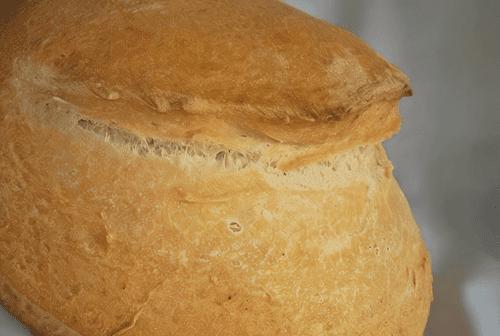
Palyanitsa is a traditional Ukrainian bread symbolizing home comfort and hospitality. Its golden crust and airy, porous crumb make it an integral part of Ukrainian cuisine. The name 'palyanitsa' has become a symbol of national identity and a unifying element of culture. This bread has a rich, slightly sweet taste due to the combination of flour, yeast, salt, and sugar. Careful kneading and proper proofing play an important role in its preparation, giving palyanitsa its characteristic texture. It pairs excellently with traditional Ukrainian dishes like borscht, salo, and homemade pâtés. Palyanitsa is baked at high temperatures with steam, forming its crispy crust and making it incredibly appetizing.
1
For the sponge, mix flour (315 g) with dry yeast. Add warm water (180 g) and knead a rather firm but not dry dough. During the kneading process, focus primarily on the dough's consistency; if it feels too dense or if there is dry flour left unmoistened, add a little more water (the sponge doesn't need to be kneaded for long).
- Wheat flour: 385 g
- Dry yeast: 1.5 teaspoon
- Water: 210 ml
2
Cover the dough and leave it in a warm place for 3-4 hours. You can tell the dough is ready by its appearance — its surface will be covered with bursting bubbles, folds, and a very pleasant bread aroma will emerge.
3
For the main dough, add the remaining flour and water to the sponge, in which you have previously dissolved the required amount of salt and sugar according to the recipe.
- Wheat flour: 385 g
- Water: 210 ml
- Salt: 1 teaspoon
- Sugar: 1 tablespoon
4
Knead the prepared dough thoroughly until smooth and homogeneous. The dough should be kneaded for a fairly long time, about 7-10 minutes.
5
Shape the prepared dough into a ball, lightly grease with vegetable oil, cover it, and let it rise in a warm place until doubled in volume (about 1.5 hours).
6
Place the risen dough on a lightly floured surface and gather it into a ball. To do this, fold the edges of the dough towards the center until a smooth surface forms on the outside.
7
Carefully transfer the shaped ball to a floured baking tray or parchment paper (seam side down), generously dust with flour on top, cover, and let it rest for about 1 hour.
8
Make a cut on the risen dough at 3/4 circle depth of 15-25 mm at 3/4 height from the bottom surface of the dough.
9
The bread is baked at 190–200 degrees with steam (if the oven doesn't have this function, you can place a bowl of water at the bottom). Bake for about 45 minutes until it sounds hollow and is golden brown (it usually takes me about 1 hour).