

Mille-feuille with berries
8 servings
300 minutes
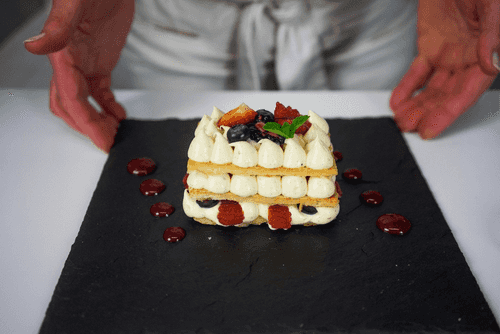
Mille-feuille, unfortunately, is not very common in our country, but one of its hypostases is familiar to all of us. This is "Napoleon", which is separated from mille-feuille by one mistake. Fatal, from the point of view of the French pastry chef, but not at all critical for those who prefer soft, raw, plump, oozing cream to crispy cakes. This metamorphosis is inevitable if you do not eat the mille-feuille immediately, but let it stand and soak for half a day.
1
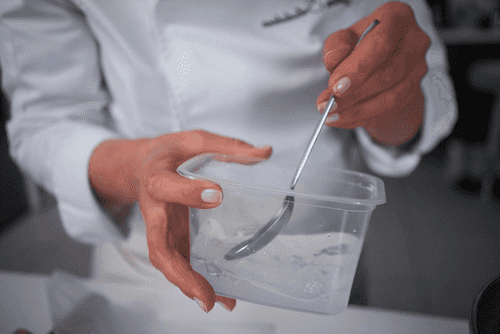
The dough for millefeuille should be the same as for croissants. You can buy ready-made puff pastry, but it's better to make it yourself to ensure the ingredients, taste, and quality. Industrial producers often use margarine and palm oil instead of butter. Pour 375 grams of flour into the bowl. Then take 165 ml of water, dissolve 2 grams of salt and citric acid in it. Add the water to the flour and crack an egg into the dough.
- Wheat flour: 400 g
- Citric acid: 2 g
- Salt: 2 g
- Egg yolk: 5 piece
2
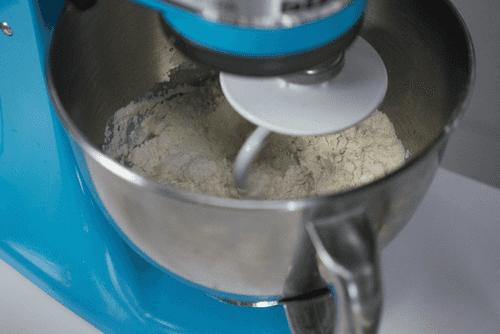
Knead the dough in a mixer with a hook attachment for 10 minutes. Start at low speed until all ingredients are combined, then you can increase the speed. Knead the finished dough by hand, wrap it in plastic wrap, and refrigerate for at least 30 minutes.
3
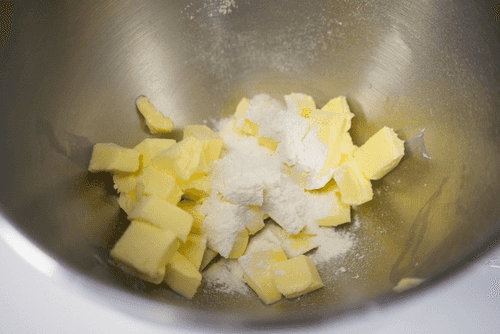
At this time, prepare the butter to layer the dough. Mix softened butter with 25 grams of flour until smooth. The flour is needed to bind the butter to the dough.
- Butter: 250 g
- Wheat flour: 400 g
4
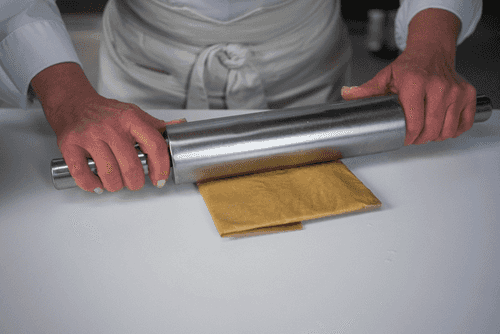
Place the butter mixture on parchment, spread it in a thin layer to form a square, and wrap it completely in paper. Roll it out on the parchment with a rolling pin several times until the mixture is flat and thin, no more than 5-7 mm thick. Put the butter in the refrigerator and keep it there until it hardens. This will take about 1 hour.
5
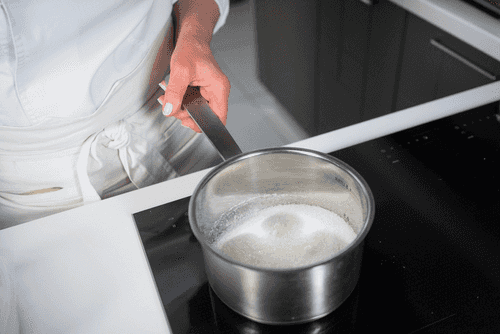
While the dough rests in the fridge, prepare the caramel. Pour 250 grams of sugar into a saucepan and place it over medium-high heat. Carefully watch what happens at the bottom of the saucepan, as this is where the sugar will start to melt. Do not stir the mixture with anything: if you interfere with a whisk or spatula, the sugar may crystallize later. However, since you need to stir the caramel, do it by gently shaking the saucepan.
- Sugar: 350 g
6
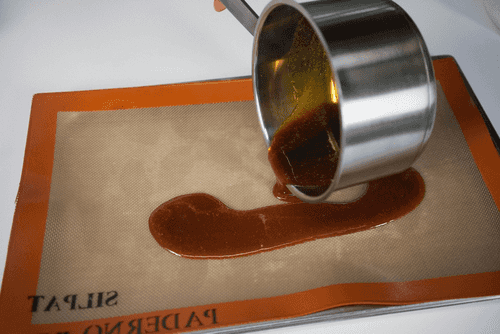
In 10-15 minutes, the sugar will turn into caramel. Watch to ensure the sugar doesn't burn; if it does, reduce the temperature. Pour the finished caramel in a thin layer onto a silicone mat and let it cool.
7
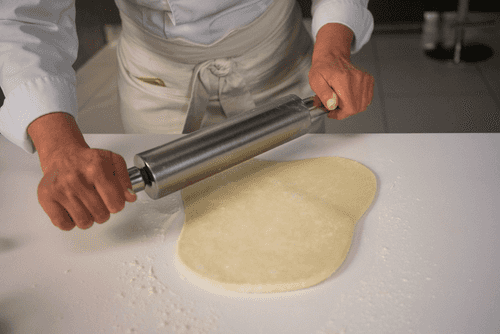
Take the dough out, roll it slightly, and then continue rolling so that the center is thicker and the edges are thinner, like petals. Stretch the corners of the dough to cover the butter later. The working surface and rolling pin should be cold. You can put the rolling pin in the refrigerator for this purpose. The optimal room temperature is 15-17 degrees; this is quite cold. In winter, you can open a window; in summer, turn on the air conditioner. This is necessary to prevent the butter from starting to melt. Melted butter will cause the dough to tear and stick to the countertop.
8
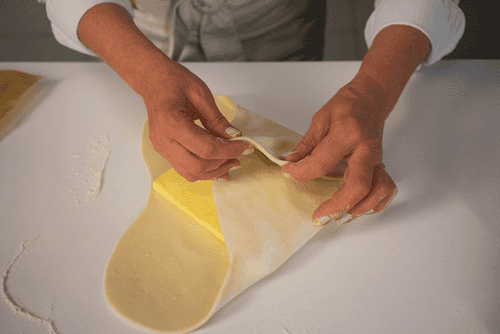
Take out the chilled butter. Check if it fits in the center of the dough and if the edges cover it completely. If not, set aside the butter and roll out the dough more or stretch it by hand. Wrap the butter in the dough like an envelope. The edges of the dough should overlap to cover the butter; press them tightly.
9
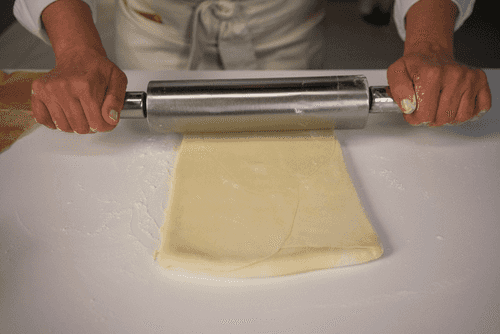
Roll the dough into a rectangle in two directions - away from you and towards you, but not across. The final thickness should be about 1 cm. The length of the dough piece should be about four times its width. Everything must be done very quickly because the butter melts. Remove excess flour from the surface.
10
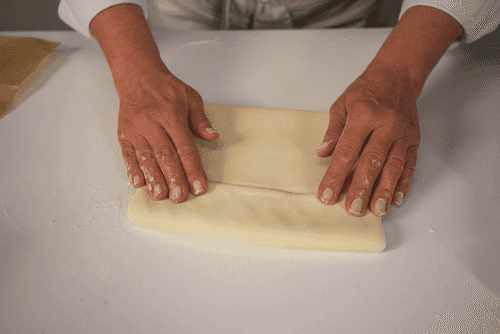
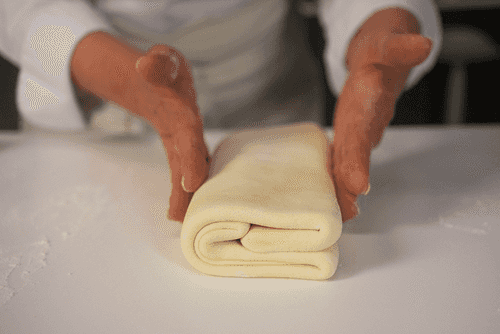
Fold the dough. To do this, mentally divide it into three parts. Fold the first two together, leaving one third of the dough to fold in half. This will create a booklet with one part larger and the other smaller. If you fold the dough symmetrically, the middle will get crumpled during subsequent folds.
11
Fold the resulting dough in half. From the side, it will look like in the picture. These are the first four layers. Put the dough in the refrigerator for 30 minutes. Then take it out, roll it to a thickness of 1 cm, fold it in the same way, and put it back in the refrigerator. Repeat the procedure two more times.
12
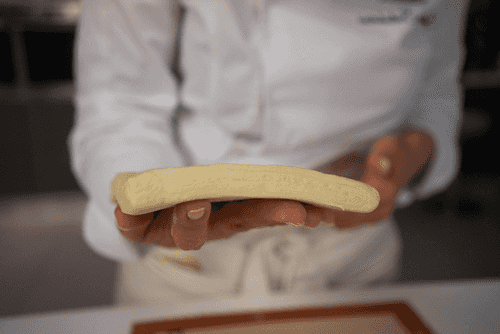
In the end, the dough will have 256 layers. In the fridge, this dough can last a week; in the freezer — three months. Besides mille-feuille, you can make pastries, pies, and cakes from it. It should be cut with a very sharp knife or pizza cutter to avoid sealing the layers.
13
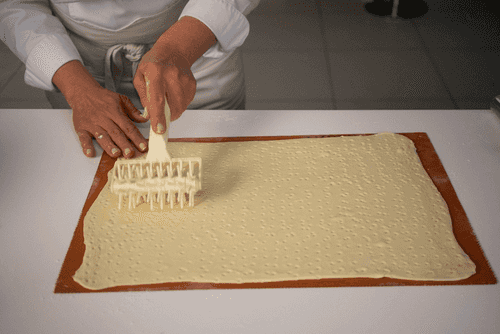
Roll out the dough in the shape of a baking tray to a height of no more than 5 mm. Poke the dough: this is necessary to prevent it from puffing up during baking and to help the layers stick together in places. Send the dough to bake in an oven preheated to 200 degrees for about 20 minutes. The dough should brown on both sides. To prevent it from turning into a pillow, it needs to be flipped. This is not difficult: when the surface has already taken on a golden color, open the oven, quickly flip the dough golden side down and leave it to finish baking. It will take about 10 minutes in the oven on each side. Let the finished crust cool.
14
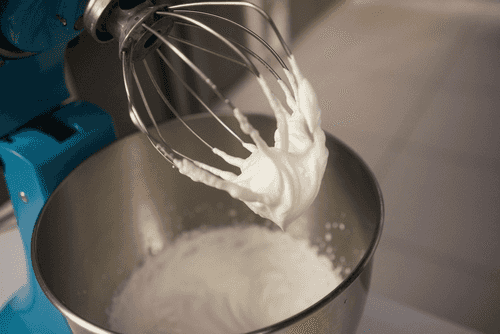
While the dough is baking, prepare the cream. Whip cold cream at maximum mixer speed until soft peaks form, which will take 5-7 minutes. Place the cream in the refrigerator to prevent it from deflating.

15
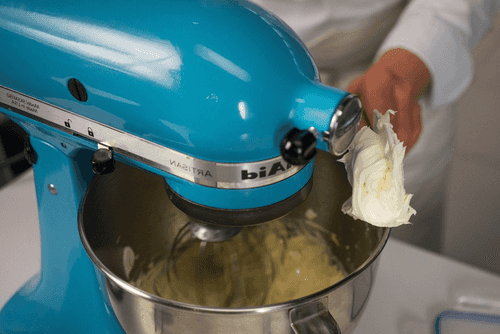
Put the yolks to whip. Add seeds from one vanilla pod to the yolks. Do not throw away the pods; they can be added to the sugar syrup while cooking, making it vanilla-flavored with a pleasant caramel hue.
- Vanilla pod: 1 piece
16
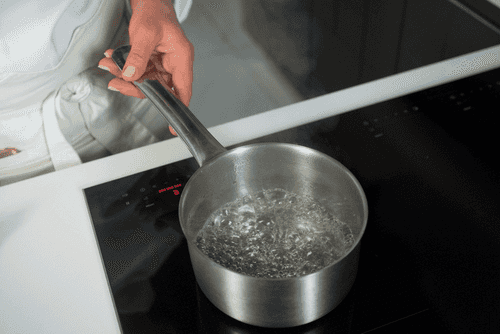
While the yolks are being whipped with vanilla, prepare the sugar syrup. Dissolve 100 grams of sugar in 80 ml of water, bring to a boil, reduce heat and cook until the syrup reaches 116 degrees. While the syrup is cooking, let the yolks continue to be whipped.
- Sugar: 350 g
- Cream 33%: 200 ml
17
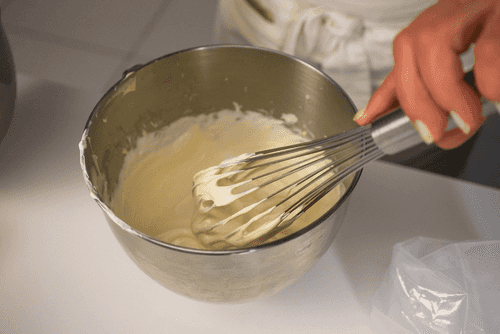
Without stopping to whip, add hot syrup to the yolks, followed by gelatin (previously soaked in cold water and squeezed). Then add mascarpone and whip until everything is homogeneous. Make sure the mascarpone doesn't stick to the sides of the bowl. If needed, stop the mixer, stir the cream with a spatula, and then continue whipping.
- Gelatin in plates: 10 g
- Mascarpone cheese: 200 g
18
Add whipped cream to the mixture and stir everything with a spatula or whisk. Mix gently from bottom to top to prevent the cream from sinking. Place the cream in the refrigerator for 1 hour.
19
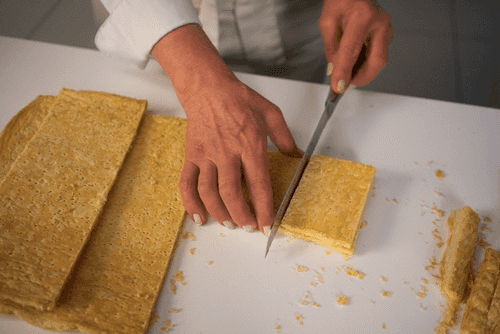
Cut the cold cake. First, trim the edges as they are uneven. You can crumble them for topping or just eat them. For portioned desserts, cut the cake into small rectangles of equal size.
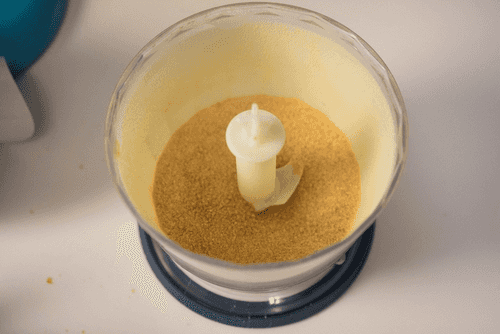
20
Crush the caramel - break it into medium pieces by hand and blend it in a blender. The result should be caramel powder.
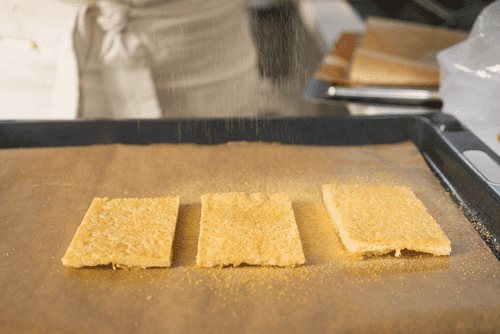
21
Place the layers on a baking sheet and sprinkle with a thin layer of caramel through a sieve. The caramel is needed for the layers to be covered with a thin crispy layer for texture, not for taste. Send to an oven preheated to 220 degrees for a few minutes. It is advisable to use the top heating. As soon as a slightly browned crust appears, take it out: do not overcook the caramel, it will burn and ruin the layers as well. A slightly set thin crust is needed. Cool the layers.
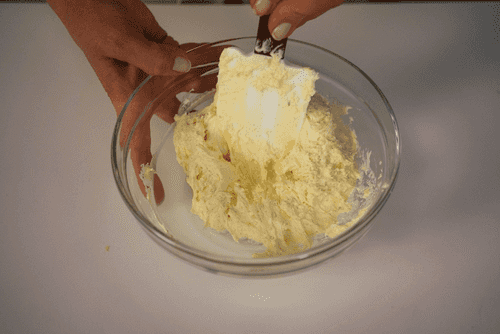
22
Take the cream out of the fridge; it will be quite soft. Mix it with a spatula until smooth. Transfer the cream to a piping bag with a round tip.
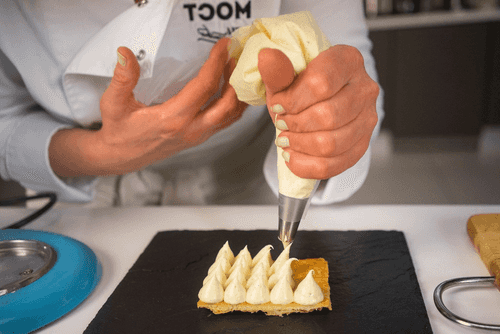
23
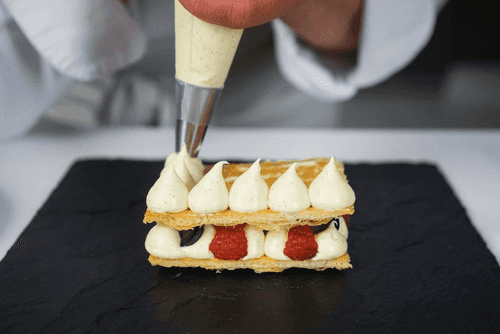
Choose one layer and place it on a serving plate. You can drop a bit of cream under it to prevent it from sliding on the plate. Squeeze peaks of cream onto the first layer. If the cream spreads, either it or the layers are not cold enough. To keep the millefeuille's shape intact, all ingredients must be cold.
24
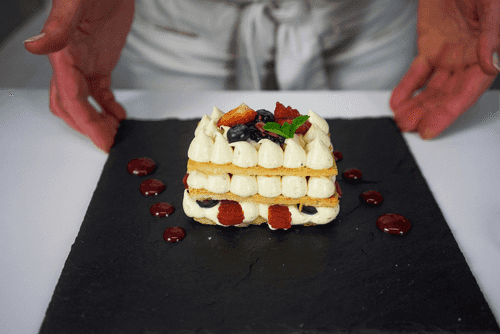
Place pieces of berries on the cream. They should not be larger than the peaks of the cream; otherwise, the second layer will rest on the berries instead of the cream. Cover the cream with the second layer. It should not press down too hard on the bottom layer. Also, pipe peaks of cream onto the layer.
- Fresh berries: to taste
25
Cover with cream using the third layer, and decorate it with cream and berries. The assembled millefeuille should be served and eaten immediately. If placed in the fridge, the layers will soak up the cream and turn into 'Napoleon'.