
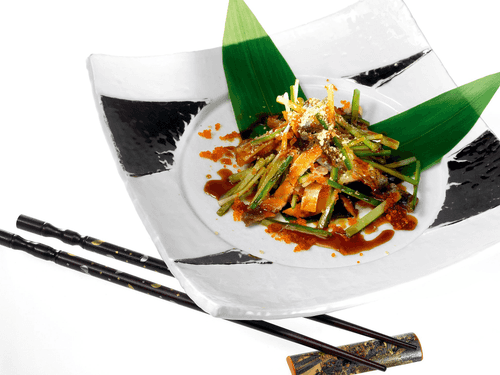
Sake-kawa-sarada
1 serving
20 minutes
The Japanese consider skin to be a full-fledged ingredient: they cover chicken skin with a sweet glaze and fry it into kushiyaki skewers, roll up boiled pork skin into a butanika roll, and add fried fish skin to salads instead of chips. And this is not food for the poor. It's just that those important truths that the rest of the world is just beginning to come to, like reasonable consumption or waste-free technologies, have been the norm in Japan for centuries: everything that can be eaten should be eaten, everything that should decorate life should decorate it. For example, fish skin is not garbage for the Japanese, but a powerful means of expression. Fried, it looks like crispy mica and adds textural contrasts and sea notes to a vegetable salad. The result is Japanese porridge from topor , where the main feature is made of something we are used to throwing away.
1
The salmon skin (first, it needs to be cut off the flesh with a sharp knife; this is not difficult: place the fish skin-side down, make an incision, and run the knife along the body, pressing it against the skin) should be fried until crispy, skin-side down. Fry without oil, as the fish's own fat will be sufficient, and the skin should be pressed down with something — for example, a smaller pan. This is necessary to keep it flat while frying, preventing it from curling. Place the finished skin on a paper towel.
- Salmon skin: 80 g
2
Cut the fried fish skin into small strips. Slice the cucumber into thin sticks. Mix both ingredients with tobiko (i.e., flying fish roe) and dress with unagi sauce.
- Salmon skin: 80 g
- Cucumbers: 20 g
- Raspberry Tobiko Caviar: 15 g
- Unagi sauce: 15 ml
3
Transfer to a plate and sprinkle with ground sesame on top.
- Sesame: 5 g