



Sauerkraut
6 servings
30 minutes
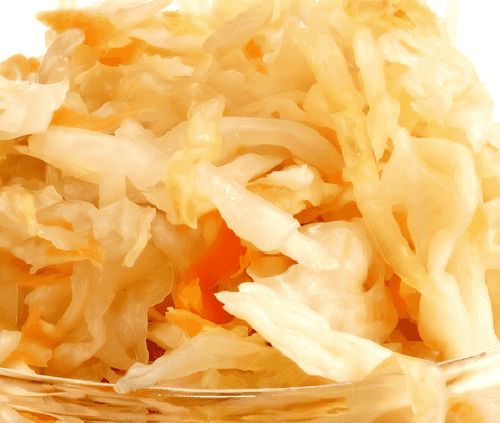
Sauerkraut is a traditional dish of Russian cuisine known for its freshness, crunchiness, and unique sourness. Its history dates back to ancient times when people sought ways to preserve vegetables for long periods. This fermentation method retains vitamins and enhances the beneficial properties of cabbage. The taste of the finished product is rich with a slight spiciness and sweetness from carrots. It is perfect as a standalone snack, a side dish for meat dishes, or even in salads and borscht. Sauerkraut pairs well with vegetable oil, herbs, and cranberries, adding new flavor nuances. The culinary art of preparing this dish requires patience: it matures over five to seven days, but the result meets expectations—a simple, healthy, and tasty addition to any table.
1
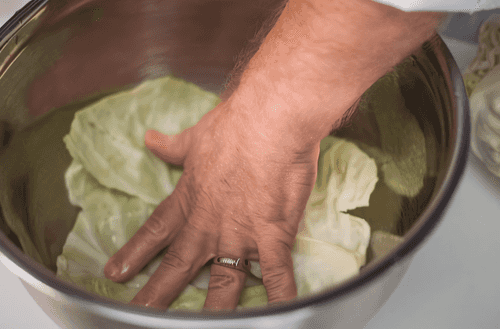
Remove the upper leaves from the cabbage head and place them at the bottom of the container where the cabbage will be fermented. This is to prevent the cabbage from touching the bottom. Later, when it’s time to pierce the cabbage, the leaves will protect the barrel (if making cabbage in it) or another container from damage. Sprinkle any spices under the leaves.
- Spices: to taste
2
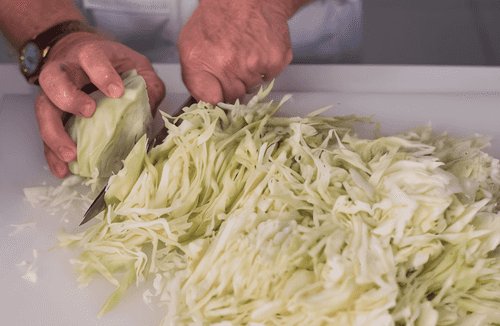
Chop the cabbage not too thin and not too thick. Cut off the stalk.
- White cabbage: 1.5 kg

3
Peel the carrot and grate it on the largest grater. Add to the cabbage.
- Carrot: 150 g
4
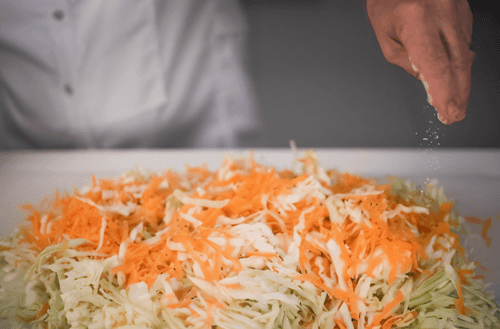
Sprinkle salt over the entire surface. First add about 40-50 grams, mix, taste - if the cabbage is moderately salty, add more salt. The cabbage should taste slightly over-salted.
- Rock salt: 30 g

5
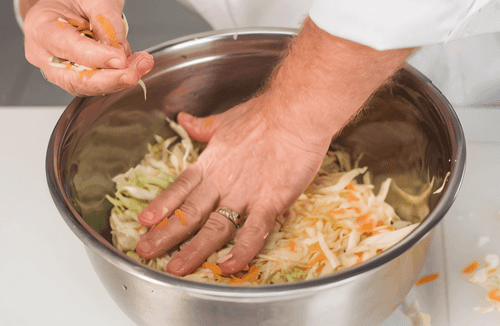
Mix the cabbage on a board or in a tray. You don't need to literally scrub the cabbage—just gently knead it by hand to release some juice, mix it with carrots, and immediately transfer it to a container for pickling. If you knead the cabbage too much, it will release juice intensely and become dry.
- White cabbage: 1.5 kg
6
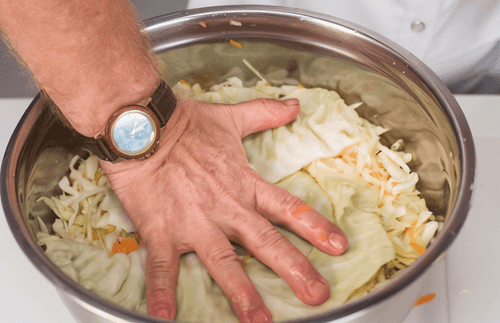
Transfer the cabbage to the fermentation container by hand and pack each batch down, pressing it to the bottom.
- White cabbage: 1.5 kg
7
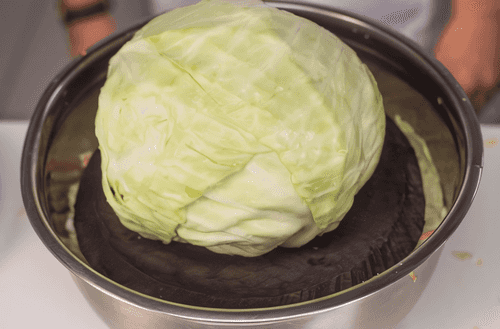
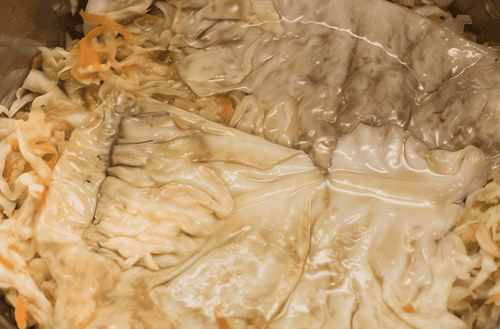
Carefully cover the cabbage on top with the same leaves placed at the bottom of the container. This is necessary to prevent the cabbage from darkening: contact with air is not beneficial for it.
- White cabbage: 1.5 kg
8
Place a wooden board on the sheets and put a weight on top. You can cover the cabbage with a plate, but if it cracks and pieces fall into the cabbage, everything should be thrown away. You can place a wooden circle and a stone on top. If the cabbage does not release juice and is not covered within an hour to an hour and a half after placing the weight, you should take boiled or non-carbonated mineral water, salt it (so that it tastes overly salty), and fill the cabbage to the top.
- White cabbage: 1.5 kg
- Rock salt: 30 g
9
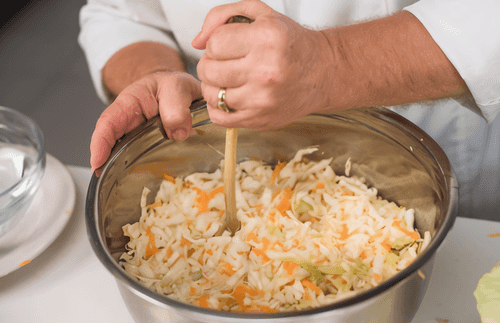
After the first three hours, pierce the cabbage to the bottom with a wooden spoon handle to release gases. If you don't pierce the cabbage, it will be bitter and sour. (The next day, remove the weight from the cabbage, pierce it again and leave it covered with a towel for an hour, then cover it with weight again. If there is too much brine the next day and the cabbage is literally floating in it, you need to change to a lighter weight but under no circumstances drain the brine!)
- White cabbage: 1.5 kg
10
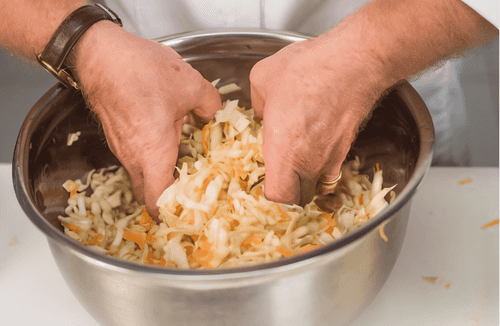
After one or two hours, open the cabbage again, put your hands in the container and stir to let the gases out. This should be done for three consecutive days. During this time, the cabbage ferments at room temperature.
- White cabbage: 1.5 kg
11
On the third day, the cabbage should start to foam — this means it can be sent to the fridge. After two days, the cabbage can be eaten, and after another two days, it is fully ready. In total, the slow fermentation process takes about five days to a week. It can be dressed with oil, cranberries added, and eaten.
- White cabbage: 1.5 kg