



Traditional Napoleon Cake
16 servings
240 minutes
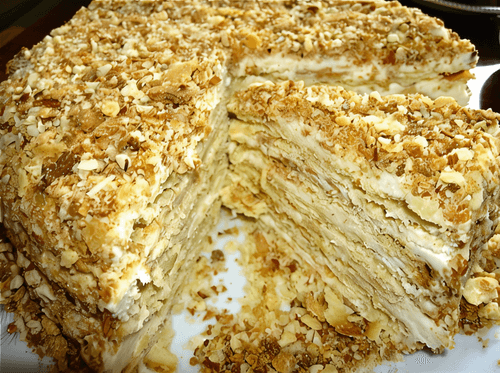
Napoleon Cake is one of the most popular desserts, a Russian Soviet millefeuille. There are several legends about the origin of the cake. The most famous one: the cake was prepared by Russian chefs for the centenary of Napoleon Bonaparte's escape from Russia. The cake was baked in the shape of a triangle, which symbolized Napoleon's hat, the sugar crumbs on top of the cake referred to the harsh Russian winter that frightened and drove away the French, and its tendency to crumble at the first movement is a symbol of the victory over Napoleon's army. Of course, other countries have their own version of the origin of the famous cake, but the preparation principle remains unchanged: thin layers of dough that are connected with sweet custard.
1
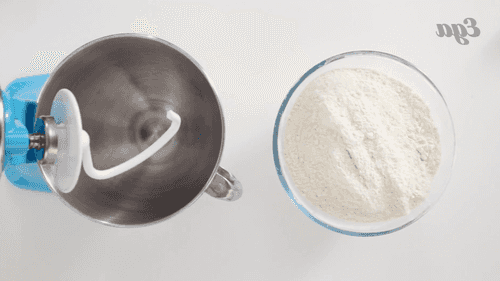
For the test, pour 1.5 kg of flour (6 cups) onto the work surface. Place 500 grams of butter on the flour and chop finely with a knife to start mixing the butter with the flour. Form a mound from this mass.
- Wheat flour: 1.8 kg
- Butter: 600 g
2
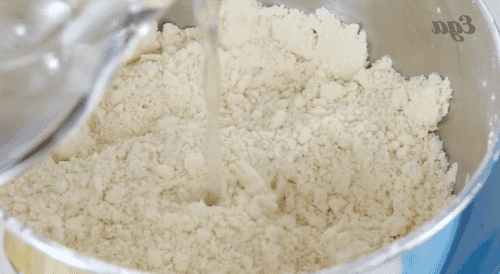
Mix cold, but not icy water with salt and gradually pour it into the center of the flour mound, constantly stirring the mixture. Once all the water is added, mix thoroughly to achieve a uniform dough. Place the dough in the refrigerator for 1-2 hours.
- Water: 200 ml
- Salt: 0.5 teaspoon
3
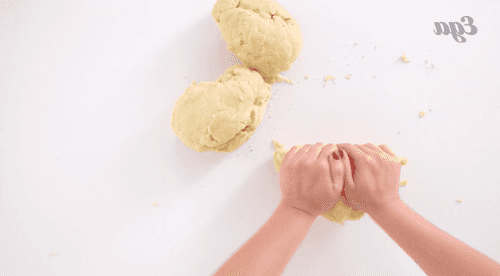
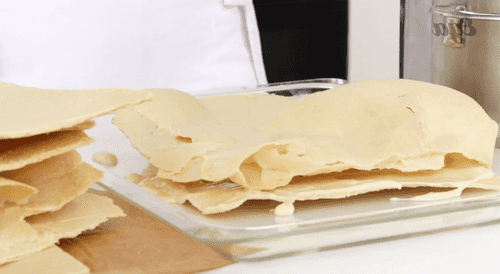
Divide the dough into 9 equal parts. Roll out the layers to a maximum thickness of 2 mm on a floured surface and bake for 15-20 minutes in a preheated oven at 180 degrees.
- Wheat flour: 1.8 kg
4
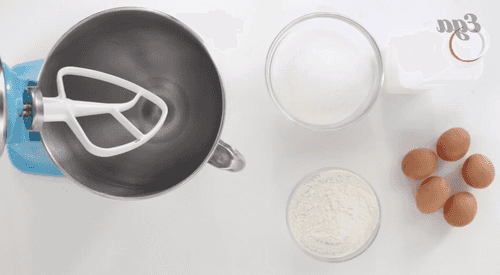
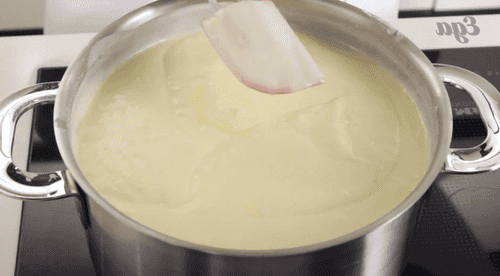
For the cream, put 2.5 liters of milk on the fire.
- Milk: 3 l
5
While the milk is boiling, mix the eggs and sugar in a bowl. Add flour to the mixture and mix everything thoroughly. After that, pour in the remaining milk (0.5 liters) and mix until smooth.
- Chicken egg: 5 piece
- Sugar: 500 g
- Wheat flour: 1.8 kg
- Milk: 3 l
6
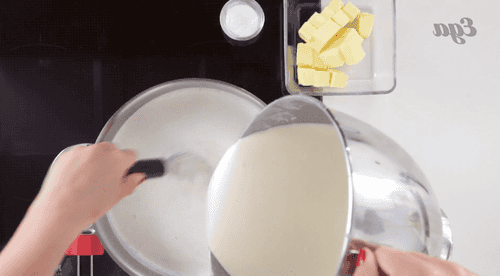
When the milk is well heated, pour in the egg mixture in a thin stream while continuously stirring. Without stopping to stir, bring the cream to a boil and turn it off as soon as bubbles appear on the surface. Add 100 grams of butter and vanillin to the hot cream. Optionally, you can add more sugar. Cool the finished cream.
- Butter: 600 g
- Vanillin: 10 g
- Sugar: 500 g
7
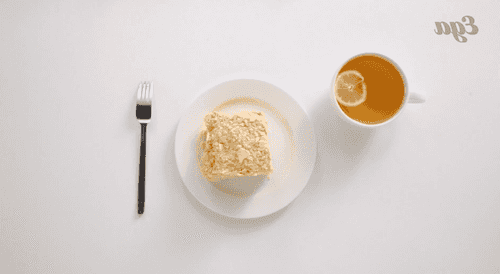
Assemble the cake on a plate, generously spreading cream on each layer. There's plenty of cream, so don't be stingy; let it drip down the sides for better soaking. Crumble the most browned layer and sprinkle it on top and the sides of the finished cake.
8
Let the cake rest for 6-7 hours, and then you can enjoy!