
Raspberry marmalade
20 servings
30 minutes
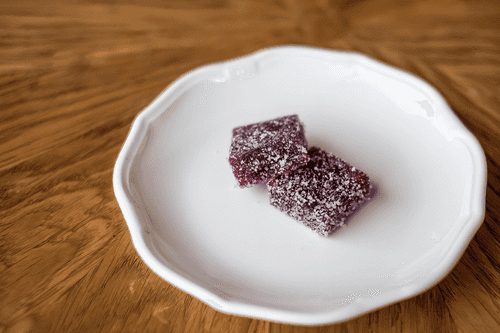
Raspberry marmalade is a vibrant embodiment of sweet artistry, combining the rich flavor of ripe raspberries with the delicate texture of a classic treat. This recipe, rooted in Russian cuisine, showcases a skillful blend of fruity freshness and the right balance of sweetness. The deep raspberry aroma unfolds through careful cooking of the berry puree, while pectin gives it a dense and elastic structure. This marmalade is perfect not only as an independent dessert but also as a decoration for baked goods and an original handmade gift. The powdered sugar coating on the pieces adds completeness to the flavor and prevents sticking together. It is a sweet delight that evokes memories of warm summer days and pleases both adults and children.
1
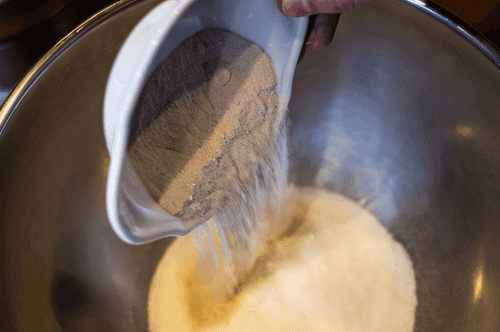
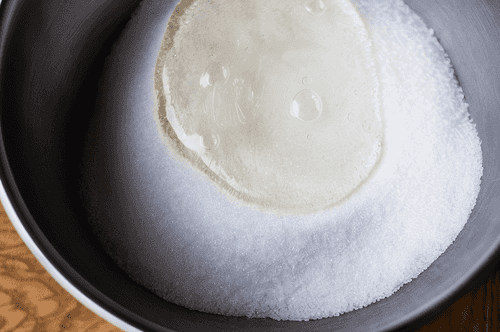
How to mix 20 grams of yellow pectin and 300 grams of sugar properly. This is necessary so that the pectin does not remain in lumps in the future and evenly incorporates into the berry puree. If the pectin clumps in the puree, a moisture capsule forms around it, leaving powder inside.
- Yellow pectin: 20 g
- Sugar: 1160 g
2
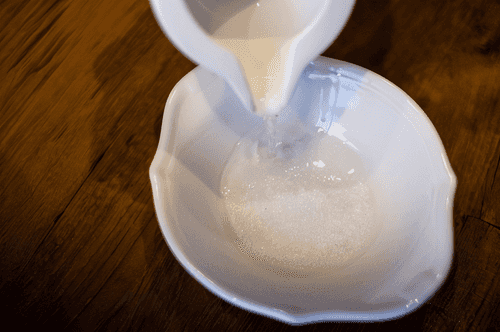
Pour 860 grams of sugar into a separate container and add 200 ml of glucose. Leave it as is, without mixing.
- Sugar: 1160 g
- Liquid glucose: 200 g
3
In a separate container, dissolve 7.5 grams of citric acid in 7.5 ml of water. The preparation stage is complete.
- Citric acid: 8 g
- Water: 8 ml
4
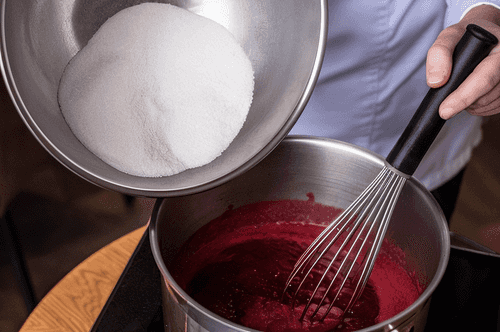
Bring the raspberry puree to a boil over medium heat, stirring to prevent it from burning. Add the mixture of pectin and sugar to the puree, immediately mixing everything with a whisk. Cook over medium heat, constantly stirring with a whisk until the sugar and pectin are completely dissolved while reducing the puree. This process will take about 5 minutes.
- Raspberry puree: 1 kg
- Yellow pectin: 20 g
- Sugar: 1160 g
5
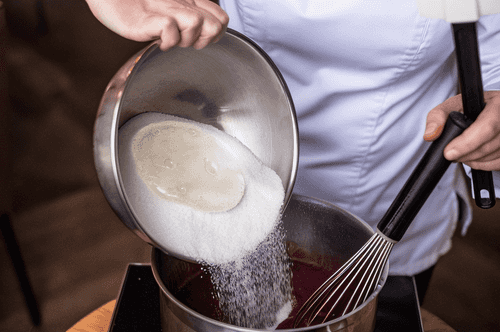
Then add sugar with glucose and continue to boil the mixture while stirring until the sugar dissolves. This time it will take about 10 minutes to boil. During this time, the mixture will become thicker and denser.
- Sugar: 1160 g
- Liquid glucose: 200 g
6
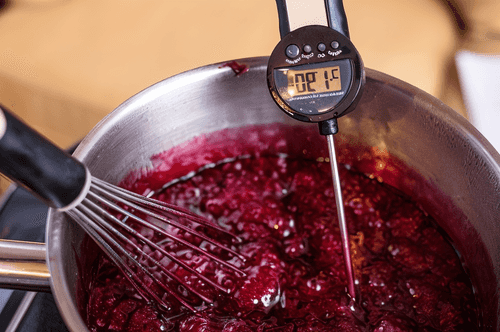
The boiling process should be stopped when the temperature inside the mass reaches 106 degrees (an electronic cooking thermometer is essential!). Measuring the temperature is necessary to understand that the mass has reached the desired density. For most jellies, this is 106 degrees. For jellies made from acidic products with high moisture (like lemon or pineapple and, by the way, pear), it is 107 degrees. One degree matters: jelly made from pear stopped at 106 degrees cannot be sliced; it will stretch behind the knife, meaning its density will be insufficient.
7
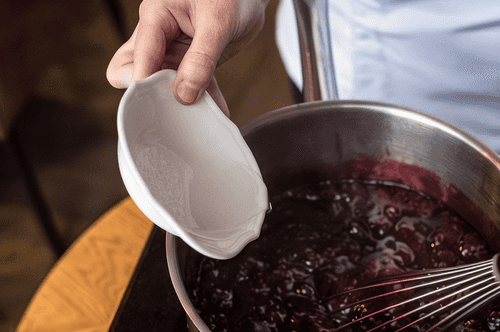
Add diluted citric acid, remove the mixture from heat, stir well to evenly distribute the acid, and immediately pour into molds.
- Citric acid: 8 g
- Water: 8 ml
8
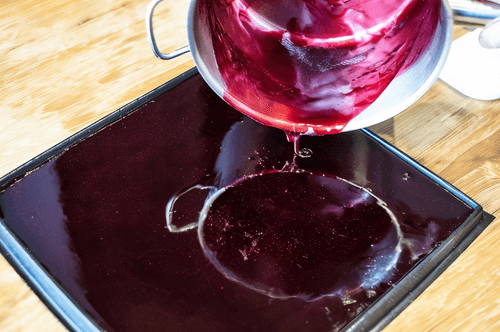
Hot marmalade must be poured into molds very quickly because citric acid activates pectin, which starts to gel the liquid. After 2 minutes, the mass will thicken and set, making it very difficult to pour. Pour the mass into a large tray. Let the marmalade cool for 30 minutes, then cover it with plastic wrap so that it makes contact and place it in the refrigerator for 6-8 hours.
9
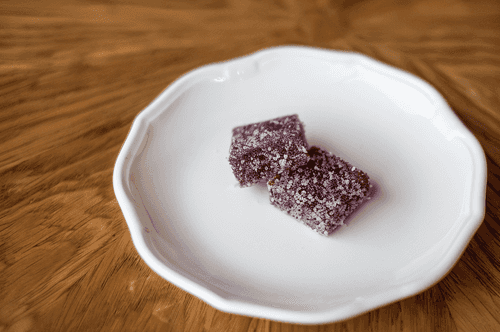
Cut the ready-made marmalade and sprinkle it with sugar before serving. It is needed for beauty and will also prevent different pieces from sticking together. Marmalade can be stored for about a month or even longer. After all, it is essentially formed jam.
- Sugar: 1160 g