
Pho-bo - Vietnamese soup
6 servings
210 minutes
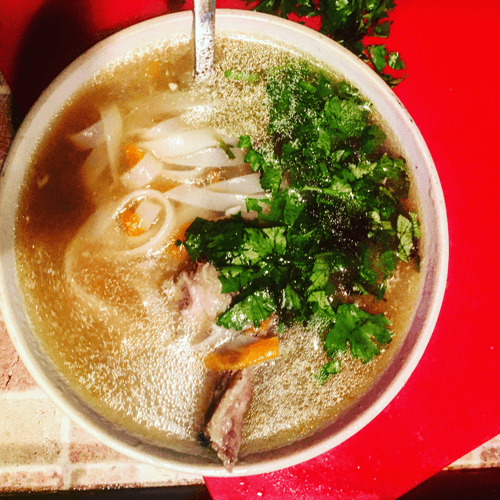
A recipe for a real tasty Vietnamese Pho-bo, slightly simplified by me, so as not to die a heroic death in the kitchen. Since there are many ingredients and it is easy to get confused, I will divide the recipe into three chapters: broth, bowl and herbs. The final step is to pour the broth over everything in the bowl and serve the herbs separately.
1
CHAPTER 1. Broth. We wash the meat for the broth (shank), fill it with cold water, and put it on the fire.
- Beef shanks: 1 kg
2
While the future broth is boiling, prepare the onion and ginger: slice them into 1-1.5 cm thick rounds and roast them over an open flame (save half an onion for the grand finale). If you don't know where to find an open flame, turn to the gas stove (yes, you'll have to sacrifice its cleanliness and place the rounds directly on the burner, turning them occasionally until they soften slightly. A charred surface on the onion and ginger is not only allowed but welcomed). If you don't have a gas stove, do the same in a dry pan. In any case, don't forget to turn on the extractor fan — the smoke will be thick. Let them cool a bit, scrape off the black burnt spots with a knife, and rinse under water. And don't be scared — it's not as difficult and long as it seems.
- White onion: 2 heads
- Ginger: 100 g
3
We remove the foam from the boiling broth, add the burnt ones, star anise, cloves, whole cinnamon, salt with sugar, and fish sauce. Cover with a lid and forget about it on low heat for 1.5 hours.
- Anise (star anise): 5 piece
- Carnation: 6 pieces
- Cinnamon: 1 piece
- Salt: 1 tablespoon
- Fish sauce: 4 tablespoons
- Sugar: 1 tablespoon
4
After 1.5 hours, we remove most of the meat (leaving the bones and remaining meat for another 1.5 hours). We soak what we removed in cold water for 10 minutes to prevent the meat from darkening and drying out. We set it aside until the second chapter. As you guessed, we did this to prevent the meat from turning into something tasteless, making it enjoyable to savor in the finished soup.
5
When the broth has been boiling for at least 3 hours, turn it off and strain it. Taste the broth—it should be slightly oversalted and very rich in spices. If not, feel free to add salt, sugar, or fish sauce. When we pour this broth over fresh herbs and noodles, everything will balance out.
6
CHAPTER 2. Bowl. I prepare the contents of the bowl while the broth is cooking.
7
We boil the rice noodles as indicated on the package. Since I usually cook more than once or twice, after boiling I cool them with cold water and twist them into portioned nests for convenience. I place one such nest in each bowl.
- Rice noodles: 300 g
8
The meat we saved from complete boiling and took out of the broth after an hour and a half, I slice thinly and put in a bowl.
- Beef shanks: 1 kg
9
Raw beef tenderloin, slightly frozen in the freezer and sliced into the thinnest slices, is sent there. When we pour all this with scorching broth, the pieces should change color except for the appetizing pink center. It’s worth mentioning that the meat should be of the highest quality. If you are not sure of its 100% kosher status, it’s better to skip this point and add more cooked meat.
- Beef tenderloin: 300 g
10
CHAPTER 3. Herbs. The simplest! Wash everything, detach cilantro, mint, and basil from the stems (don’t chop, keep it large). Slice green onions and lime into rings, and onion into the thinnest rings. Chili can be dried, fresh, any color, or even sauce (my favorite is sriracha). Place all this on a separate plate, and when you pour the results of chapter two over the results of chapter one, sit at the table to savor, and generously dip your favorite herbs into the steaming appetizing bowl.
- Fresh cilantro (coriander): 1 bunch
- Green onions: to taste
- Mint: 1 bunch
- Green basil: 1 bunch
- Chili pepper: to taste
- Lime: 1 piece
- Bean sprouts: to taste