
Lagman
8 servings
180 minutes
Lagman has such a long history - like the noodles that are pulled for it. The Uyghurs consider it their own, but the Uzbeks consider it theirs too. As do the Chinese, who call it lamian. And lagman also has a distant Japanese relative, ramen.
1
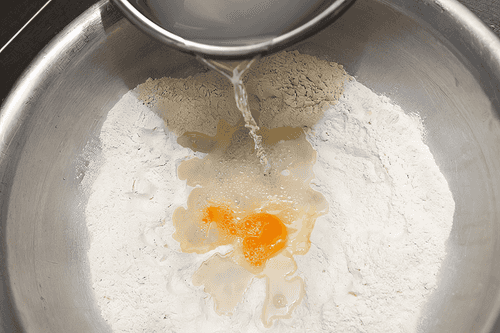
Dissolve salt (20 g) in one and a half glasses of cold water. Pour flour into a basin and crack an egg into it. Gradually pouring in the salt solution, knead the dough. It should be elastic, not too soft, but also not too hard, so all the solution may not be needed. Cover the finished dough with film and leave it for two hours.
- Salt: 30 g
- Wheat flour: 1 kg
- Chicken egg: 1 piece
2
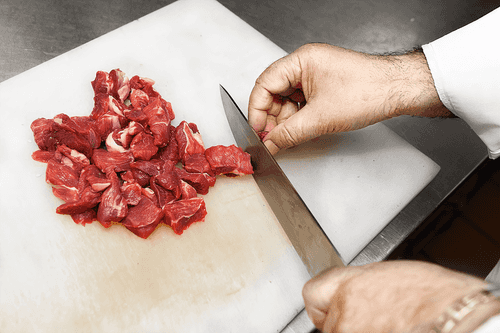
Meanwhile, clean and chop the onion, sweet pepper, tomatoes, beans, celery stalks, and garlic into fairly large pieces. Cut the lamb (meat) into medium-sized cubes. Heat two tablespoons of vegetable oil in a pot and cook the meat until a crispy crust forms.
- Onion: 320 g
- Sweet pepper: 420 g
- Tomatoes: 200 g
- Green beans: 120 g
- Celery stalk: 80 g
- Garlic: 120 g
- Mutton: 640 g
- Vegetable oil: 180 ml
3
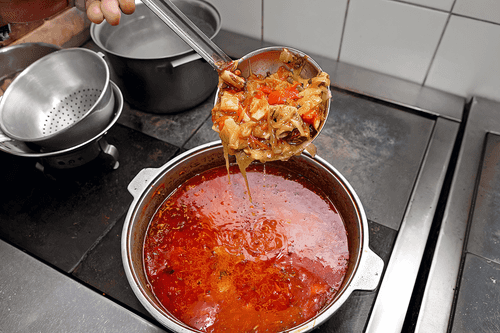
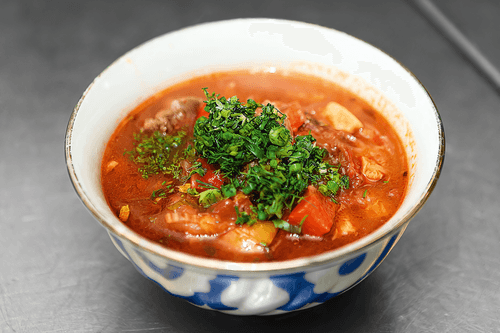
Add onion to the meat, then tomatoes a little later, garlic, celery stalks, tomato paste, and spices (except paprika) after five minutes. Simmer for one and a half to two hours. Fifteen minutes before the end, add sweet pepper, beans, and paprika, and five minutes before the end, add celery greens. Dilute the sauce with water or meat broth to the desired consistency, salt it, and bring to a boil while stirring.
- Onion: 320 g
- Tomatoes: 200 g
- Garlic: 120 g
- Celery stalk: 80 g
- Tomato paste: 120 g
- Anise (star anise): 6 g
- Coriander seeds: 6 g
- Ground paprika: 10 g
- Sweet pepper: 420 g
- Green beans: 120 g
- Celery greens: 20 g
- Salt: 30 g
4
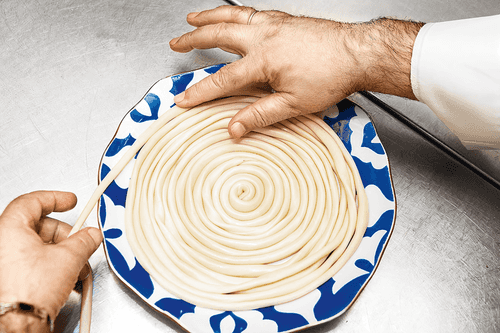
Divide the dough into several pieces. For each piece, grease with vegetable oil, knead by hand and roll it into a strand. When it becomes thin enough, gradually stretch it further by passing it between your fingers first one way and then the other. Then place the dough in a spiral on a plate and let it rest for another ten minutes.
5
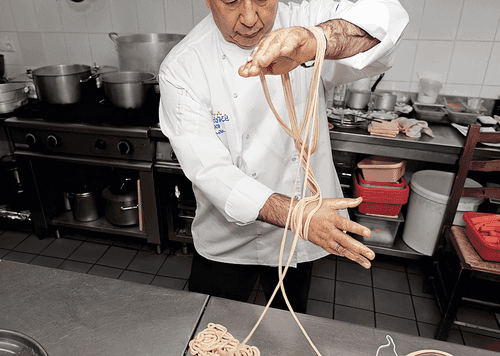
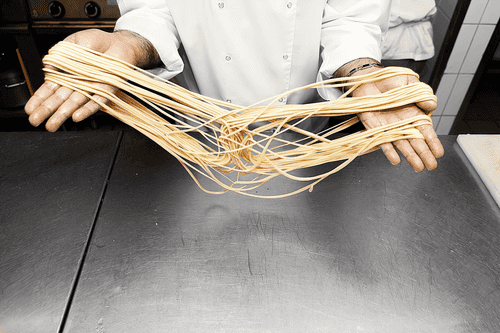
After that, stretch the noodles between your fingers a few more times until their thickness reaches about two to three millimeters. Then, connect the ends of the two dough cords and wrap them around the wrists in a figure-eight: first one, then the other.
6
Carefully, calculating the strength to avoid tearing the noodles, spread your arms and occasionally slap the table — so that the noodles' thickness approaches spaghetti as much as possible.
7
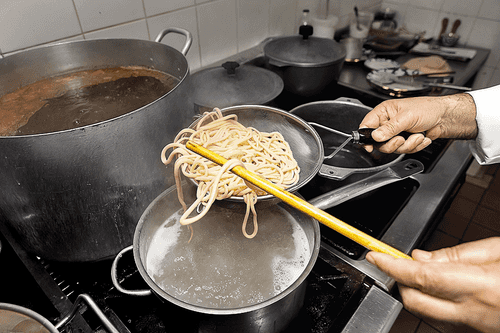
Place the noodles in a strainer, dip into boiling salted water, cook for two to three minutes, then remove and rinse with cold running water. Divide the noodles into portions.
- Salt: 30 g
8
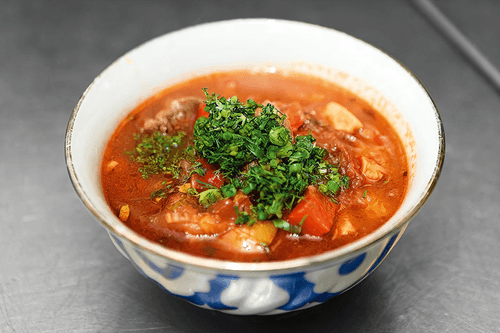
Place the cooked noodles in a sieve and blanch in boiling water - portion by portion. Arrange on plates, pour over the sauce (that's what it's called) and sprinkle with finely chopped green onions and dill.
- Green onions: 20 g
- Dill: 20 g