

Korean Kimchi
10 servings
240 minutes
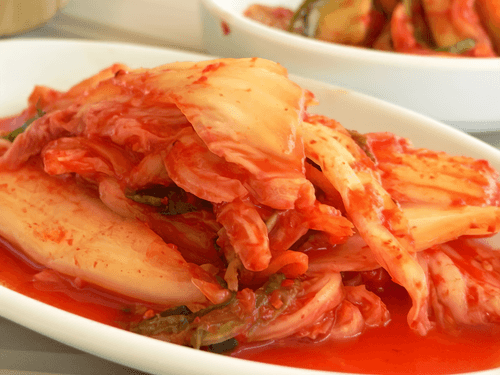
Kimchi is a symbol of Korean cuisine, a dish that combines spiciness, heat, and the rich flavor of fermented vegetables. Its history spans over a thousand years when Koreans began fermenting vegetables for long-term storage. Napa cabbage, carrots, and aromatic spices soaked in a vibrant sauce with garlic, ginger, and red pepper create a unique blend. Kimchi has a rich spicy flavor with a slight tang and characteristic crunchiness. It is not just a side dish – it complements meals, improves digestion, and fills the body with beneficial bacteria. South Koreans serve kimchi with rice, meat, and soups, and its culinary uses are endlessly diverse. The preparation process requires patience but rewards you with an unmatched taste that only gets better with each passing day.
1
We cut each cabbage head lengthwise, and each part from the base, but not all the way through.
2
Under the stream of water, gently spread the leaves so that the cabbage gets wet. Then in a large bowl, salt each leaf by sprinkling salt on them one by one. The thick stems at the base require more salt than the leaves. Place the cabbage in the bowl and leave it for 2 hours. After two hours, turn them over to the other side. This way they will be salted evenly. Leave for another 2 hours.
- Salt: to taste
3
While the cabbage is salting, we prepare the dressing. First, we need a piece of ginger, an onion, and a whole cup of garlic.
- Fresh ginger: 1 piece
- Onion: 1 piece
- Garlic: 170 g
4
Chop ginger, onion, and garlic in a processor.
- Fresh ginger: 1 piece
- Onion: 1 piece
- Garlic: 170 g
5
We make 'kissel' from rice flour. I take about 2-3 cups of water and dissolve about three tablespoons of flour with a whisk. The resulting white mixture is placed on the heat and stirred until it starts to boil. As soon as large bubbles appear, turn off the stove and add 3-4 tablespoons of sugar to the 'kissel'. Stir. Leave to cool. The resulting kissel should be thick enough.
- Rice flour: 0.5 glass
- Sugar: to taste
6
We cut the carrot and green onion as shown in the picture, into strips. South Koreans also often use radish instead of carrot or equal parts of both.
- Carrot: 1 piece
- Green onions: 1 stem
7
In a large bowl, mix the carrot, green onion, our mixture from the processor (ginger...), and the cooled rice 'gel'.
- Carrot: 1 piece
- Green onions: 1 stem
8
We add about half a cup of red pepper flakes to our dressing. You can buy '고춧가루' (Korean Red Chili Pepper Flakes) in Asian stores or grind hot peppers in a processor.
- Chili pepper flakes: 0.5 glass
9
Now it's time for the fish sauce. We pour half a cup into our dressing. Be careful, it's salty. It's sold widely in 'Asian' sections. It looks clear, light brown.
- Fish sauce: to taste
10
Well, our cabbage has been pickling for four hours now. It's time to wash it. We rinse each leaf under running water, making sure no salt remains. We squeeze the heads slightly while twisting.
11
You should get a beautiful dressing for our kimchi)) Only with this dressing will you achieve an amazing taste and aroma))) I definitely recommend wearing gloves, our beautiful hands will still be needed))) Spread the dressing on each cabbage leaf. Let pieces of carrot and green onion remain between the leaves, it will look very nice when you cut the kimchi into a salad bowl. Now shape it into a cabbage head, smooth all the leaves. Layer the cabbage in a plastic container. Leave it at room temperature for a day if you like a sour taste. Store in the refrigerator. GOOD LUCK!
- Chinese cabbage: 2 pieces