



Ghee
12 servings
60 minutes
Ghee is an ancient gift of Indian cuisine, symbolizing purity and prosperity. Its history dates back centuries when it was used not only in cooking but also in Ayurvedic medicine. Ghee has a rich nutty flavor with a slight caramel note and a velvety texture. It is perfect for frying as it doesn't burn at high temperatures and adds a subtle depth to dishes. Ghee can be used in porridge, soups, and baking; it enhances the aroma of spices and reveals the flavors of ingredients. This health elixir can be stored without refrigeration, remaining fresh for months. Adding garlic gives the ghee a piquant touch, making it an excellent complement to savory dishes. Ghee is not just an ingredient; it's a philosophy of enjoying food and caring for the body.
1
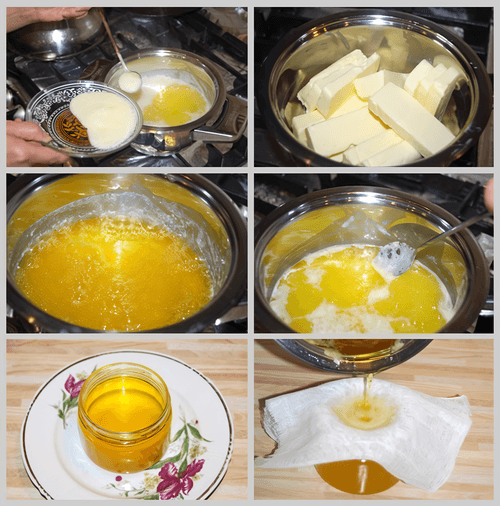
Melt the butter in a large thick-walled pot over medium heat and bring it to a boil. Don't be alarmed when it starts to bubble and froth. Just reduce the heat as much as possible and leave the pot on the stove with the lid off. Occasionally skim off the foam that forms on the surface to prevent the butter from burning.
- Unsalted butter: 1 kg
2
When the white particles at the bottom and on the walls of the pot start to turn golden-brown and the oil is clear enough to see the bottom of the pot, it's a signal to turn off the heat. If the oil is heated on too high a flame or for too long, it will darken and start to emit a pungent smell. The finished ghee has a golden color and is transparent.
3
Carefully pour the ghee through a strainer (or through 2-3 layers of cheesecloth) into a jar or clay pot and let it cool to room temperature without covering it.
4
If desired, garlic can be added, for example, it will result in garlic oil.
- Garlic: to taste