
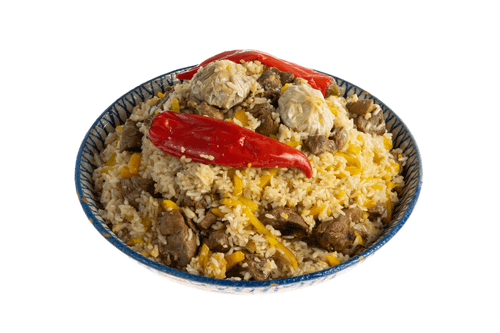
Fergana pilaf
10 servings
90 minutes
Most of the devzira rice this recipe requires is grown in the Fergana Valley. And in Fergana, as well as in neighboring Namangan and Andijan, pilaf is prepared only from it. Fergana pilaf does not tolerate any sweet additives, no raisins, only garlic and hot pepper. Less often - chickpeas and barberry. This is one of the most famous types of the great Uzbek pilaf and certainly the most canonical. Before you go shopping, pay attention - Fergana pilaf needs yellow carrots!
1
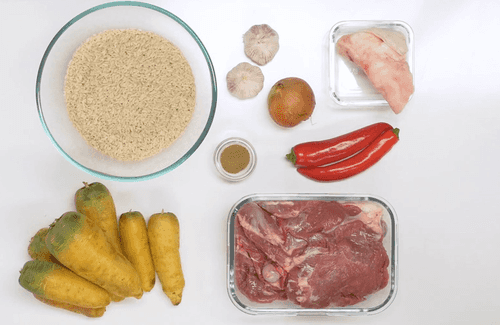
Prepare the necessary products.
2
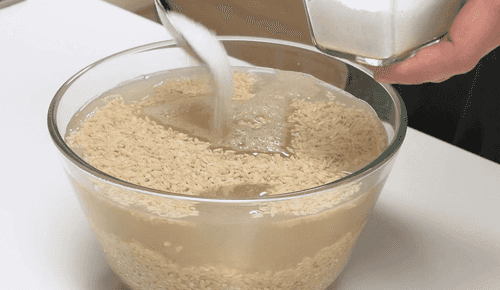
Carefully sort the devzira to ensure no small stones or splinters remain. Place the rice in a bowl, add two tablespoons of rock salt, and pour in two liters of cold water. The rice should sit like this for at least half an hour. Once you pour water over the rice, it will become almost transparent; if it turns matte, you can rinse it; otherwise, the grains may break.
- Coarse salt: 2 tablespoons
- Devzira rice: 1 kg
3
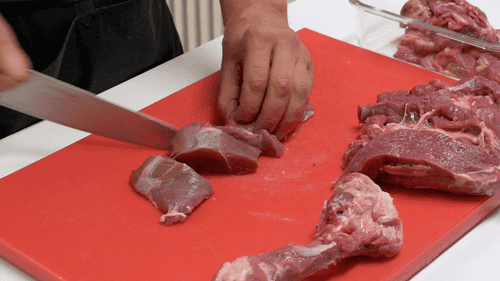
Clean the lamb from veins, membranes, and fat - if not careful, the meat may have an unpleasant odor. Remove the meat from the bone. Chop the bones into manageable pieces and cut the meat into cubes about three centimeters on each side.
- Lamb on the bone: 1 kg
- Fat tail fat: 400 g
4
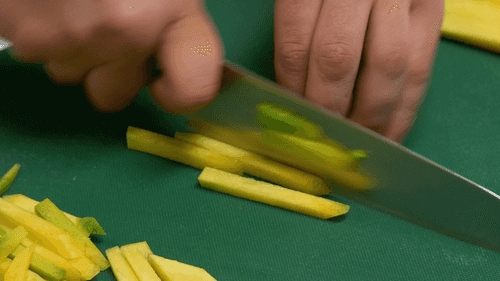
Cut the carrot into thick sticks along the length of the tuber, three to four millimeters thick. Slice the onion into not too thin half-rings or slightly smaller.
- Yellow carrot: 1 kg
- Onion: 100 g
5
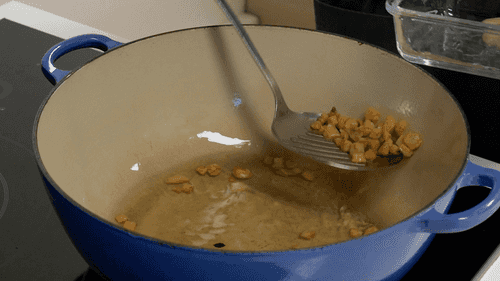
Cut the tail fat into cubes about the same size as the meat. Place it in a hot cauldron - the fat will start to bubble and melt; without stirring, wait for the bubbles to disappear, then turn the sticky lump. The fat should be rendered over medium heat to become clear. When only rendered fat and cracklings remain in the cauldron, remove them.
- Fat tail fat: 400 g
6
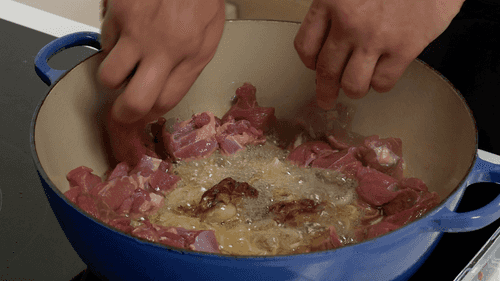
Increase the heat and heat the fat until it smokes. Fry the bones until browned, then the onion until golden. Next, place the meat along the walls. While it rests on the walls, it will heat up and not lower the temperature of the boiling fat too much. After about five minutes, stir the meat with the fat at the bottom of the pot, add cumin, and fry, stirring, until golden brown. The next step is the carrot, fry it until soft. Then pour cold water into the pot to cover its contents completely, bring to a boil, and reduce the heat to medium.
- Onion: 100 g
- Lamb on the bone: 1 kg
- Ground cumin (zira): 1 teaspoon
- Yellow carrot: 1 kg
7
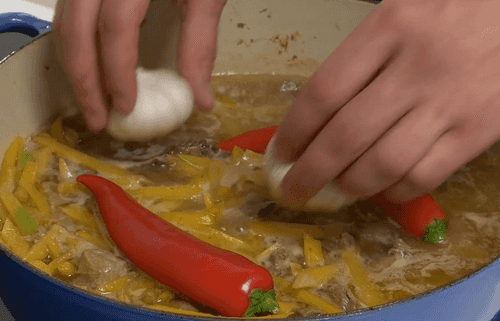
Place whole heads of young garlic, peeled from the outer skin, and chili peppers into the zirvak (the liquid medium formed in the kazan). Simmer everything together for thirty minutes.
- Garlic: 2 heads
- Chili pepper: 2 pieces
8
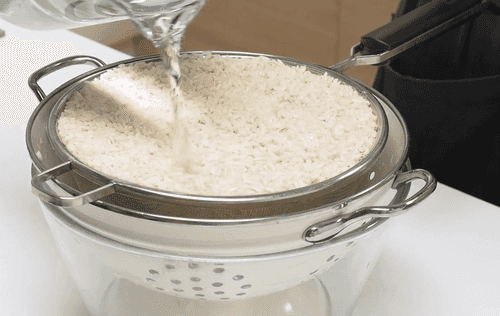
Rinse the soaked rice. Do this carefully: place a bowl under a stream of cold water and tilt it slightly to let the water flow slowly from one side. Do not rub the rice, or it will break; it's better to gently toss it in the bowl.
- Devzira rice: 1 kg
9
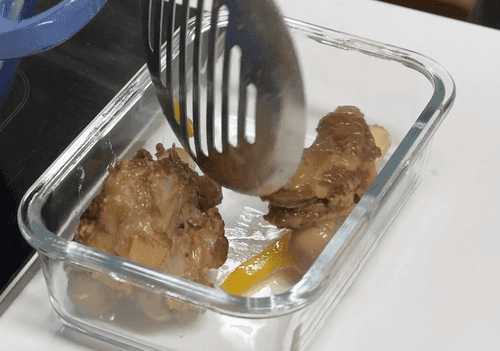
Remove the bones from the pot — if not taken out before adding rice, they will slow down cooking and create clumps of undercooked rice around each bone.
- Lamb on the bone: 1 kg
10
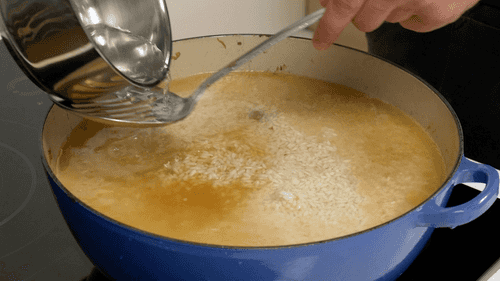
Then bring the zervak to a strong boil and evenly spread the rice over the meat. Add boiling water so that it covers the rice by one centimeter, and ensure that the boiling occurs not only in the center of the pot but also at the edges. To do this, you can move the rice from the quiet boiling area to where it is bubbling well.
- Devzira rice: 1 kg
11
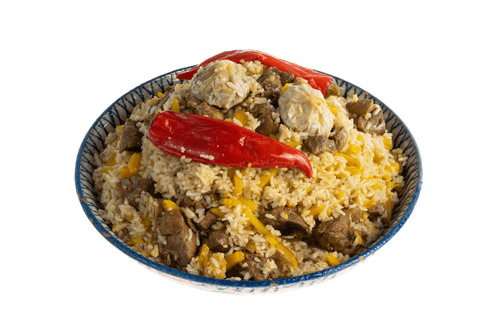
Cook the rice to almost full readiness — about 90% done, which is the state when you taste it and think: almost, just a little more. If the rice is still raw and the water has evaporated, you can add a little boiling water. At the very end, increase the heat, cover the pot, and let the zervak boil actively so that the fat rises to the top and absorbs into the rice. Finally, reduce the heat to the minimum and let it rest for twenty minutes.
- Devzira rice: 1 kg