
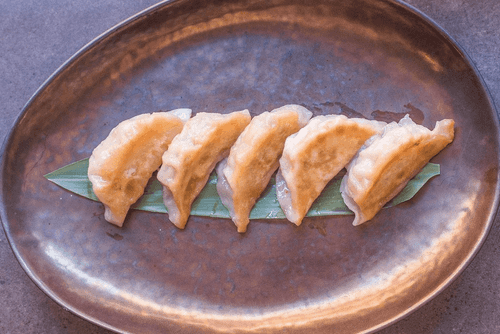
Gedza with shrimps
4 servings
60 minutes
Gedza are Japanese fried dumplings. Compared to Russian dumplings, they are light, do not leave a feeling of heaviness, or strong satiety. They have relatively little dough (and it is very thin, weightless) and a lot of filling.
1
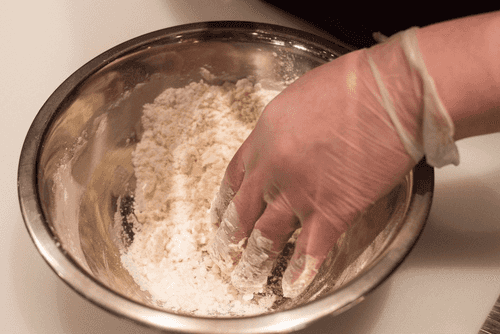
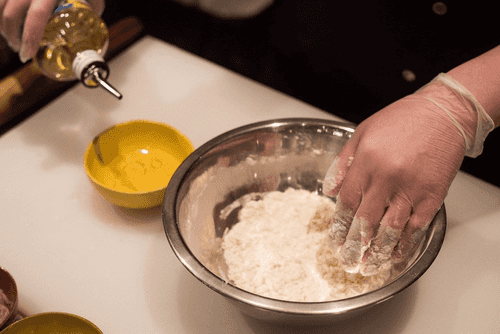
Combine wheat and rice flour, corn and 35 grams of potato starch in a bowl with baking powder and a pinch of salt, then add the egg white of 1 egg. Mix the dough by hand until all ingredients are combined.
- Wheat flour: 30 g
- Rice flour: 10 g
- Cornstarch: 10 g
- Potato starch: 50 g
- Baking powder: 2 g
- Salt: to taste
- Egg white: 1 piece
2
Add 2 tablespoons of water and a few drops of vegetable oil, and knead the dough. It should be similar to plasticine: not too stiff, not too liquid, but very elastic and pliable. Similar to dumpling dough but drier. The dough needs to be kneaded well until it becomes smooth and shiny, then cover with plastic wrap and leave at room temperature for 30 minutes.
- Vegetable oil: to taste
3
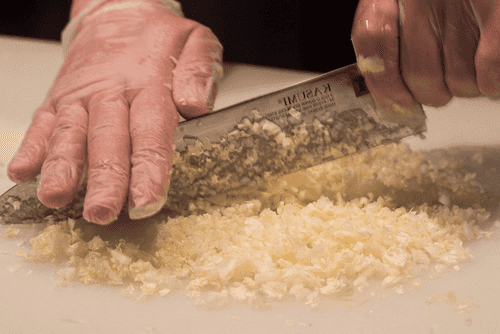
Chop the Chinese cabbage finely with a knife. Then squeeze the cabbage through cheesecloth to remove excess moisture. Also finely chop 15 grams of boiled starch noodles, the white part of leek, garlic, and green onions.
- Chinese cabbage: 250 g
- Funchoza: 15 g
- Leek: 6 g
- Garlic: 1 clove
- Green onions: 8 g
4
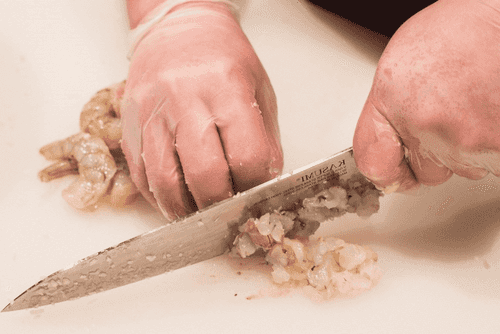
Chop the shrimp, but not as finely as the cabbage and noodles.
- Tiger prawns: 120 g
5
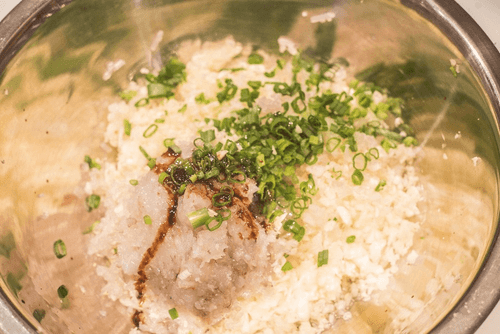
Combine all chopped ingredients for the filling, add a teaspoon of vegetable oil, 6 ml of soy sauce, dashi powder, and a pinch of salt and black pepper. Mix the filling by hand, divide it into portions of 15 grams each, and shape them into balls.
- Vegetable oil: to taste
- Soy sauce: to taste
- Dashi powder: 4 g
- Salt: to taste
- Ground black pepper: to taste
6
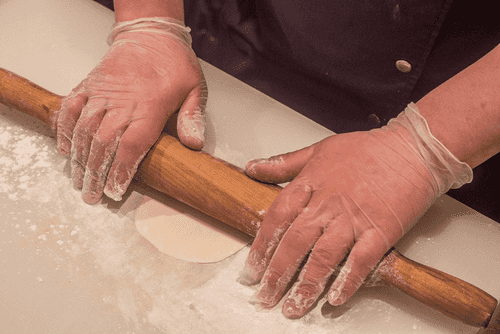
Prepare the dough by tearing off pieces weighing about 5-6 grams. You can use 8 grams, but the gyoza will be heavier, although easier to roll and shape. Immediately cover the divided dough with plastic wrap to prevent it from drying out and cracking. Dust the board and rolling pin with potato starch. Take a piece of dough, wet your fingers, drop a little water in the center of the circle, and wrap the moisture inside the dough (without moisture, it may crack while rolling). Knead the dough for a minute. Then roll out a portion of dough with a rolling pin until the diameter reaches about 11 cm. Do not stop during this process; otherwise, the dough will dry out instantly and start tearing instead of stretching elastically. Continuously sprinkle starch on the board and rolling pin. If the edges are uneven, trim them with a pastry ring. The 11 cm diameter dough will be very thin. Immediately cover the rolled-out circle with plastic wrap to prevent it from drying out. Roll out all the dough this way.
7
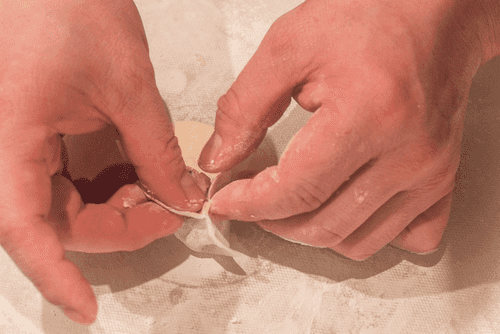
Place the minced meat in the center of the circle. Then moisten your finger with water and run it along half of the dough's circumference — and immediately start shaping. A second's delay — and the water will dry, making the dough unworkable. Start folding the moistened part of the circle over and sticking it to the opposite dry part. You will get 5–6 overlaps.
8
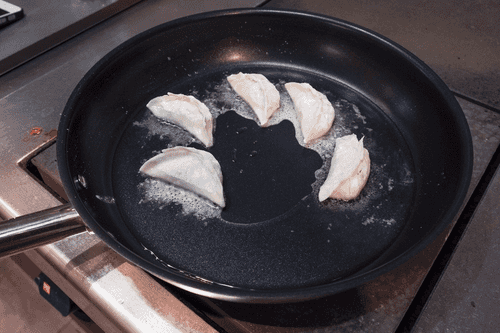
The glued nests should be prepared immediately. First, fry them in a heated pan with vegetable oil and a pinch of starch on the bottom side until golden brown. This will take about 3-4 minutes.
- Vegetable oil: to taste
- Potato starch: 50 g
9
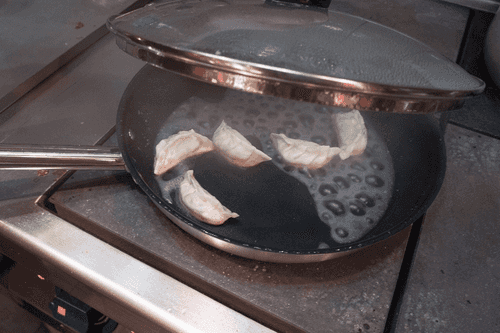
Melt the oil. After that, pour water into the pan so that it covers the bottom with a thin layer, cover with a lid, return to heat and wait for the water to evaporate. Then repeat the process. If the gyoza are not transparent, repeat once more. The cooking speed depends on how thinly the dough is rolled: the thinner it is, the faster they will cook. Serve gyoza with soy sauce and a drop of sesame oil.
- Soy sauce: to taste
- Sesame oil: to taste