


Honey cake with custard
6 servings
150 minutes
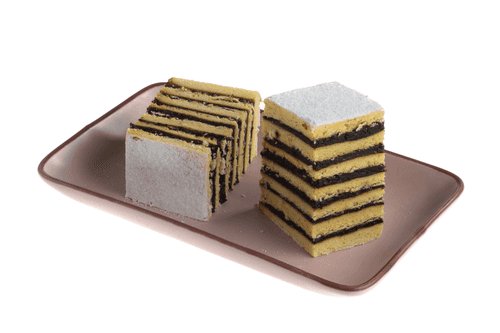
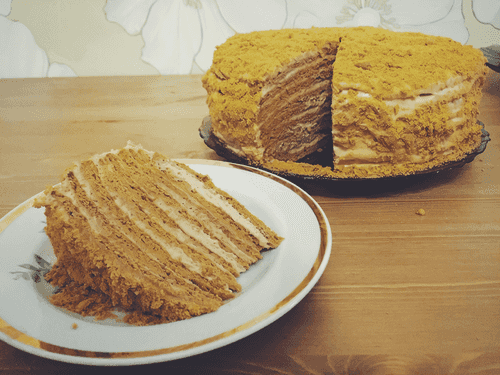
Medovik with custard is a true masterpiece of European cuisine, infused with the aroma of honey and the tenderness of cream. This cake has deep roots in Eastern European baking traditions, where honey layers symbolized festive gatherings. Its taste is a harmony of caramelized honey sweetness and creamy softness, creating a unique texture. It is perfect for cozy family tea times, formal events, or simply enjoying the moment. The honey layers soaked in cream become incredibly tender, and the light creamy flavor adds sophistication. Each slice of this cake is a small gastronomic story connecting past traditions with present-day taste pleasures.
1
For the cream: Whisk 1 egg and starch well to avoid lumps! Slightly heat the milk and mix it with the egg-starch mixture. Place on low heat, cook for about 10 minutes, stirring continuously, until thickened (I cook for 4-5 minutes on medium heat). Cool the mixture (cover with film to prevent a crust) to room temperature.
- Chicken egg: 4 pieces
- Cornstarch: 3 tablespoons
- Milk: 300 ml
2
Add boiled condensed milk and stir.
- Boiled condensed milk: 300 g
3
In a cold bowl, whip the chilled cream to stiff peaks. Then, carefully add the whipped cream to the completely cooled milk-pastry mixture using a spatula. ** This should be done in 2-3 additions, moving the spatula from bottom to top in scooping motions. Place the cream in the refrigerator.
- Cream 35%: 400 ml
4
Whisk sugar with 3 eggs until a fluffy, white mass forms.
- Chicken egg: 4 pieces
5
Place the honey in a thick-bottomed pot and heat it to 50 degrees. Add baking soda to the hot honey (the mixture will foam) and, stirring constantly over medium heat, bring the mixture to a dark caramel color. ** ** This procedure gives the biscuit a beautiful amber color. Remove the honey mixture from the heat.
- Honey: 100 g
- Soda: 1.5 teaspoon
6
Mix hot honey (one spoon at a time) into the whipped eggs with sugar, stirring constantly to prevent the eggs from curdling.
- Honey: 100 g
7
Pour in the melted butter.
- Butter: 100 g
8
Add sifted flour in 2-3 portions. Knead a very soft and very sticky dough.
- Wheat flour: 400 g
9
I immediately add 350 g of flour, then add another 50-100 g if needed.
- Wheat flour: 400 g
10
The dough may seem liquid and you might want to add more flour - don't do it, after the dough cools, it will become denser and harder to roll out.
11
Shape the dough into a sausage, wrap it in film, and refrigerate for 30-40 minutes. ** After cooling, the dough becomes less sticky and easier to roll out. Divide the dough into 8-9 equal parts. Form a ball from each part.
12
Preheat the oven to 170 - 180 C. Roll out the dough from the ball (dusting with flour), transfer it to baking paper, and prick with a fork. Bake on a tray for 5-7 minutes. While one is baking, roll out the next.
13
Remove the cake from the oven and, without letting it cool, cut out a circle of the desired diameter (I used a pot lid as a stencil). Set aside the scraps. Bake all the cakes this way, and brush off any flour residue with a soft brush.
14
Assembly: Line the bottom and sides of a removable mold with food film. ** This technique will make the cake more even and better soak the sides with cream.
15
Place the first layer in the form, generously spread cream on it (don't skimp on the cream!), sprinkle a small amount of crumbs from the layers, cover with the second layer, and so on with all the layers.
- Cornstarch: 3 tablespoons
16
Put the cake in the fridge for a few hours (preferably overnight).
17
Carefully remove the chilled cake from the mold, generously coat the top and sides with cream, and sprinkle with crumbs. Decorate the cake and put it back in the refrigerator to let the layers soak in the cream.