
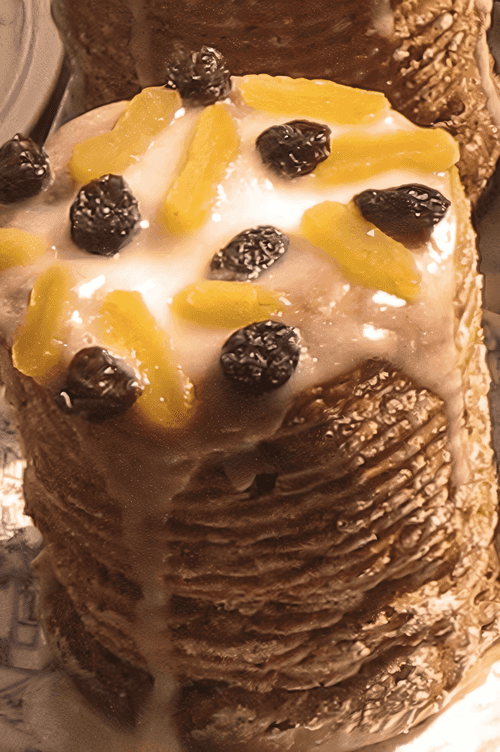
Kulich with raisins in glaze
10 servings
360 minutes
The glazed Easter cake with raisins is a traditional Russian pastry symbolizing the holiday, family warmth, and spring renewal. Its history traces back to ancient Slavic rituals where baking played an important role in celebrating Easter. The dough is tender and airy, enriched with butter, cream, and eggs, giving the cake a rich flavor and softness. Raisins add sweet notes while the glaze creates an appetizing shiny crust. This cake is not just a treat but an essential part of the festive meal that decorates the table and creates a celebratory atmosphere. Its taste is a harmony of sweetness and tenderness that pairs perfectly with tea or milk. The cake is served whole and cut into portions so that the whole family can enjoy its rich flavor and symbolic meaning.
1
Dissolve the yeast in a small amount of warm water or milk with a spoonful of sugar. Cover the container with a napkin, place it in a warm spot, and wait for about 20 minutes until it rises (starts bubbling).
- Dry yeast: 25 g
- Milk: 500 ml
- Sugar: 1 glass
2
Melt the butter in milk, cool to warm, combine with yeast and flour, mix (to pancake thickness), cover the container with a napkin, place in a warm place, and let rise (for about 15-20 minutes).
- Butter: 250 g
- Milk: 500 ml
- Wheat flour: 700 g
3
Break 5 eggs, add a pinch of baking soda, salt, cream, and more flour (the dough should not be stiff; knead the dough for a long time until it stops sticking to your hands and the sides of the bowl; it should become shiny, smooth, and elastic (20-25 minutes).
- Chicken egg: 5 piece
- Soda: pinch
- Salt: pinch
- Cream 25%: 100 ml
- Wheat flour: 700 g
4
Cover the dough container with a clean towel and place it in a warm place.
5
When the dough volume doubles, add raisins (washed and dried beforehand; avoid using blue raisins as they color the dough and create an unappealing effect), mix well and cover again with a towel, leaving it in a warm place.
- Seedless raisins: 400 g
6
Meanwhile, grease the inside of the molds with vegetable oil and sprinkle with breadcrumbs or semolina, lining the bottom with greased paper.
7
Place the dough in two-thirds of the mold's volume and let it rise in a warm place.
8
Preheat the oven to 175 degrees.
9
Bake for 45–60 minutes, check readiness with a skewer — if the top is browned but the kulichs are not cooked through, cover the top with foil.
10
Decorate the ready kulich with icing, nuts, powdered sugar, etc.