



Bagels with soft cream cheese and salmon
8 servings
120 minutes
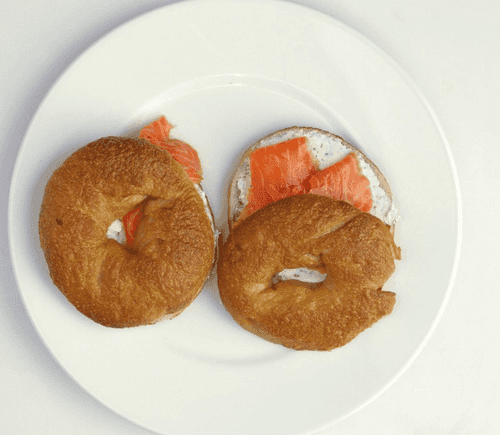
Bagels with soft cream cheese and salmon are an exquisite combination of airy dough texture, rich creamy cheese flavor, and delicate saltiness of salmon. The origins of bagels trace back to Eastern European Jewish cuisine, where they were valued for their dense, slightly chewy texture and golden crust. This salmon variant gained popularity in New York, becoming a symbol of refined breakfast. The crispy crust, soft and elastic crumb, creamy cheese texture, and slight oiliness of the fish create a perfect balance of flavors. They are great for leisurely morning enjoyment with a cup of freshly brewed coffee or as an elegant snack throughout the day. They can be complemented with fresh herbs, capers, or slices of red onion to add new flavor nuances.
1
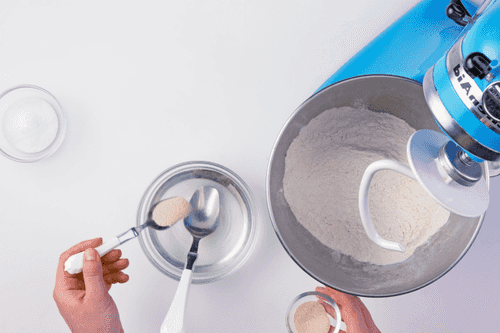
In a bowl, mix 1 tablespoon of honey, yeast, and 1.5 teaspoons of salt with 1 cup of warm water. In the mixer bowl, add flour and pour in the yeast mixture. Knead the dough with the hook on the lowest speed for 3 minutes. The dough should be dense, elastic, and moist. If the dough is too dry, add a little more water. Let the dough rest for 5 minutes.
- Honey: 2.5 tablespoons
- Dry yeast: 1 tablespoon
- Salt: 2.5 teaspoons
- Wheat flour: 454 g
2
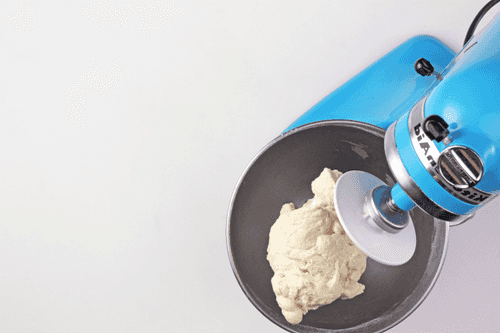
Continue mixing the dough in the mixer on low speed for another 3 minutes. If desired, you can transfer the dough to a lightly floured surface and knead it by hand instead of using the mixer to make the dough more uniform and start forming gluten. If the dough is sticky, add a little more flour.
- Wheat flour: 454 g
3
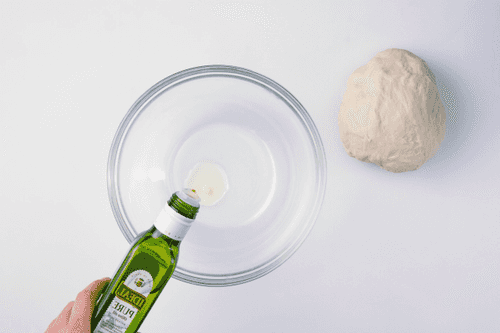
Transfer the dough to a lightly greased bowl, cover tightly with plastic wrap, and let it rise at room temperature for 1 hour.
- Olive oil: to taste
4
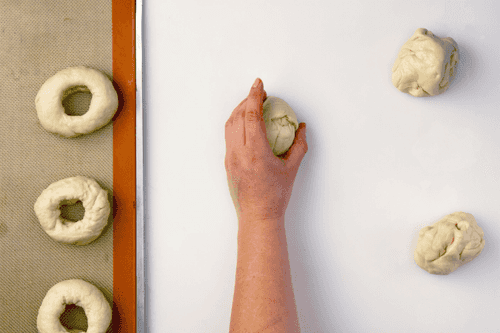
When the dough has risen, prepare a baking tray by lining it with parchment paper or a silicone mat. Lightly grease the surface with vegetable oil. Divide the dough into equal pieces of 113 grams. Form balls. Do not sprinkle flour on the work surface, just wipe it with a damp cloth — this will provide the necessary friction. Make a hole in the middle of the ball with your thumbs. Carefully rotate the dough around your thumbs to stretch it to the desired diameter. Transfer the bagels to the prepared tray, lightly spraying oil on top. Cover with plastic wrap and leave in the refrigerator overnight.
- Olive oil: to taste
5
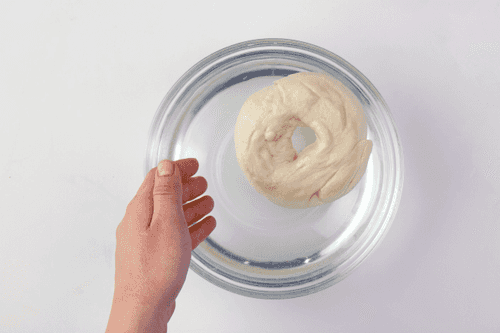
Take the bagels out of the fridge and let them sit at room temperature for 1-1.5 hours. Pour cold water into a bowl. Dip one bagel into the bowl: if it floats, you can start cooking; if not, dry it and leave it at room temperature for another 15-20 minutes. Then test again.
6
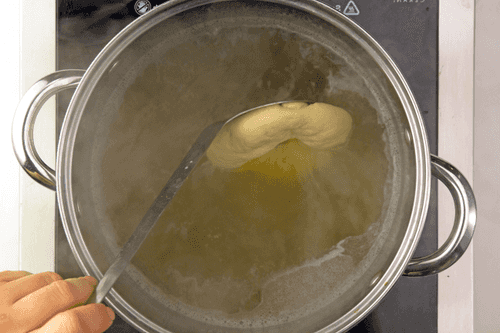
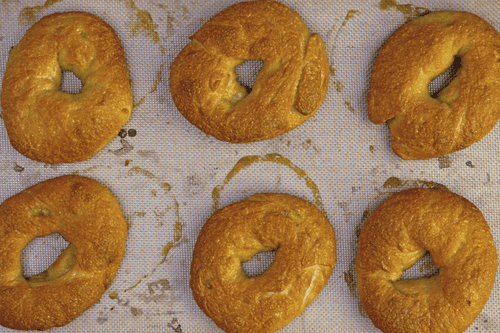
Preheat the oven to 260 degrees. In a pot, bring 2 liters of water to a boil, reduce the heat, add 1.5 tablespoons of honey, baking soda, and 1 teaspoon of salt. Slowly lower several bagels into the pot. They should float within 15 seconds. After 1 minute, flip them. Boil for another 30-60 seconds, remove with a slotted spoon, and transfer to a baking sheet.
- Honey: 2.5 tablespoons
- Soda: 1 tablespoon
- Salt: 2.5 teaspoons
7
It is important that the baking sheet is covered with greased parchment paper; otherwise, the bagels will stick. Sprinkle with poppy seeds, sesame seeds, or other toppings. Place the baking sheet in the oven and bake for 15-20 minutes at a reduced temperature of 232 degrees. After 8 minutes, check the bottom of the bagels; if it is too dark, place another baking sheet under the one with the bagels.
8
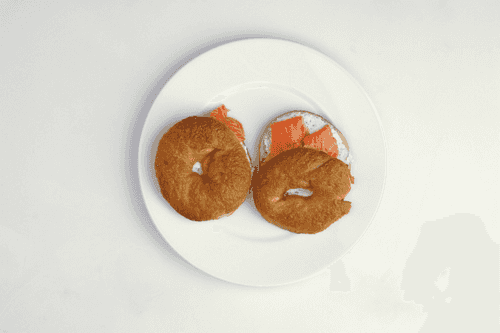
Let cool for 30 minutes. Cut the bagels in half, spread each half with cream cheese, and top with a slice of salmon.
- Cottage cheese: 400 g
- Lightly salted salmon: 400 g