


Oriental pilaf in urban conditions
6 servings
105 minutes
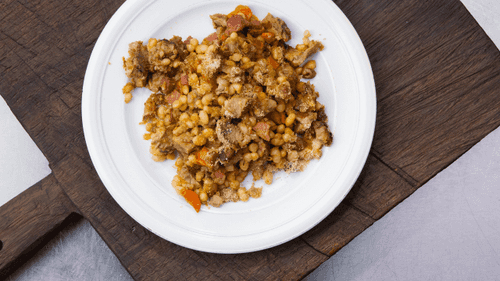
Eastern pilaf in urban conditions is an adaptation of the famous Uzbek dish, allowing one to enjoy its rich flavor even without a traditional fire. This pilaf is characterized by a strong aroma of spices, tender meat texture, and a golden hue of oil-soaked rice. Its flavor base includes sautéed meat, carrots, and onions that create a unique balance of sweetness and umami. Added chickpeas provide density and a nutty note. The pilaf is cooked in a cast-iron cauldron or duck pot, with a final pinch of barberry adding a slight tanginess. This dish is suitable for family gatherings and friendly meetings, and its richness makes it a complete meal that doesn't require additional side dishes.
1
Prepare a cast iron cauldron (or at least a duck pan) with a volume of 4-5 liters.
2
Preparation: rinse the pork meat and place it on a cutting board. Separate the fat layer (lard) and cut all the fat into small cubes. Place the pot on the stove (on high heat) and add the fat cubes. Let it render for about 10 minutes (traditionally, lamb fat is used, but it's hard to find in my city, as well as fresh lamb).
- Pork: 800 g
- Pork: 800 g
3
Cut the meat into large chunks (see 4-5). Peel the onion and carrot. Cut the carrot into strips 4-5 cm long, and the onion into half rings.
- Carrot: 300 g
- Onion: 300 g
4
When the fat in the cauldron has melted and turned into black cracklings — remove them with a slotted spoon and throw them away. You can leave them for those who like cracklings.
5
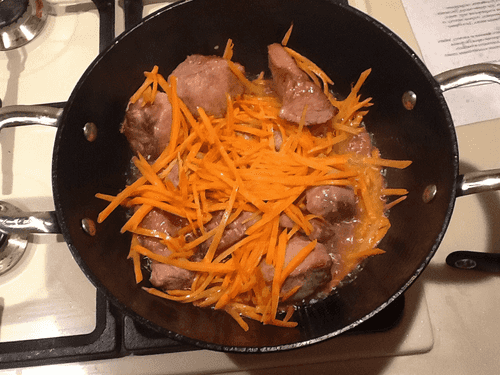
Add meat to the boiling fat and fry. Once a crust forms, add the carrot (it should sizzle actively when added), then after 5-7 minutes, add the onion. Do not reduce the heat or cover. If there isn't enough fat, add a little vegetable oil. And salt to taste.
- Pork: 800 g
- Carrot: 300 g
- Onion: 300 g
- Spices: to taste
6
When the onion darkens, add ½ to ¾ cup of chickpeas to the pot, add 1 cup of water, reduce the heat to medium, and cover. Stew for 20 minutes. Boil 1.5 liters of water.
- Chickpeas: 0.5 glass
7
Rinse 700–800 grams of rice thoroughly (6–7 times) until the water is clear. For the last rinse, pour boiling water and let it sit for a couple of minutes. Then drain the water.
- Long grain parboiled rice: 800 g
8
Sprinkle a mixture of spices (usually 2-3 pinches) that we bought at the market on top of the kazan. If the mixture lacks cumin, you can add a pinch or two separately.
- Spices: to taste
9
Important step: reduce the heat to minimum and add the rice. Using a tablespoon (or wooden spoon), place the pre-washed and scalded rice on the surface of the meat without mixing. Hide one or two heads of washed and unpeeled garlic in the rice. Pour boiling water (gently, through a spoon) over the rice. The water should cover the rice by 1.5–2 cm. Sprinkle a pinch of barberry on top for an unforgettable tang. Add salt if necessary.
10
Cover with a lid and do not lift it for 15-20 minutes. This is where the magic begins: you need to cook the rice almost to readiness, but not overcook it. This is achieved by a combination of the amount of water, rice, and the level of heat on the stove. After a few attempts, it will definitely work.
11
Open the lid after 20 minutes. The rice has absorbed the water. Now, with smooth, gentle movements (trying not to stir), push the rice from the edges to the center to form a mound. In this mound, make several holes with the handle of the spoon for excess water to evaporate. Leave it on low heat under the lid for another 5-10 minutes. Now you can finely chop the greens (parsley, dill, green onion, and optionally cilantro).
12
Turn off the heat and let the pilaf sit covered for 10 minutes.
13
Before serving, open the lid and gently stir the contents of the pot (bottom to top, bottom to top). Serve on plates, topped with a pinch of greens, but not excessively.