

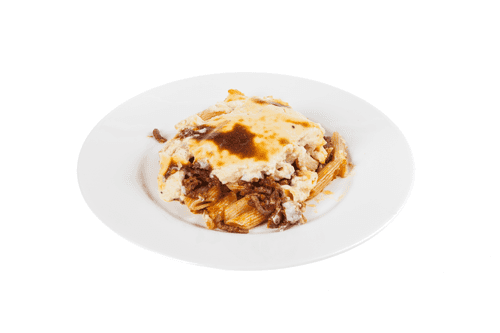
Minimalist pilaf with chicken
12 servings
120 minutes
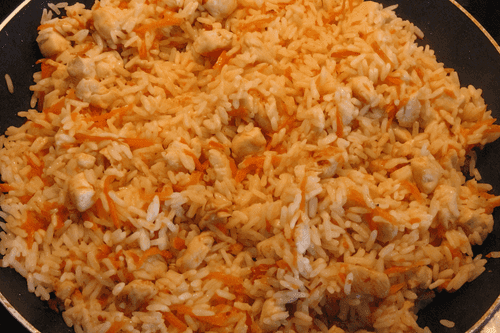
Minimalist chicken pilaf is a simplified version of the classic Uzbek dish that retains its rich flavor and aroma. Historically, pilaf is a symbol of Eastern cuisine, and its preparation is a whole ceremony. This recipe uses minimal ingredients, but each plays an important role. Sweet carrots, caramelized onions, and tender chicken fillet create a harmonious taste highlighted by traditional spices. This pilaf is easy to prepare and suitable for daily menus while maintaining the festive feel of an Eastern meal. Its uniqueness lies in the simplicity of preparation without compromising flavor. Thanks to the chicken, it is light yet still filling. It is best served hot with herbs and fresh vegetables to emphasize its rich flavor nuances.
1
Thoroughly and repeatedly rinse the rice under hot water. The water should run completely clear. Once it is clear like mountain rivers, place the rice in a bowl with hot water to soak and wait.
- Rice: 600 g
2
We take our pot or thick-walled saucepan, pour vegetable oil to the thickness of a finger (about 1 cm from the bottom), and place it on medium heat to heat the oil for the third step.
3
Cut the fillet into cubes with sides from 0.5 to 1 cm. Or larger, if you think it tastes better and is more convenient.
- Chicken fillet: 5 piece
4
Once the oil is heated and the fillet is sliced, we confidently dump all the meat into the pot. The oil starts to sizzle, and we cover this beauty with a lid and set the heat to one-third of your stove's power. Don't forget to occasionally lift the lid and stir the chicken.
5
Now comes one of the most responsible steps - chopping the onion! While the meat is simmering in the pot, we should clean and chop the onion, thus using our cooking time efficiently. We chop the onion into small cubes about 3 mm or larger, as you prefer. After about five and a half onions, it's time to remove the lid from the pot and increase the heat (I turn it up all the way) to evaporate the juice released by the meat.
- Onion: 5 head
6
The onion is chopped, the juice has evaporated (or almost evaporated), it's time to add the onion to the cauldron. You might think that the mountain of onions is higher than the western ridge of the Tien Shan, but there's no need to be scared; onions significantly reduce in volume when cooked. So, we add the onions to the cauldron, mix them with the meat, and fry until they turn golden or until they no longer look raw. There's no point in stirring it constantly, as we have things to do in the next step.
7
Now the star hour of the carrot has come! Quickly peel, wash, and grate on a large grater. By the end of the sixth step, the onion should be at the required condition. We dump all the grated carrot into the pot and mix it with what was already there. We wait, just like with the onion, for the moment when the carrot looks like a cooked vegetable.
- Carrot: 6 pieces
8
Put the kettle to boil, you'll find out its purpose later.
9
So, in the pot we have cooked meat, onion, and carrot; at this moment, we can add salt and pepper, and add spices. I added about one and a half teaspoons of salt and mixed everything thoroughly.
- Salt: to taste
- Ground black pepper: to taste
- Seasoning for pilaf: to taste
10
The most significant point of the entire preparation! It's time to add the rice. Before that, level the meat in the cauldron. Drain the water from the bowl with rice. Place the rice on the meat and level it as well. From this stage, the cooking pilaf becomes two-layered.
- Rice: 600 g
11
Now carefully pour the just-boiled water without disturbing the rice layer. The water should be two fingers above the rice surface (about 2 cm). You can add more salt now; I think one heaping teaspoon should be enough.
- Salt: to taste
12
Now the fire should be at a minimum (I had it at 1/6 power). We cover our future pilaf with a lid and wait. After about 15 minutes, open the lid and check the rice; it may need a bit more steaming. The quality and cooking time of rice can vary greatly, so you will need to taste it later; if it stops sticking to your teeth, the pilaf is ready, you can turn off the heat and let it rest a little more on the hot stove.