














Recipe Catalog
Recipes with all the words: 1. Next come recipes that match some of the words

Fresh tuna with a very simple dressing, vegetables and lettuce leaves. The main thing here is the sauce, of course. And the quality of the tuna should be good. It is not the cheapest fish meat, but for the New Year you can spend a little. If you believe in the ideas of the East , these expenses will pay off with interest.
14
1
20
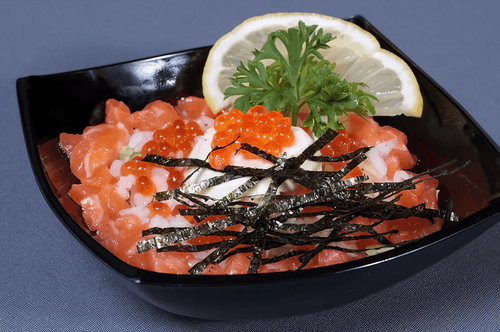
Ikura sarada is a delicate and elegant dish of Japanese cuisine that combines the freshness of seafood with the creamy softness of cheese. This salad incorporates traditional Japanese ingredients such as rice, seaweed, and red caviar, symbolizing richness and refined taste. Historically, dishes with caviar were considered delicacies, and the combination of salmon and caviar signifies luxury. The flavor of this salad is a harmony of tender salmon, crunchy cucumber, and the rich taste of caviar complemented by the softness of Philadelphia cheese. It is perfect as a festive treat or appetizer served with soy sauce that enhances the depth of flavor.
8
4
15
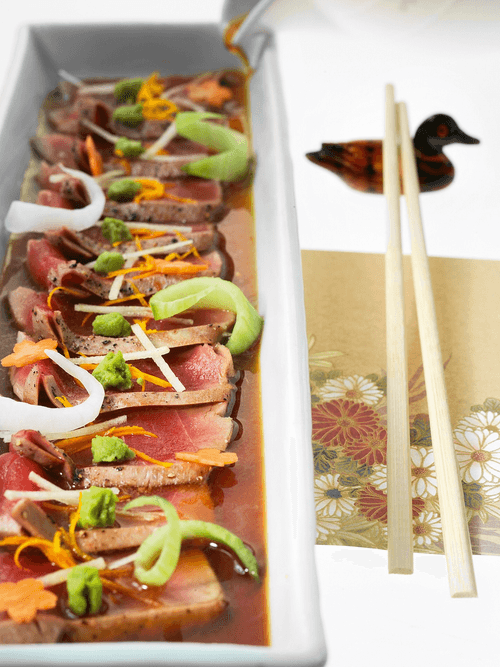
Orendzi-shoyu-maguro-tataki is an exquisite Japanese dish that combines the freshness of tuna with a refined citrus-soy flavor. The 'tataki' technique preserves the tenderness of the fish by searing it only on the outside, leaving the center nearly raw. A sauce infused with kombu and citrus notes adds subtlety and depth to the dish. A garnish of thinly sliced vegetables and apple complements the dish with freshness and a crunchy texture. Orendzi-shoyu-maguro-tataki is often served in traditional Japanese restaurants as an appetizer or light main course that pairs harmoniously with sake. With its balance of flavors—salty, sweet, sour, and spicy—it represents true gastronomic art that highlights the philosophy of Japanese cuisine: respect for ingredients and a pursuit of perfection.
8
1
10
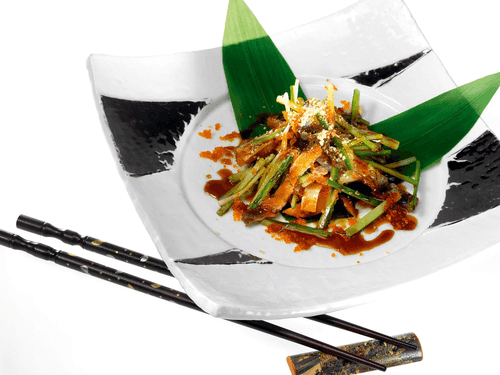
The Japanese consider skin to be a full-fledged ingredient: they cover chicken skin with a sweet glaze and fry it into kushiyaki skewers, roll up boiled pork skin into a butanika roll, and add fried fish skin to salads instead of chips. And this is not food for the poor. It's just that those important truths that the rest of the world is just beginning to come to, like reasonable consumption or waste-free technologies, have been the norm in Japan for centuries: everything that can be eaten should be eaten, everything that should decorate life should decorate it. For example, fish skin is not garbage for the Japanese, but a powerful means of expression. Fried, it looks like crispy mica and adds textural contrasts and sea notes to a vegetable salad. The result is Japanese porridge from topor , where the main feature is made of something we are used to throwing away.
5
1
20




















