










Recipe Catalog
No recipes contain all the words, showing recipes that match some of them

Kulich with raisins and lemon zest is a traditional Easter pastry rooted in Russian cuisine. It embodies celebration and joy, symbolizing prosperity and the warmth of home. The tender dough infused with lemon aroma and rich in raisin sweetness offers a harmony of flavors. Added rum gives the pastry a subtle spiciness, while toasted almonds add a light crunch. Kulich not only serves as the main decoration of the Easter table but also pairs wonderfully with tea or coffee, making any morning cozier. Its moderate sweetness and lightness make this dessert a favorite treat for the whole family. The exquisite taste of lemon zest completes the composition, adding freshness to each bite.
10
5
120

This aromatic kulich, infused with traditions and tenderness, is a true decoration for the festive table. Its base is airy dough enriched with sour cream that gives it special softness, while raisins add sweet notes. Bright orange zest fills the pastry with freshness and a light citrus tang. This recipe combines classic techniques with exquisite ingredients to create a harmony of flavors. Kulich, as a symbol of the bright holiday, is perfect for cozy family tea gatherings. It can be decorated with sugar glaze, nuts, and candied fruits to add individuality. With each piece, one feels the warmth of home and the joy of communication.
12
6
300

The raisin kulich on a sponge is a symbol of the bright holiday of Easter that comes from the depths of Russian traditional cuisine. Its preparation requires patience and skill: the sponge rises several times, creating airy dough, while raisins add sweetness and a delicate tartness. The taste of the kulich is rich, soft, slightly creamy due to the yolks and margarine, with subtle vanilla notes. This kulich not only decorates the festive table but also serves as a sacred symbol of abundance and well-being. It is delightful on its own or with a cup of fragrant tea, and its texture is so airy that each piece seems to melt in your mouth. It is baked to a golden crust and can be decorated with icing, nuts or sprinkles after cooling — making it a true decoration for the holiday.
9
6
180
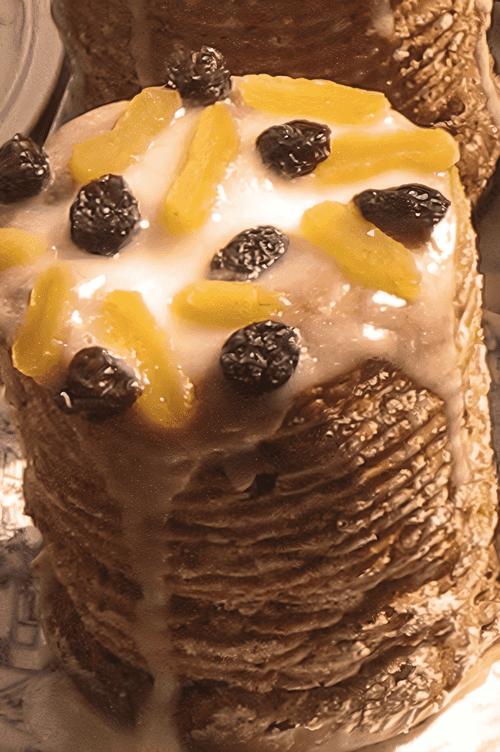
The glazed Easter cake with raisins is a traditional Russian pastry symbolizing the holiday, family warmth, and spring renewal. Its history traces back to ancient Slavic rituals where baking played an important role in celebrating Easter. The dough is tender and airy, enriched with butter, cream, and eggs, giving the cake a rich flavor and softness. Raisins add sweet notes while the glaze creates an appetizing shiny crust. This cake is not just a treat but an essential part of the festive meal that decorates the table and creates a celebratory atmosphere. Its taste is a harmony of sweetness and tenderness that pairs perfectly with tea or milk. The cake is served whole and cut into portions so that the whole family can enjoy its rich flavor and symbolic meaning.
10
10
360

Kulich with raisins and almond petals is a traditional Easter treat of Russian cuisine, symbolizing the holiday and family warmth. Its airy dough, enriched with butter, milk, and fresh yeast, acquires a delicate texture and rich aroma. The combination of dark and light raisins soaked in cognac adds sweet and spicy notes, while almond petals give a noble nutty shade. The glaze made of powdered sugar and egg white makes the kulich festive and appetizing. Its taste is a harmony of light sweetness, softness, and festive richness. Served in a ceremonial atmosphere, often accompanying tea conversations or family gatherings. This kulich is not just baked goods but part of cultural heritage connecting generations and carrying the spirit of celebration.
13
8
420

The recipe is taken from the magazine "1000 tips for the cook.
11
2
60
The recipe is taken from the magazine "1000 tips for the cook.
10
6
120

Cottage cheese and orange zest kulich-cake is an exquisite blend of traditional Russian Easter kulich and a soft cake with a rich citrus aroma. Its roots go back to Russian culinary tradition, where baked goods play an important role in festive feasts. The delicate cottage cheese flavor gives the pastry an airy texture, while the orange zest and raisins create a harmony of sweetness and freshness. Walnuts add a light crunch, making the kulich-cake even more interesting. It is perfect for family tea gatherings, especially during Easter. Decorated with sugar glaze, it pleases the eye and brings warmth to a cozy home celebration. The taste of this kulich is a combination of creamy softness, nutty aroma, and fruity freshness that creates an unforgettable culinary delight.
10
15
90

Kulich with walnuts and raisins is a traditional Ukrainian pastry that is an integral part of Easter celebrations. Its rich flavor is achieved through the combination of tender yeast dough, butter, sweet raisins, and nutty notes. This kulich symbolizes festivity and home comfort, while its aroma fills the kitchen with warmth. The fluffy texture of the dough, airy glaze, and crunchy nuts make it a true decoration for the festive table. It is perfect as a standalone treat or paired with hot tea. Kulich highlights the age-old traditions of family celebrations, bringing generations together at one table.
13
10
360

Valery Chigarnov, chef of the restaurant "L.E.S.", shared the recipe with us.
14
10
60

Blackcurrant and lemon zest cake is a refined treat that combines sweetness with refreshing tartness. This recipe has roots in Russian cuisine, where currant berries are widely used in baking due to their rich flavor. The delicate batter made from whipped eggs and milk gains an airy structure, while the lemon zest adds a subtle citrus note. The currants coated in breadcrumbs retain their shape and release aroma during baking. The finished cake is dusted with powdered sugar, creating an appetizing contrast of textures. It's the perfect treat for tea, whether it's a cozy family evening or a festive tea party. The cake turns out soft, juicy, and fragrant, harmonizing perfectly with fresh berries or creamy frosting.
7
4
60

Mulled wine with port, lemon zest, and nutmeg is a drink infused with the warmth of Portuguese traditions. It combines the rich flavor of red port wine with bright citrus notes of lemon zest and the spicy warmth of nutmeg. The sweetness of sugar softens the wine's bitterness, creating a harmonious balance. Historically, mulled wine was a popular drink in Europe, warming people during the cold season. In Portugal, it is often made with local port varieties, giving it a unique and rich flavor. This drink is perfect for cozy evenings and festive gatherings, filling the atmosphere with spice aromas. It is best served hot, lightly dusted with nutmeg to enhance the aroma. Mulled wine with port is not just a drink but a true pleasure in every sip.
5
6
15

Italian ice cream with lemon zest, or Gelato, is the embodiment of elegance and freshness in the dessert world. Its history dates back to the Renaissance when culinary masters created refined treats for the aristocracy. Unlike regular ice cream, Gelato has a richer flavor and silky texture due to reduced air content and increased density. In this recipe, delicate egg yolks provide a creamy base, while lemon zest adds a subtle citrus note that refreshes every bite. Gelato perfectly complements summer evenings; it can be served as a standalone dessert or adorned with fruits and caramel. This Italian masterpiece is not just a sweet treat but a true art of enjoyment that can transport you to sunny Italy with the very first spoonful.
4
4
10
Fried broccoli with lemon zest and chili is an Italian dish that combines the freshness of vegetables with spicy notes. Broccoli baked with aromatic garlic and olive oil gets a delicious golden crust, while lemon zest adds a refreshing tang. The mild heat of chili enhances the flavor's richness and contrast. This dish is perfect as a standalone appetizer or a side to meat and fish dishes. In Italian cuisine, broccoli is often served with spicy dressings and spices, and this version pairs perfectly with a glass of white wine. The simplicity of preparation and harmony of flavors make it an excellent choice for a light yet sophisticated dinner.
7
4
20

Tagliatelle with mushrooms, lemon zest, parmesan, and argan oil is a true delight for gourmets. This recipe hails from European cuisine, where pasta is valued for its silky texture and ability to absorb sauce flavors. The earthy notes of mushrooms, the spiciness of garlic, and the freshness of lemon zest create a harmony of tastes complemented by the depth of parmesan and nutty accents of argan oil. The dish turns out tender, aromatic, and balanced. It is served as an exquisite lunch or dinner that pairs excellently with white wine. The ease of preparation makes it an ideal choice for those wanting to indulge in something special without spending much time. Mediterranean aromas, sophistication, and simplicity are all encapsulated in one plate of delightful tagliatelle.
8
4
30