











Recipe Catalog
No recipes contain all the words, showing recipes that match some of them

Borscht made from soaked beets is a traditional Russian dish rich in flavors and aromas. The process of soaking beets in vinegar gives the soup a special tanginess, while the stewed vegetables make it rich and deep. Historically, this borscht was prepared in villages where fermented beets helped preserve food during long winter months. Meat broth adds heartiness to the dish, and serving it with sour cream and herbs makes it incredibly harmonious. This borscht is not just food but a cozy immersion into Russian traditions, perfect for warming up on cold days. It suits both everyday dinners and festive feasts, becoming a symbol of hospitality and home comfort.
12
4
30

Lenten borscht with beets and beans is a bright and aromatic dish of Russian cuisine that has won love for its rich flavor and nutritional properties. Its roots go back to the traditions of fasting food, where the absence of meat is compensated by the abundance of vegetables and legumes. Borscht has a pleasant balance of beet sweetness, slight acidity from tomatoes, and soft bean texture, creating a harmony of flavors. It reflects the depth of traditions—from the slow soaking of beans to the delicate frying of vegetables that preserves their color and aroma. This dish warms in cold weather and refreshes in summer when chilled. Lenten borscht is not only a gastronomic delight but also a symbol of care, as its flavor unfolds even more brightly after steeping, like a good conversation at the family table.
14
6
60

Borscht with beets on pork ribs is a fragrant and hearty dish of Slavic cuisine that warms and fills with coziness. Its history dates back to ancient times when this hearty soup became a symbol of home and family traditions. Borscht combines the sweetness of beets, the sour notes of tomato juice, and the spiciness of spices to create a rich flavor bouquet. Pork ribs add richness and depth to the broth, making it perfect for cool evenings. Cabbage and potatoes add tenderness and texture, while fresh herbs and garlic finish the composition with light, invigorating tones. Borscht is traditionally served with sour cream and fresh bread, and the next day its taste becomes even brighter and deeper.
15
12
90

Vegetarian borscht with pickled beets is a bright and aromatic dish of Ukrainian cuisine, infused with traditions and the warmth of home. In classic borscht, meat plays a key role, but this recipe proves that a rich flavor can be achieved even without it. Pickled beets add spiciness and a mild sourness to the borscht, while an abundance of vegetables makes it light and nutritious. A rich palette of flavors unfolds thanks to tomato paste, garlic, and bay leaves, creating a harmonious balance. It can be served with herbs and sour cream for added freshness and tenderness. This borscht warms in winter and refreshes in summer, remaining an unchanged symbol of cozy home cooking where simple ingredients transform into culinary art.
14
4
35

Borscht on beef broth with roasted beets is a traditional Ukrainian dish that embodies a wealth of flavors and aromas. The history of borscht dates back to ancient times when it served as a symbol of home comfort and hospitality. This version with roasted beets features a deep rich color and subtle caramelized notes. Beef broth gives the borscht density and richness, while fresh vegetables provide a balance of flavors and textures. It is served hot with sour cream and golden garlic pampushka, adding warmth to the meal. Borscht not only satisfies hunger but warms the soul and brings people together at the table. It reveals its best flavors the day after cooking when the ingredients exchange aromas, creating perfect harmony of tastes.
14
7
210

Carrot pudding made from soaked carrots is a delicate dish of Russian cuisine that combines the sweetness of the vegetable with the softness of cottage cheese and the lightness of whipped egg whites. Soaking the carrots makes their taste more delicate by removing excess bitterness. The combination of milk and butter gives the pudding a velvety texture, while bran creates a light crispy crust. Historically, such dishes were popular in Russian villages where ingredients were used as economically as possible. It is served with sour cream, which adds a refreshing tang and completes the flavor composition. This pudding is perfect for a cozy tea time, a healthy breakfast, or a light dessert after a hearty lunch.
8
4
30

Salmon steak with roasted pumpkin sauce and pickled lingonberries is a refined dish that combines the tenderness of fish, the sweet creamy texture of pumpkin puree, and the refreshing tartness of lingonberries. This recipe reflects European culinary tradition, where attention is paid to flavor balance and natural ingredients. Roasted pumpkin pureed gains a deep, warming flavor that pairs perfectly with rich fish broth and butter. Salmon sautéed in vegetable oil with added butter remains juicy, while light caramelization enhances its taste. The juiced lingonberries complement the dish with bright notes of freshness. This steak can be served as a main course for a festive dinner or romantic evening, enjoying its layers and sophistication.
8
1
40
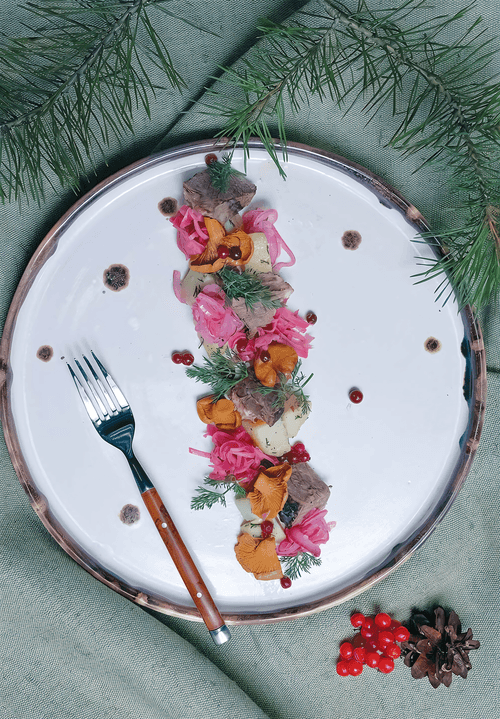
The recipe is taken from the book "The North Warms" by Rashid Rakhmanov, published by "Eksmo". "Probably, this salad combines all the ways in which the Uralians of that region prepared food for the long winters. This includes salting elk meat (corned beef), pickling cabbage, marinating mushrooms, and soaking berries (for example, lingonberries). You will find several recipes in this book in the relevant sections. I will dwell separately on corned elk meat. Like many northern dishes, corned beef appeared due to the need to store food for the long winters. This is how elk and deer meat was preserved: it was rubbed with salt and placed in a kind of refrigerator - in a hole in the frozen the ground, lined with stones, and then covered with earth. This method was common among many peoples of the North (Yakuts, Evens, Evenks, Nganasans). For me, this salad embodies the history and cultural traditions of the peoples of the Northern Urals. We use wet salting because it has some advantages over dry salting. With wet salting, salt penetrates the meat faster and is distributed evenly, the product turns out tender and moderately salty (unlike dry salting, where the meat is greatly dehydrated, becoming dry and tough ) . In addition, it is easier to saturate the salt solution with spices
15
8
60

Brownies with cranberries soaked in cognac are the embodiment of refined taste and sophistication. This dessert hails from America, where chocolate brownies have long been a symbol of home comfort. The rich, velvety flavor of dark chocolate harmoniously blends with the sweet-sour notes of cranberries infused with noble cognac. This combination adds depth and a light aroma of fine spirits to the pastry. Each serving embodies a cozy evening by the fireplace or an exquisite dinner with a glass of strong coffee. It is perfect as a standalone dessert or paired with vanilla ice cream. Its dense texture and slightly moist center make each bite a true delight.
8
8
60

Beet pkhali is a colorful dish of Georgian cuisine that combines the tenderness of boiled beets, the richness of nuts, and the aroma of spices. Historically, pkhali is a traditional appetizer where vegetables are mashed with nuts and herbs to create an incredible blend of flavors. In this version, beets add a light sweetness that perfectly balances the spiciness of the spices and the zestiness of red onion. Imeretian saffron and ucho-suneli reveal a rich palette of Georgian flavors. This dish is served chilled, making it especially fresh and vibrant. It pairs wonderfully with lavash and greens and is an excellent complement to meat and fish dishes. Beet pkhali is not just an appetizer but a piece of Georgian gastronomic culture in every spoonful.
11
8
120
Pickled grapes according to Irina Meglinskaya's recipe is an amazing combination of simplicity and refined taste. This authorial recipe transforms aromatic 'Isabella' grapes into a savory treat soaked in a salty brine with mustard and dill. This preservation method has been known since ancient times when fruits and berries were salted for winter storage. The taste of pickled grapes pleasantly contrasts between sweetness and a light spicy note, while the marinade makes it juicy and rich. It can be used as an independent snack, an addition to meat and fish dishes, or as an original ingredient for salads. After a month of aging in a cool place, the grapes acquire a rich flavor and amazing texture, making it a true gastronomic delight.
5
6
10

Pickled grapes in the Kuban style is a traditional Russian preparation that gives the berries a tangy-sweet flavor with spicy notes. This recipe has roots in folk methods of preserving harvests, where fermentation was used for natural food preservation. Grapes infused with the aroma of dill, bay leaves, and pepper acquire an unusual rich taste, while mustard creates a natural protective film that aids fermentation. This treat perfectly complements meat dishes, homemade snacks, and even cheese platters, revealing new shades when paired with different products. In Russia, pickled berries are especially popular in rural areas where pickling traditions are passed down through generations.
6
12
10
Pickled tomatoes without water are an ancient European method of salting tomatoes passed down through generations. In this recipe, the tomatoes gain a rich flavor thanks to aromatic herbs, garlic, and spices that enhance their zest. The preparation process is very simple: fresh tomatoes are thoroughly mixed with greens and spices, and then, through natural fermentation, they acquire a pleasant sourness and vibrant taste. This method preserves the freshness of the tomatoes and complements them with the sharp aroma of horseradish and parsley. The taste of pickled tomatoes is a harmony of sweet-sour notes with a savory saltiness. They perfectly complement meat dishes, pair well with potatoes, or simply serve as an independent snack that reveals the richness of natural ingredients.
8
4
20

Our recent recipe, which in winter times will go well with vodka, and with duck, and in a sandwich, and anywhere.
3
10
40

Warm roasted beet salad with dill is a fragrant and cozy dish that reveals the depth of flavor of roasted root vegetables. In Russian cuisine, beets have always played an important role, whether in borscht or vinaigrette, and this salad offers a new take on classic combinations. Roasted until tender, beets acquire a rich, slightly caramel flavor that pairs beautifully with the freshness of dill and the light acidity of wine vinegar. Sweet onions add softness, while olive oil brings all the ingredients together in a harmonious ensemble. This salad is perfect as a standalone dish or as a warm side for meat and fish. With its simplicity of preparation and natural ingredients, it fits into any menu, adding homey comfort and gastronomic sophistication to the meal.
5
4
30