






Recipe Catalog
No recipes contain all the words, showing recipes that match some of them

The 'Napoleon' cake in a pan is a simplified version of the famous layered dessert from France. Its history is linked to Napoleon's victory, but over time the recipe has adapted and received many variations. This version is made in a pan without complex layered dough but retains its tenderness and rich creamy flavor. The layers made without butter have a light crispy texture, while the airy cream with milk and condensed milk adds juiciness and pleasant sweetness. The cake is perfect for family tea gatherings or cozy evenings when you want to enjoy classic flavors with minimal effort. Its simplicity makes it accessible for any occasion, and the softness and delicacy of the cream captivate everyone from the first spoonful.
6
4
60

Sour cream 'Napoleon' in a pan is a variation of the classic cake adapted for quick preparation. Its history traces back to the traditional Russian 'Napoleon', named after the French emperor. This version features particularly tender layers made without an oven and a rich sour cream filling that adds a slight tang and airy texture. The cake's flavor harmoniously combines sweetness with soft creamy freshness. Its main secret is prolonged soaking, which makes the dessert surprisingly soft and melt-in-your-mouth. This 'Napoleon' is perfect for family tea gatherings and unexpected guests – it's easy to make but impresses with its rich taste and pleasant texture. Add chocolate crumbs for sophistication!
6
8
120
Honey and banana skillet cake is a wonderful blend of simplicity and sophistication. It embodies the warmth of home and lightness, making it a great option for those who want to prepare a dessert without an oven. The roots of this recipe can be found in traditional European cuisine, where harmony of flavors and natural ingredients are valued. The delicate layers cooked in a skillet soak up aromatic honey, gaining softness and sweetness, while fresh bananas add fruity freshness and velvety texture. Crunchy walnuts complete the composition, giving the cake an additional richness. This dessert is perfect for cozy family tea time or an unexpected sweet treat with tea.
10
8
30

A skillet cake in half an hour is a culinary miracle for those who want to make a delicious dessert without an oven and long waiting. This recipe has roots in traditional European honey cakes but is adapted for quick preparation. The layers fried in the skillet acquire a light caramel note thanks to the honey, and the variety of creams allows for flavor experimentation—from delicate sour cream to rich custard. Such a cake is perfect for family tea time or unexpected guest visits since it can be made in just half an hour. Fragrant, sweet, with a light crispy crust—this dessert will delight even the most discerning sweet tooth.
8
4
30

Cottage cheese cake in a skillet is a cozy and homemade treat infused with the aromas of vanilla and the tenderness of cottage cheese. Originating from European cuisine, it embodies the simplicity and accessibility of ingredients, transforming them into a true culinary masterpiece. Soft layers, fried to a golden crust, are enriched with creamy frosting, creating a harmony of flavors — delicate, sweetish, with a slight tang of cottage cheese. The addition of nuts and chocolate gives the cake richness in texture and an exquisite accent. It's convenient to prepare without an oven and can be enjoyed over a cup of tea with loved ones. This dessert is a testament to how the simplest ingredients can provide a true celebration of taste.
6
4
60

Vanilla cake on a skillet is a simple yet surprisingly delicious treat, perfect for a cozy home tea time. Its layers, made without an oven, are soft and tender with a light caramel hint from the condensed milk. The cream, rich in vanilla aroma, gives the cake an exquisite sweetness and velvety texture. This dessert resembles classic European recipes adapted for quick preparation. Soaked and tender, it pairs perfectly with a cup of fragrant tea or coffee. Such a cake would be a wonderful treat for a family celebration or a warm evening with loved ones.
8
8
90

The 'Minute' cake in a skillet is a quick and cozy dessert from Russian cuisine, made for those who appreciate simplicity and taste. Its base consists of tender, thin layers cooked in just a minute on a hot skillet without the need for an oven. The cream is light and creamy, soaking each layer to create an airy texture. Historically, this cake emerged as an ingenious solution for quickly preparing sweets, especially when access to an oven was unavailable. The taste of 'Minute' resembles classic homemade cakes: soft and creamy with subtle vanilla notes. Its ease of preparation makes it an ideal choice for family tea gatherings or unexpected guests. By adding nuts, bananas, or cocoa to the cream, new flavor variations can be created to suit personal preferences.
7
8
90

Diet cake in a pan is the perfect combination of simplicity and health benefits. This airy dessert, inspired by European culinary traditions, is made without an oven, making it accessible to everyone. The base of the cake consists of tender oatmeal layers with a rich cocoa flavor, soaked in a light mascarpone and soft cottage cheese cream. With no sugar and the use of healthy ingredients, it is suitable even for those watching their figure. The presentation is adorned with fresh berries or chocolate glaze, adding a special elegance. This cake is an excellent option for a healthy treat with tea, maintaining a balance between delicate texture and rich flavor.
9
8
30
The cake is surprisingly light and delicious. It is eaten in one go by all participants in the process.
7
12
150

Winter cake 'Napoleon' with fruits is a refined treat where crispy layers combine with delicate creams and fresh fruits. This cake is inspired by traditional Swedish cuisine, valuing harmony of flavors and textures. The buttery and custard creams give the dessert a rich creamy taste, while the added liqueur brings a touch of sophistication. Fruits add freshness and brightness, creating a balance between sweetness and slight acidity. After soaking, the cake becomes soft, its layers melt in the mouth. It's the perfect dessert for winter holidays when one seeks comfort and warmth.
9
8
120

The Napoleon cake is a true embodiment of elegance and rich flavor. Its history dates back to the 19th century when it was created in honor of Russia's victory over Napoleon's army. This dessert consists of delicate layers soaked in a fragrant cream made from eggs, milk, and condensed milk. Its thin layers are infused with thick vanilla cream, creating a harmony of airiness and rich buttery taste. Almond flakes add an exquisite texture and a light nutty note. The Napoleon is perfect for celebrations and family gatherings, giving each bite a sense of festivity and comfort. It is best served slightly chilled to enhance its flavor.
9
12
180

Dietary Napoleon cake made from lavash is a light and healthy alternative to the classic French dessert. It combines airy crispy layers of Armenian lavash with a delicate, aromatic cream based on milk, egg yolks, and corn starch. The history of Napoleon dates back to the times of the Russian Empire, where it became one of the most beloved festive treats. This version uses skimmed dry milk and sugar substitute, making it lower in calories but equally rich in flavor. The cream fills each layer of the cake, giving it a velvety texture, while the lavash crumbs add a crunchy note. This dessert is perfect for those who watch their diet but don't want to give up sweet pleasures.
8
12
60

Homemade 'Napoleon' cake is a true culinary masterpiece that embodies the traditions of Russian cuisine. Its history dates back to the 19th century when multi-layered cakes became popular among the aristocracy. Crispy layers soaked in delicate custard create a unique balance of textures—light and crumbly layers blend smoothly with velvety cream, offering a rich, sweet, and slightly creamy taste. This cake is perfect for festive gatherings, family evenings, or special occasions. Its characteristic crumble adds completeness to its appearance, creating a cozy feeling of homemade baking. Napoleon requires patience in preparation but the result meets expectations: each spoonful is infused with traditions, warmth, and the flavor of true homemade treats.
6
12
120
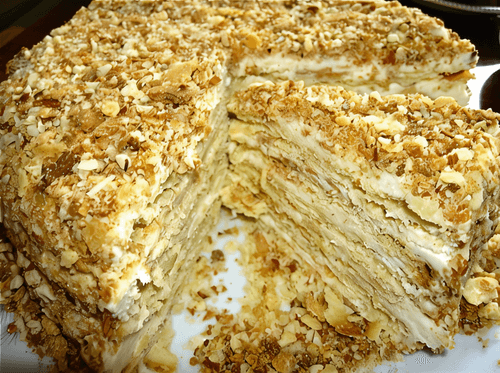
Napoleon Cake is one of the most popular desserts, a Russian Soviet millefeuille. There are several legends about the origin of the cake. The most famous one: the cake was prepared by Russian chefs for the centenary of Napoleon Bonaparte's escape from Russia. The cake was baked in the shape of a triangle, which symbolized Napoleon's hat, the sugar crumbs on top of the cake referred to the harsh Russian winter that frightened and drove away the French, and its tendency to crumble at the first movement is a symbol of the victory over Napoleon's army. Of course, other countries have their own version of the origin of the famous cake, but the preparation principle remains unchanged: thin layers of dough that are connected with sweet custard.
8
16
240

Kefir puff pastry for the 'Napoleon' cake is an unusual and refined version of classic puff pastry, giving the dessert unique softness and elasticity. The kefir used in the recipe makes the dough tender, while its lactic acid replaces traditional vinegar, adding a slight tanginess. This dough serves as a wonderful base for the famous 'Napoleon' cake, valued for its layered structure and rich creamy flavor. The preparation process requires patience and precision: the dough is rolled out and chilled multiple times to create airy layers. This version of the dough is perfect not only for the classic recipe but also for various baking variations that require a delicate texture and pronounced flavor.
10
12
120