

















Recipe Catalog
No recipes contain all the words, showing recipes that match some of them

The recipe is taken from the book "Ural cuisine.
10
4
45
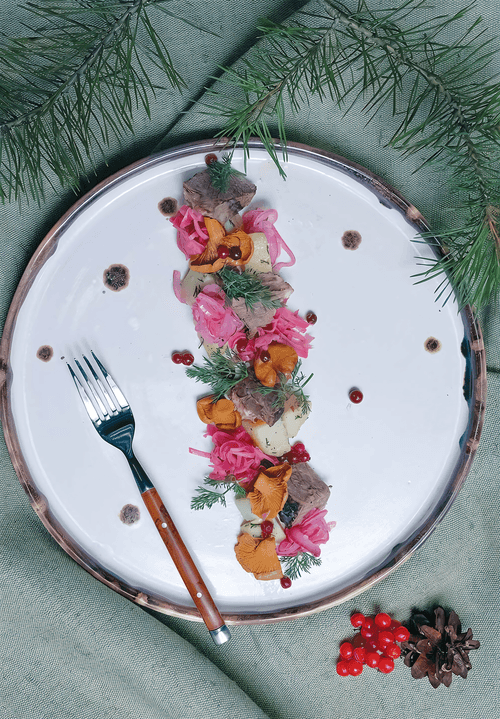
The recipe is taken from the book "The North Warms" by Rashid Rakhmanov, published by "Eksmo". "Probably, this salad combines all the ways in which the Uralians of that region prepared food for the long winters. This includes salting elk meat (corned beef), pickling cabbage, marinating mushrooms, and soaking berries (for example, lingonberries). You will find several recipes in this book in the relevant sections. I will dwell separately on corned elk meat. Like many northern dishes, corned beef appeared due to the need to store food for the long winters. This is how elk and deer meat was preserved: it was rubbed with salt and placed in a kind of refrigerator - in a hole in the frozen the ground, lined with stones, and then covered with earth. This method was common among many peoples of the North (Yakuts, Evens, Evenks, Nganasans). For me, this salad embodies the history and cultural traditions of the peoples of the Northern Urals. We use wet salting because it has some advantages over dry salting. With wet salting, salt penetrates the meat faster and is distributed evenly, the product turns out tender and moderately salty (unlike dry salting, where the meat is greatly dehydrated, becoming dry and tough ) . In addition, it is easier to saturate the salt solution with spices
15
8
60
Borscht with mushroom 'ears' is a traditional dish of Lithuanian cuisine that combines the rich flavor of beet borscht with delicate mushroom dumplings. Its origins date back centuries when mushrooms were an accessible and valuable part of the diet. Thick broth, aromatic dried mushrooms, and fresh vegetables create a layered taste where sweet notes of beetroot intertwine with the slight acidity of vinegar and the richness of meat broth. The 'ears'—miniature dumplings filled with mushrooms—are added to the borscht before serving. This soup is traditionally served with sour cream and chopped herbs, making it especially soft and harmonious. Borscht with 'ears' is a cozy, warming dish perfect for cold evenings that brings families together at the table.
13
4
120

Lithuanian-style borscht with smoked pork belly is a hearty and aromatic dish rooted in the ancient culinary traditions of Lithuania. The base of the borscht is a rich broth made from smoked pork belly, giving it a deep, rich flavor with subtle smoky notes. Pickled beets add a pleasant tang, complementing the sweetness of carrots and the richness of onions. Whole boiled potatoes harmoniously complete the composition, providing a tender texture to the dish. Served with sour cream and fresh herbs, this borscht is truly cozy and warming. An ideal option for cold days, it pairs excellently with rye bread and can become the centerpiece of a family lunch.
11
4
60

Poltava-style borscht with goose is a true culinary masterpiece of Ukrainian cuisine that combines the rich flavor of goose, the sweetness of beets, and the intense aroma of spices. This recipe originates from the Poltava region, known for its traditional dishes where goose symbolizes festive feasts. The broth made from goose meat gives the borscht a special depth of flavor, while stewed beets with vinegar and tomato add a characteristic sweet-sour note. Lightly frying carrots and onions highlights the richness of flavors, while cabbage and potatoes make the dish hearty. It is best served with thick sour cream and fresh herbs that soften its richness and make it even more delicate. This dish not only warms but also transports you to an atmosphere of coziness and home warmth.
15
6
40

Borscht with chicken, beef, and tongue homemade style is a rich and aromatic dish of Russian cuisine that combines the depth of traditional borscht flavor with the tenderness of meat assortment. Its origins trace back to home gatherings where each hostess aimed to make borscht heartier and richer in taste. The combination of three types of meat—beef, chicken, and tongue—results in a strong and flavorful broth, while beets give the borscht its characteristic ruby color and pleasant sweetness. Vegetables sautéed in vegetable oil add depth to the flavor, and garlic notes enhance its spiciness. It is recommended to serve the dish with sour cream and herbs, complementing it with homemade pampushki or rye croutons rubbed with garlic for an even cozier and warming experience.
19
8
90

Kefir and millet are usually added to Komi-borscht, which makes it completely different from the traditional banal home-made borscht. Sour cream and potatoes, similar in meaning, are also added here.
12
12
180

Borscht according to the recipe of Valeria Olegovna from Mariupol
14
6
70

A quiet, calm recipe that requires two types of cabbage: raw and pickled. Recipe by Alena Solodovichenko, chef of "Dr. Zhivago.
18
4
60

The recipe is taken from the book "The North Warms" by Rashid Rakhmanov, published by "Eksmo". "The gastronomic festival "Cherinyan-gazh" is held annually in Pechora. From the name, you probably already understood that its main dish is fish pie. The Komi are very hospitable people: "Come and drink tea" - this is how they invite a guest. And when you come, you will certainly see on the table among the treats a traditional fish pie cherinyan (in translation from the Komi language "cheri" - "fish", "nyan" - " bread" ). Various fish pies have always been a traditional food of the Zyryans, they baked whole fish in dough, right with the scales. In addition to fish, they added eggs, herbs and various cereals to the pie.
9
12
90
The 'Komi' salad is a harmonious blend of traditional Russian flavors and rustic simplicity. Potatoes, pickled mushrooms, and sauerkraut create a rich texture and depth of flavor, while hard cheese adds a tangy note. Cranberries provide a light acidity and freshness, balancing the saltiness of the ingredients. This salad perfectly complements meat dishes or can serve as an independent snack. Its origins trace back to the northern regions of Russia, where simple yet hearty dishes are cherished for warming cold evenings. Dressed with fragrant sunflower oil, it fully reveals its taste, offering a sense of coziness and home warmth.
6
4
25

Mushroom borscht with prunes is an amazing combination of the rich flavor of forest mushrooms and the sweet tartness of prunes. This recipe, originating from Ukrainian cuisine, embodies the tradition of using simple yet rich ingredients. Prunes add an unusual depth of flavor to the dish, complementing the earthy notes of mushroom broth. The slight acidity and sweetness make this borscht warming and cozy. It is often prepared in cold weather when one craves something aromatic and hearty. It pairs perfectly with rye bread, sour cream, and herbs. Borscht not only satisfies but also warms the soul—its rich taste transports you with each sip to an atmosphere of homey comfort and ancient culinary traditions.
6
6
65

Green borscht with rice is a fragrant spring dish of Russian cuisine filled with the freshness of greens and rich flavor. Its roots trace back to the tradition of making sorrel soup, which has been popular in rural areas for centuries. The main highlight of the borscht is sorrel, giving it a light sourness perfectly complemented by the creaminess of sour cream. The rice in the mix makes it heartier and more delicate, while boiled eggs and sautéed vegetables add depth to the flavor. The soup needs to steep for the ingredients to release their aromas and for the sour cream to give it a velvety texture. Green borscht is served warm, garnished with fresh herbs and an extra spoonful of sour cream, creating a sense of homey comfort and gastronomic delight.
12
4
30

Ukrainian borscht with pork ribs is a true embodiment of warmth and national traditions. Thick, aromatic, rich in flavors of fresh vegetables and tender meat, it is not just a dish but part of Ukraine's cultural heritage. Borscht has an ancient history and is considered one of the symbols of Ukrainian cuisine. The secret to its special taste lies in the long simmering of the ribs combined with sautéed vegetables, a rich tomato base, and a garlic accent. The result is a rich, slightly sweet yet savory soup best served with a dollop of sour cream and a slice of rye bread. This dish warms the soul, nourishes the body, and brings families together at the table while remaining an unchanged favorite for centuries.
10
4
30




















