
- Categories
- Main courses (12806)
- Bakery and desserts (12068)
- Appetizers (5704)
- Salads (4899)
- Soups (3502)
- Drinks (2372)
- Breakfast (2278)
- Pasta and pizza (1930)
- Sauces and marinades (1410)
- Sandwiches (562)
- Risotto (313)
- Broths (106)
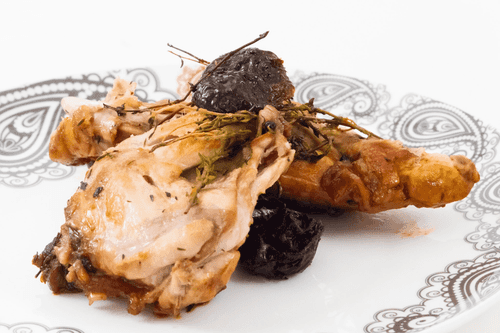
Duck leg confit
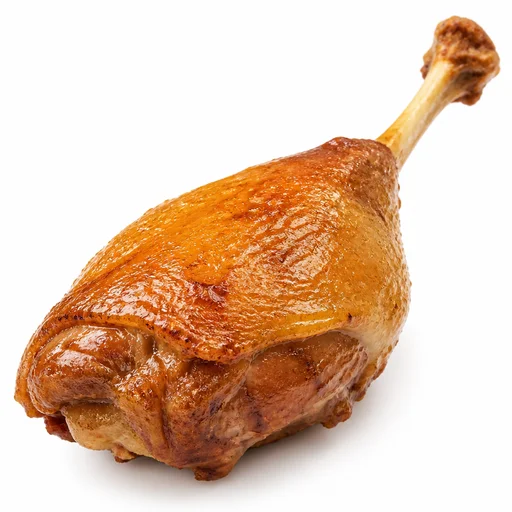
Duck leg quarters cured with spices and slowly cooked in their own fat until tender, with a delicate texture, pan-fried until the skin is crisp before serving.
Duck leg confit is duck leg quarters cured with spices, garlic and thyme and then slowly cooked and held in their own duck fat until the meat is completely tender, with a delicate texture that falls off the bone easily and a rich taste. Before serving they are pan-fried until the skin is crisp and served with potatoes, lentils, sauerkraut, cassoulet and salad.
Calories, proteins, fats and carbohydrates per 100 g of product
Duck leg confit, Raw: Calories 217.0 kcal, Proteins 26.8 grams, Fats 11.4 grams, Carbohydrates 0.0 grams per 100 g of product.
Duck leg confit, Stewed: Calories 178.0 kcal, Proteins 29.1 grams, Fats 6.0 grams, Carbohydrates 0.0 grams per 100 g of product.
Duck leg confit, Baked: Calories 337.0 kcal, Proteins 19.0 grams, Fats 28.4 grams, Carbohydrates 0.0 grams per 100 g of product.
Recipes with this ingredient
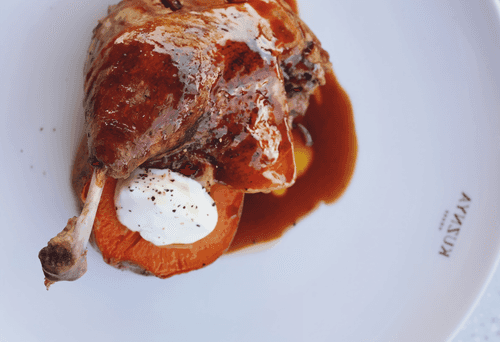
Recipe by Ruslan Zakirov, chef of the Kuznya House restaurant. Instead of the duck leg in this recipe, there could have been, for example, beef ribeye, baked chicken or pork chop. It would still have been an excellent illustration of the fact that sweet potato as a side dish looks much more elegant than regular potatoes. Its sweetness especially suits "wild" meat, to which duck also belongs in a sense.
15
2
120
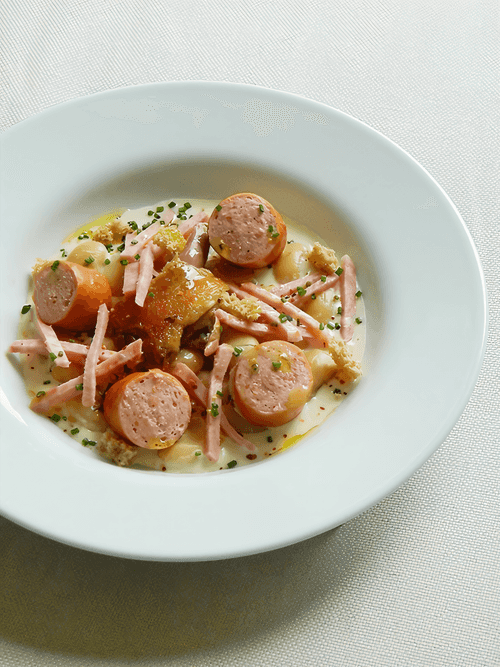
Cassoulet is a famous dish from French cuisine, originating from the Languedoc region. It embodies rural comfort and the traditions of slow cooking. The modern version of cassoulet retains the main elements of the classic recipe while adding sophistication to the flavor. Beans simmered with aromatic cloves absorb rich notes of vegetables and spices. The duck leg confit is crispy on the outside and tender on the inside, creating a wonderful contrast with creamy bean puree. Toulouse sausage and garlic sausage add spiciness, while sherry vinegar highlights the depth of flavor. The dish is completed with croutons, espelette pepper, and fragrant olive oil. Cassoulet is not just food; it is a symbol of France's gastronomic heritage and an ideal choice for a cozy dinner on a cool evening.
15
6
120