
- Categories
- Main courses (12806)
- Bakery and desserts (12068)
- Appetizers (5704)
- Salads (4899)
- Soups (3502)
- Drinks (2372)
- Breakfast (2278)
- Pasta and pizza (1930)
- Sauces and marinades (1410)
- Sandwiches (562)
- Risotto (313)
- Broths (106)
Ponzu (citrus soy sauce)
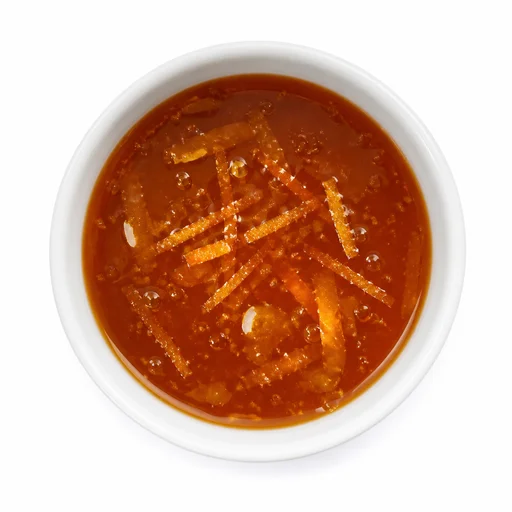
A Japanese sauce of soy sauce, citrus juice, rice vinegar and dashi, salty-sour and refreshing, for sashimi, gyoza, nabe and tofu.
Ponzu (citrus soy sauce) is a Japanese sauce of soy sauce, citrus juice (yuzu, sudachi, lemon, lime), rice vinegar, mirin and dashi with bonito flakes, light brown, salty-sour, refreshing, with a citrus aroma. It is served as a dipping sauce for sashimi, gyoza, nabe, tofu, tempura vegetables and seafood, and used in marinades, dressings and sauces.
Recipes with this ingredient

Ecuadorian ceviche made from tuna, salmon, and dorado is a vibrant, refreshing dish that embodies the spirit of Latin American coastal cuisine. Its roots trace back to fishermen who prepared fresh fish by soaking it in citrus juice. This version harmoniously combines tender pieces of tuna, salmon, and dorado with crunchy red onion and sweet notes of grapefruit. Quinoa adds a textural contrast while the citrus-soy sauce enhances the depth of flavor. The taste of ceviche is a balance of freshness, acidity, and a hint of saltiness that awakens the appetite. It’s perfect as an appetizer on a hot day or as an elegant dish for a special occasion.
7
1
20
Ceviche made from Argentine langoustines with shrimp chips is a refined dish of Argentine cuisine that embodies the freshness of seafood and the harmony of citrus notes. Historically, ceviche originated in South America where fishermen prepared it using freshly caught fish marinated in lemon juice. This version features tender Argentine langoustines enriched with grapefruit aroma and the spiciness of citrus-soy sauce. Crispy shrimp chips add a textural contrast, while herbs and red onion provide freshness and lightness. The dish is perfect for a light dinner or festive table, surprising with its flavor combination and elegant presentation. Ceviche is an art of balance between acidity, sweetness, and saltiness that creates culinary delight.
7
1
20
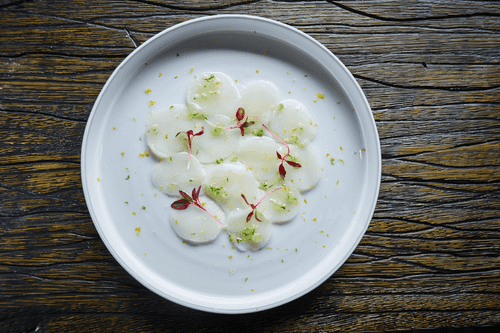
Scallop carpaccio from Murmansk is a refined dish of Italian cuisine that embodies the freshness of the sea depths and the brightness of Mediterranean aromas. Its roots trace back to the traditions of enjoying raw flavors characteristic of Italian culinary art. Tender, thinly sliced scallops melt in the mouth, enriched with a citrus sauce harmoniously combining lemon and orange zest, fresh cucumber, and olive oil. This dish captivates with a balance of salty and sweet flavors, with a slight acidity that awakens taste buds. Carpaccio is served chilled, and its exquisite taste is perfectly complemented by notes of watercress and the aroma of fresh citrus. An ideal choice for those who appreciate gastronomic experiences and seek refinement in food.
9
1
10
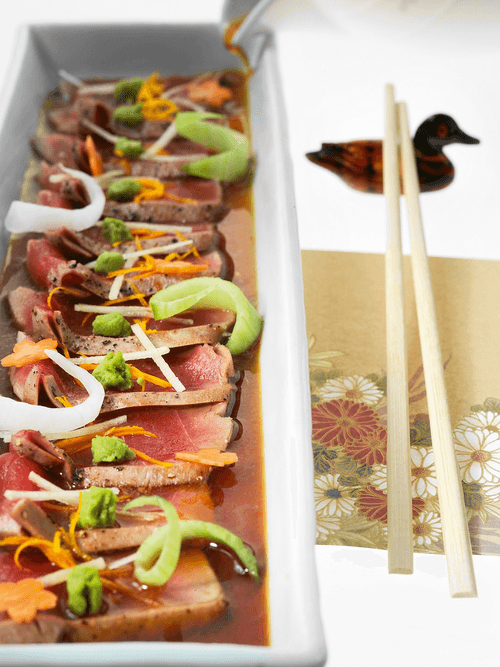
Orendzi-shoyu-maguro-tataki is an exquisite Japanese dish that combines the freshness of tuna with a refined citrus-soy flavor. The 'tataki' technique preserves the tenderness of the fish by searing it only on the outside, leaving the center nearly raw. A sauce infused with kombu and citrus notes adds subtlety and depth to the dish. A garnish of thinly sliced vegetables and apple complements the dish with freshness and a crunchy texture. Orendzi-shoyu-maguro-tataki is often served in traditional Japanese restaurants as an appetizer or light main course that pairs harmoniously with sake. With its balance of flavors—salty, sweet, sour, and spicy—it represents true gastronomic art that highlights the philosophy of Japanese cuisine: respect for ingredients and a pursuit of perfection.
8
1
10