
- Categories
- Main courses (12806)
- Bakery and desserts (12068)
- Appetizers (5704)
- Salads (4899)
- Soups (3502)
- Drinks (2372)
- Breakfast (2278)
- Pasta and pizza (1930)
- Sauces and marinades (1410)
- Sandwiches (562)
- Risotto (313)
- Broths (106)
Green tkemali sauce
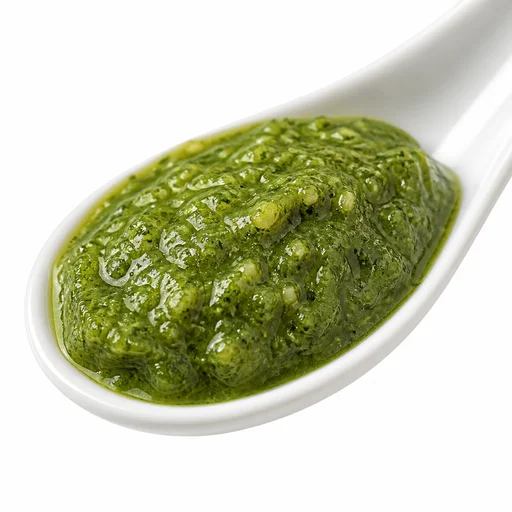
A Georgian sour-hot sauce of unripe cherry plum with garlic and herbs for meat, poultry and potatoes.
Green tkemali sauce is a Georgian sour-hot sauce of unripe cherry plum (or sloe) with garlic, fresh herbs (cilantro, dill, pennyroyal), hot pepper and salt, bright green, refreshingly sour. It is served with meat, poultry, potatoes, khachapuri and khinkali, used in marinades and as a base for kharcho.
Recipes with this ingredient
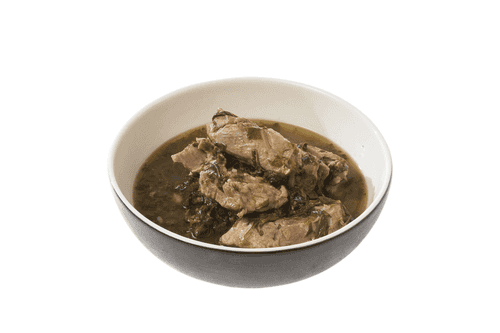
Chakapuli is translated from Georgian as "meat in foam" and is young meat stewed with greens. Chakapuli is often prepared for Easter and St. George's Day, and since these days are celebrated far from cities, chakapuli is cooked over a fire. It is supposed to be eaten hot, and washed down with wine, of course.
8
10
90
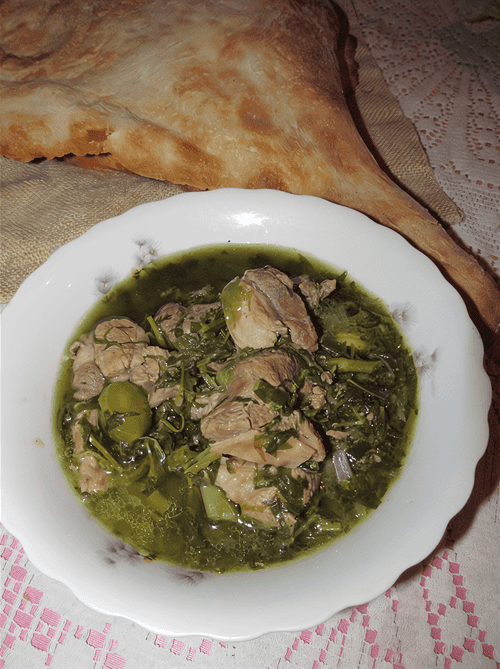
Chakapuli is a spring Georgian dish that combines the freshness of greens and the tenderness of lamb meat. Its roots go back to the traditions of mountainous regions where the spring awakening of nature inspired the creation of light, aromatic dishes. Lamb soaked in white wine and tarragon juices acquires a rich flavor with a tangy taste of tkhemali. Chakapuli is often prepared for Easter and spring holidays, served with Georgian bread tonis puri. This dish is perfect for warm days as it is light yet rich in aromas. The acidity of tkhemali enhances the freshness of greens while the white wine makes the meat tender and infused with flavor. In every bite lies the breath of Georgian nature and the warmth of family traditions.
7
8
120

Chakapuli is a vibrant representative of Georgian cuisine, embodying the freshness of spring herbs and rich flavors. Historically, this dish was prepared for May holidays using young greens and juicy meat. Veal simmered in its own juice with white wine gains tenderness and depth of flavor. Tarragon adds a slight bitterness, while cilantro and green onions provide freshness and aroma. Tkemali gives a special tang that highlights the meat flavor. Garlic adds spiciness, and herbs harmoniously connect all components. Chakapuli is served hot, traditionally with Georgian wine, enjoying its juiciness and richness of flavor nuances. This dish is a true embodiment of Georgian gastronomy—simple to prepare but deep in taste and history.
7
6
150