

- Categories
- Main courses (12806)
- Bakery and desserts (12068)
- Appetizers (5704)
- Salads (4899)
- Soups (3502)
- Drinks (2372)
- Breakfast (2278)
- Pasta and pizza (1930)
- Sauces and marinades (1410)
- Sandwiches (562)
- Risotto (313)
- Broths (106)
Toban djan (chili bean sauce)
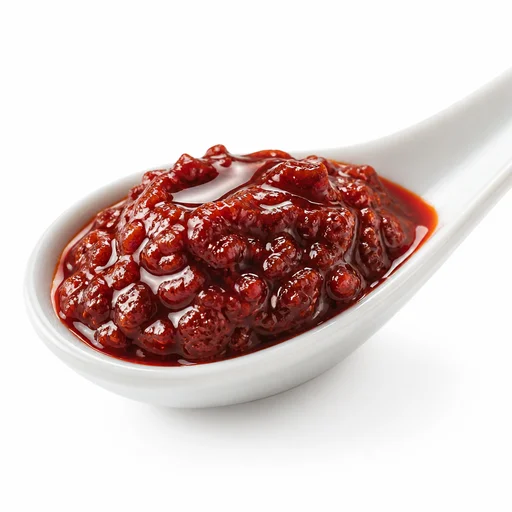
A thick dark red Sichuan fermented paste of beans and red chili pepper, very salty and spicy, the base of mapo tofu and dan dan noodles.
Toban djan (chili bean sauce, doubanjiang) is a thick dark red Sichuan fermented paste of broad beans, soybeans, salt and red chili pepper, very salty, spicy, with a deep umami taste and a light oiliness. It is fried in oil as the base of mapo tofu, dan dan noodles, hot pot, Sichuan braised beef and wok stir-fries; a key ingredient of Sichuan cooking.
Recipes with this ingredient

Mapo tofu is a legendary dish of Chinese cuisine from Sichuan province. Its history dates back to the 19th century when a small tavern owner prepared a fragrant, spicy dish for travelers. The secret of its flavor lies in the combination of soft silky tofu, spicy minced meat, and the characteristic heat of Sichuan pepper that creates a slight numbness on the tongue. The Tobanjan sauce adds richness and depth to the dish while green onions provide freshness. Mapo tofu pairs perfectly with rice, absorbing its softness and creating a balance between spiciness and tenderness. Today, this dish is loved worldwide for its rich flavor and warming spiciness that can awaken the appetite and offer a gastronomic journey to the heart of Sichuan.
13
1
20
Sichuan tofu is a vibrant and aromatic dish from Chinese cuisine, known for its spiciness and depth of flavor. The origins of this recipe trace back to Sichuan province, famous for its spicy dishes. Tender cubes of tofu are infused with a rich sauce made from tobajiang paste, ginger, and garlic. The broth adds juiciness to the dish while starch helps achieve the perfect silky consistency of the sauce. Thin rings of green onion garnish the dish, adding fresh notes. This dish pairs perfectly with rice, creating a harmonious balance of flavors. Sichuan cuisine is renowned for its 'ma la' principle—a unique combination of spiciness and a slight numbing sensation due to special spices. Sichuan tofu is a delight for lovers of rich flavor nuances and vibrant gastronomic experiences.
11
2
20
Tofu with spicy chicken sauce is a refined dish of Pan-Asian cuisine that combines the tenderness of soy with rich spicy notes. Inspired by the traditions of Chinese and Japanese gastronomy, it embodies a harmony of flavors. Tender slices of tofu absorb the aromatic sauce infused with deep umami—a blend of light and dark soy sauce, oyster accents, and spicy tobanjan adds richness to the dish. Ginger and garlic add heat, while sweet pepper and celery provide freshness and textural contrast. Steaming completes the creation of a perfect consistency, making each serving silky smooth. Sesame oil and cilantro finish the composition, leaving a spicy aftertaste. This dish pairs perfectly with rice and can be part of a festive dinner or a cozy home treat.
15
2
25
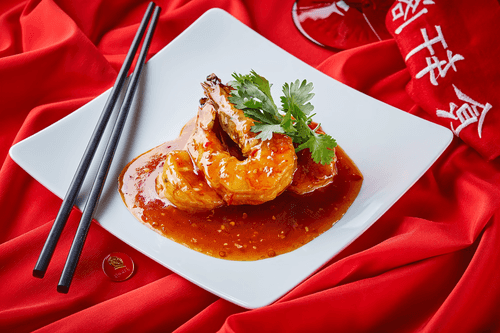
Prawns in a sweet and spicy Chinese sauce are one of the hits of "Chinese Literacy" performed by the restaurant's chef Zhang Xianchen. The preparation does not require any superpowers, except perhaps the ability to work with a wok - you need to shake the hot pan from time to time and make sure that the shrimp do not become rubbery. But the whole secret here is in the glaze, for which you will have to collect an extensive set of typical Chinese sauces (however, one raid on a specialized store of Asian spices will provide you with everything you need). Thickened with starch, the glaze turns out transparent and very thick. As a result, the shrimp literally burst in the mouth, giving off the most tender flesh, enclosed in a caramel crust.
14
1
30
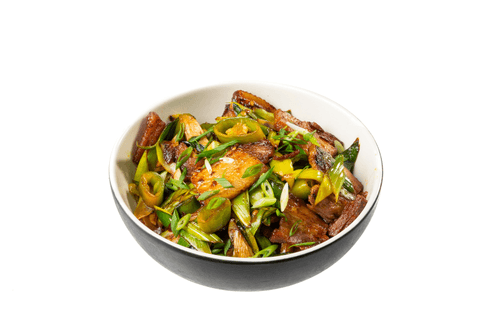
Over the time of the existence of the phenomenon of twice-cooked pork, many legends have accumulated explaining the origin of this dish. The most romantic is about the wife of one of the builders of the Great Wall of China: the woman waited for her lover for so long that the meat had to be cooked a second time. There is also a more pragmatic version: boiled pork in China was left as an offering to the spirits of ancestors, but due to the high price of meat, it was subsequently cooked again with the addition of a large amount of pepper. Twice-cooked pork should be fatty, so it is best to take brisket - you can with the skin. It is good if you can find young leeks: their greens have a beany flavor that goes great with pork. However, it can be replaced with regular leeks or green onions.
15
4
90
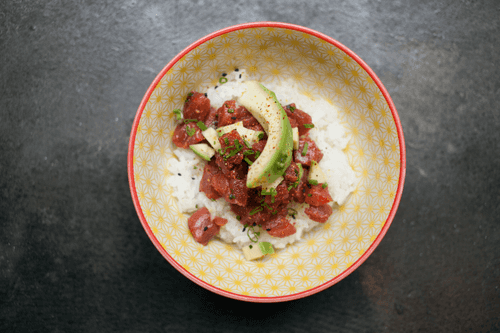
Recipe provided by Cutfish restaurant chef Glen Ballis.
18
6
45
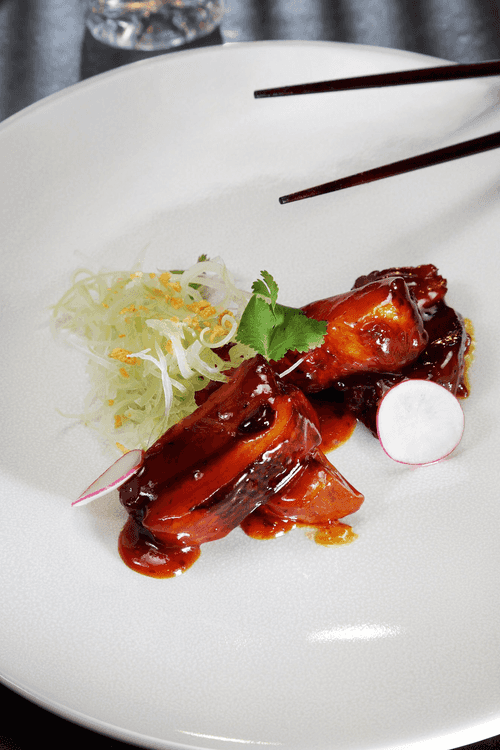
Ribs are the foundation on which a building of two dozen ingredients is built - among them hoisin and tobanjian sauces, cranberry jam, cornflakes and chu-hau paste.
19
8
70
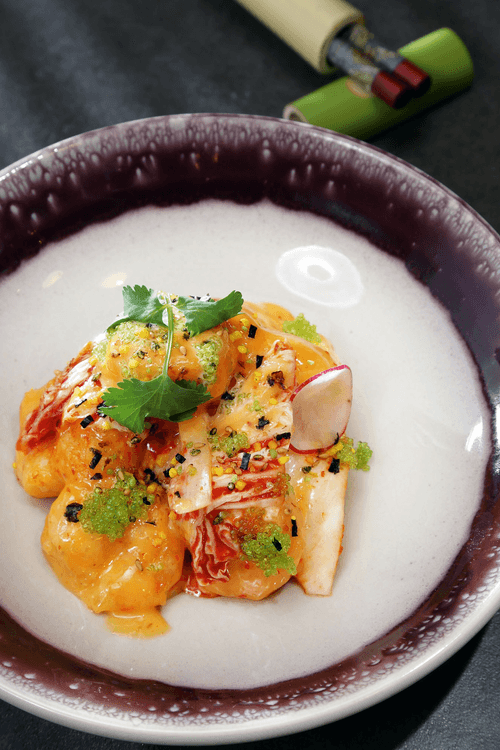
Shrimp in kimchi sauce is a refined dish of Pan-Asian cuisine, combining the crispy texture of shrimp with the rich flavor of spicy sauce. The recipe's origins trace back to Korean culinary traditions, where kimchi adds spiciness and depth to dishes. Tender shrimp, breaded and deep-fried, absorb the aromatic kimchi sauce with notes of lime, sake, and tobanjan. Cilantro leaves and thin radish slices add freshness, while green tobiko caviar provides a light sea saltiness. Furikake gives the dish a distinctive Japanese accent. It's the perfect treat for those who appreciate vibrant flavor combinations and enjoy the harmony of spicy, crispy, and juicy.
17
8
30
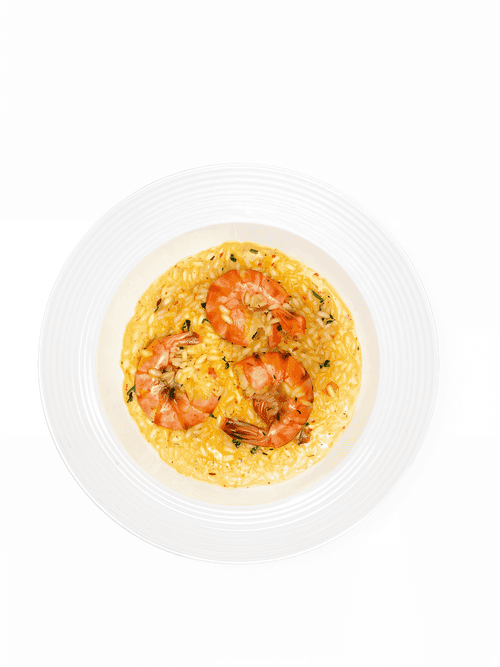
Shrimp risotto with tobadjan is an exquisite blend of Italian classic and Asian flavor accents. Traditional creamy risotto made from Arborio rice, enriched with the aromas of vermouth and fish broth, gains a spicy note from the tobadjan sauce. Cream adds a velvety texture to the dish, while large shrimp provide tenderness and marine freshness. Parsley adds lightness, highlighting the balance of flavors. This recipe is perfect for special dinners where you want to impress guests with depth of flavors and originality in presentation.
11
6
20