
- Categories
- Main courses (12806)
- Bakery and desserts (12068)
- Appetizers (5704)
- Salads (4899)
- Soups (3502)
- Drinks (2372)
- Breakfast (2278)
- Pasta and pizza (1930)
- Sauces and marinades (1410)
- Sandwiches (562)
- Risotto (313)
- Broths (106)
Water-soaked lingonberries
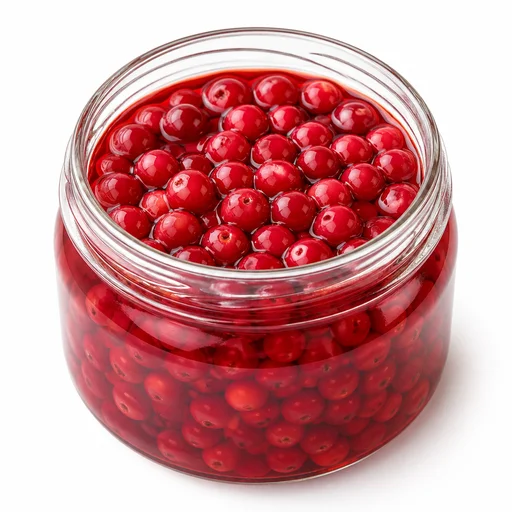
Whole lingonberries covered with cold boiled water and kept for several weeks, sweet-sour and springy, as a side for game, roasts and poultry and in sauces.
Water-soaked lingonberries are whole lingonberries covered with cold boiled water (sometimes with sugar, salt, clove and cinnamon) and kept in the cold for several weeks, dark red, springy, with a sweet-sour refreshing taste and a light spiced note, naturally preserved thanks to benzoic acid. They are served as a side for game, roasts, poultry and meat, added to sauces, salads and fruit drinks.
Recipes with this ingredient

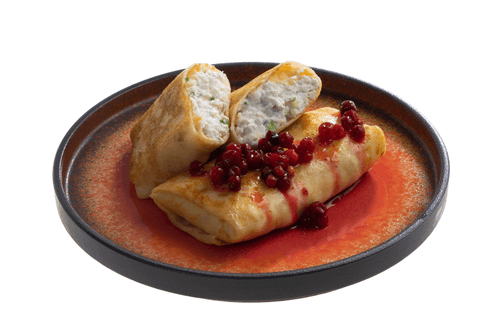
Other names for Maslenitsa are Cheese Week, or Meat Week. The thing is that meat was not allowed before the strict Great Lent, but butter, cheese, cottage cheese and other fast treats were eaten with great pleasure. Therefore, we will fill the pancakes not with meat, but with chicken and cheese. You can use harder feta or suluguni cheese, or soft feta. For tenderness, add a little yogurt to the filling. And green onions will add spring greenery and aroma to it, and it does not matter that winter in our area is so hot .
11
10
60
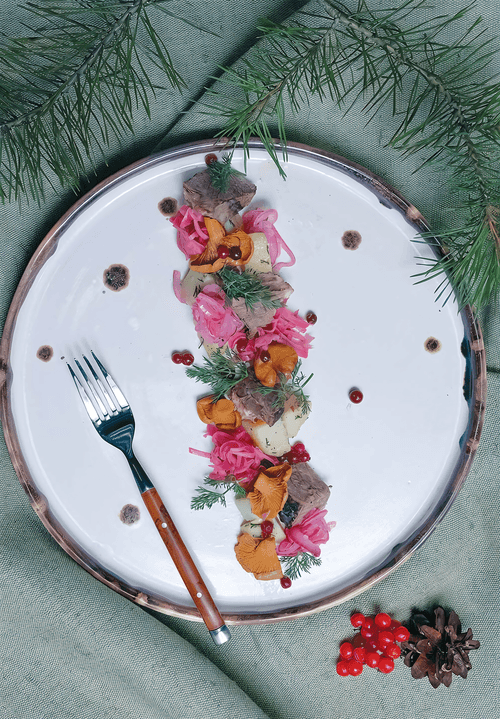
The recipe is taken from the book "The North Warms" by Rashid Rakhmanov, published by "Eksmo". "Probably, this salad combines all the ways in which the Uralians of that region prepared food for the long winters. This includes salting elk meat (corned beef), pickling cabbage, marinating mushrooms, and soaking berries (for example, lingonberries). You will find several recipes in this book in the relevant sections. I will dwell separately on corned elk meat. Like many northern dishes, corned beef appeared due to the need to store food for the long winters. This is how elk and deer meat was preserved: it was rubbed with salt and placed in a kind of refrigerator - in a hole in the frozen the ground, lined with stones, and then covered with earth. This method was common among many peoples of the North (Yakuts, Evens, Evenks, Nganasans). For me, this salad embodies the history and cultural traditions of the peoples of the Northern Urals. We use wet salting because it has some advantages over dry salting. With wet salting, salt penetrates the meat faster and is distributed evenly, the product turns out tender and moderately salty (unlike dry salting, where the meat is greatly dehydrated, becoming dry and tough ) . In addition, it is easier to saturate the salt solution with spices
15
8
60